










Quick answer: ThriveSparrow, Lattice, and 15Five are the three most-searched Culture Amp alternatives in 2026. ThriveSparrow has the clearest pricing and the most features in one place — from $2/user/month, 14-day free trial. Lattice and Leapsome go deeper on performance management but take longer to set up. 15Five wins if your real problem is managers not acting on feedback. Qualtrics is the only tool here with survey data that goes deeper than Culture Amp's.
How this guide was built: publicly listed pricing pages, current G2 and Capterra data (linked throughout), and each vendor's own docs. Where a claim rests on a single source, we say so. This guide is written by ThriveSparrow's marketing and research team, which competes with several tools on this list — flagged upfront.
You're not here because Culture Amp is bad. You're here because somewhere around week six of setup, something felt off — great dashboards, rich data, and an HR team still staring at heatmaps at 11pm wondering what to actually do on Monday.
That gap between insight and action is why so many teams are looking for a Culture Amp replacement. This guide covers 17 real alternatives — including cheaper picks for teams that just want clearer pricing, not a bigger platform. We checked G2 and Capterra reviews, real pricing, and what switching actually involves (data, HRIS sync, timeline) — the part most comparisons skip. Where ThriveSparrow competes directly, we say so.
Let's get into it.
Why Teams Are Rethinking Culture Amp Right Now
Gallup's State of the Global Workplace 2026 Report puts a number on what HR leaders already feel in their gut: global employee engagement fell to 20% in 2025, costing the world economy an estimated $10 trillion in lost productivity. Two consecutive years of decline. And here's the part that should keep every HR leader up at night — only one-third of employees believe their organization will actually act on their feedback.
Think about that. Your employees are filling out your pulse surveys. And most of them genuinely don't expect anything to change.
That's not a Culture Amp problem specifically. That's a category-wide problem with employee engagement platforms that are better at collecting data than driving action. But it does explain why the search for better alternatives has never been more urgent.
Here's what HR teams are actually complaining about when they start looking elsewhere:
- Pricing opacity that makes budgeting a guessing game: Culture Amp starts at ~$4,500/year minimum and never publishes a number publicly. You need to run a full sales cycle — demos, discovery calls, procurement conversations — just to find out if it fits your budget. For a 150-person company, that's an exhausting way to shop for software.
- Employee survey customization that hits a ceiling: Fixed question structures work for a lot of teams. But if your organization has a particular way it wants to listen — lifecycle surveys, role-specific pulse surveys, custom eNPS follow-ups — the rigidity shows up fast.
- The action gap: This one comes up again and again in real user reviews. The dashboards are impressive. The benchmarking is thorough. But "what do I actually do with this?" remains unanswered after the meeting.
- Implementation that takes longer than anyone admitted in the demo: Weeks of onboarding. Dedicated admin overhead to sustain it. For a stretched HR team, that's a real cost.
- A platform built for 200+ employees that doesn't justify itself below that: The feature depth that makes Culture Amp powerful for enterprise teams becomes dead weight for companies not yet at that scale.
- Support that goes quiet when you need it most: One Capterra reviewer (Chief People Officer, Financial Services, 2+ years on the platform) described it plainly: "They don't have on-demand customer service — just the chat bot. If you need anything more complex, like talent grids or calibration modules, you have to contact your CS team, and their solutions are super limited."
What Is Culture Amp? (The Fair Version)
Culture Amp is one of the most recognized names in employee engagement software — and it earned that reputation. The People Science team is a genuine differentiator. The industry benchmarking database is among the best available anywhere. For large organizations with dedicated HR bandwidth, a meaningful budget, and a team trained to interpret the output — it delivers.
Where it starts to crack under pressure:
- Each module is purchased separately — the full suite adds up quickly
- Pricing ranges from ~$5–$9/user/month for basic plans to $118–$122/user at enterprise tier
- No free trial — you're committing before you can fully evaluate
- G2 rating: 4.5/5 (1,537+ reviews), with 63% of reviewers from mid-market organizations
One SelectSoftware reviewer summed it up without ceremony: "The price is the first thing that comes to mind, because it is not cheap. The reporting is also frustrating at times — if I want to filter by a specific manager or region, it gets clunky fast."
For a deeper breakdown, read our full Culture Amp review.
Quick Comparison: 17 Culture Amp Alternatives at a Glance
Best Culture Amp Competitors: Head-to-Head on the Top 6
If you're short on time, these six come up most often in real buying decisions: ThriveSparrow, Lattice, Leapsome, Workleap, 15Five, and Engagedly. Here's how they stack up on the things that actually decide a deal — not a long feature list, but the real tradeoffs each one asks you to accept.
Setup notes: "Low" for ThriveSparrow is based on its own stated under-48-hour first survey. "High" for Leapsome matches Leapsome's own stated 3–6 week setup time. Lattice's "High" rating is a judgment call, based on the G2 pattern quoted above — Lattice doesn't publish a setup timeline. Workleap, 15Five, and Engagedly ratings are also judgment calls based on how each product is built (Slack-native, weekly check-ins, add-on modules), not a number confirmed by the vendor — none of the three publish a setup timeline.
Here's the pattern worth noticing: setup complexity, not pricing transparency, is what actually separates these six. Lattice publishes real base pricing but still takes real time to configure. Leapsome keeps both pricing and setup behind a sales process. Either way, the deeper and more configurable a tool is, the longer it takes to stand up — that's the real line between these six, not the feature list.
- Choose ThriveSparrow if you want the most features for the clearest price, with the fastest path to your first survey.
- Choose Lattice if flexible review cycles matter more to you than setup speed.
- Choose Leapsome if you want every module to talk to every other module, and you can spend 3–6 weeks getting there.
- Choose Workleap if you want people using it inside Slack or Teams more than deep performance management.
- Choose 15Five if your real problem is managers not following through — not a lack of data.
- Choose Engagedly if you want learning tools next to performance and engagement, on a smaller budget than Culture Amp.
Best Culture Amp Alternative by Use Case
Here's a faster way to cut through 17 options: match your real constraint to the tool built around it.
- Best overall, clearest pricing: ThriveSparrow
- Best for large-scale survey programs: Qualtrics
- Best for performance reviews specifically: Lattice
- Best if recognition is your main gap: Kudos (or Vantage Circle for a rewards-marketplace angle)
- Best for AI-driven insights: ThriveSparrow or CultureMonkey
- Best on a tight budget: ThriveSparrow ($2/user/month) or Weekdone (free for up to 3 users) — Weekdone is also the closest thing to a genuinely free Culture Amp alternative on this list, though it only covers OKRs, not surveys
- Best for startups and nonprofits watching every dollar: ThriveSparrow's no-minimum-spend pricing and Weekdone's free tier are the two options here that don't require negotiating a custom enterprise contract just to get started
- Best for teams spread across countries: Deel (payroll and compliance), paired with Workleap or ThriveSparrow (engagement)
- Best for small businesses without an HRIS yet: BambooHR
- Best if manager follow-through matters more than HR reports: 15Five
If none of those match your exact need, the full breakdown below covers all 17 — including a few built for narrower jobs (pure recognition, pure OKRs, pure HR automation) that don't try to replace Culture Amp on their own.
Prefer a quick walkthrough? Watch this video to explore the best Culture Amp Alternatives in 2026 before diving into the full comparison.
The 17 Best Culture Amp Alternatives
1. Lattice — Best for Structured Performance Management + Engagement
Type: Performance management + engagement platform

Lattice is the Culture Amp alternative most HR leaders land on first — and for good reason. It's the closest match in structure: engagement surveys and performance management in one mid-market platform, for teams that take both seriously.
Here's where Lattice really earns its spot: flexible review cycles. You can run quarterly, twice-a-year, or project-based reviews, and layer OKR tracking and ongoing feedback right alongside them. That goal-to-performance link runs deeper here than in Culture Amp. If Culture Amp's rigid setup has frustrated you, that flexibility is real.
But here's the part the demo won't tell you: Lattice carries the same setup weight as Culture Amp. One common G2 review pattern puts it plainly — "Culture Amp and Lattice are similarly complex to set up — neither is a lightweight choice for a 200-person HR team running with one person."
If you're switching to escape that weight, Lattice isn't the fix. If you're switching for more control over how you run reviews, it might be exactly right. (See our full Culture Amp vs. Lattice comparison — including where G2's own review data disagrees with itself — or the ThriveSparrow vs. Lattice comparison if you're weighing both.)
Core strengths:
- Custom review cycles without needing a developer
- Visual OKR tracking that flows from company goals down to each person
- Spots top performers and flags retention risk early
- Engagement surveys run right alongside performance — no second tool needed
Limitations:
- Pricing adds up fast — each module is billed on its own
- Setup work matches Culture Amp's — this isn't a lighter lift
- Recognition exists, but it's not a main focus
- No free trial; you only see it in a demo
Feature snapshot: Engagement ✓ | Performance ✓ | 360 feedback ✓ | Recognition: limited | Goals/OKRs ✓ | AI: limited
Pricing: $11/person/month for the Performance + Goals & OKRs bundle — this is current, published pricing, not a custom quote. Engagement, Grow, and Compensation are separate add-on modules (roughly $4–$6/person/month each). Lattice sets a $4,000 minimum annual commitment regardless of headcount, and enterprise-scale deployments are quoted separately.
Choose Lattice if flexible review cycles matter more to you than setup speed, and your HR team has the time to manage a platform with real setup work. Read the full Lattice review for more on where it holds up and where it doesn't.
Quick decision helper: If review-cycle flexibility matters more than setup speed → Lattice. Want that same depth without the multi-week setup? Keep reading — ThriveSparrow is next.
2. ThriveSparrow — Best All-in-One Alternative for SMB to Mid-Market
Type: Employee experience platform — engagement + performance + recognition + goals
Here's the honest version of this comparison, because you deserve it.
Culture Amp charges separately for Engage, Perform, and Develop. By the time you've added the modules you actually need — surveys, reviews, goal tracking — you're well past the $4,500/year floor, still haven't touched recognition, and you're three weeks into setup. And you haven't run a single survey yet.
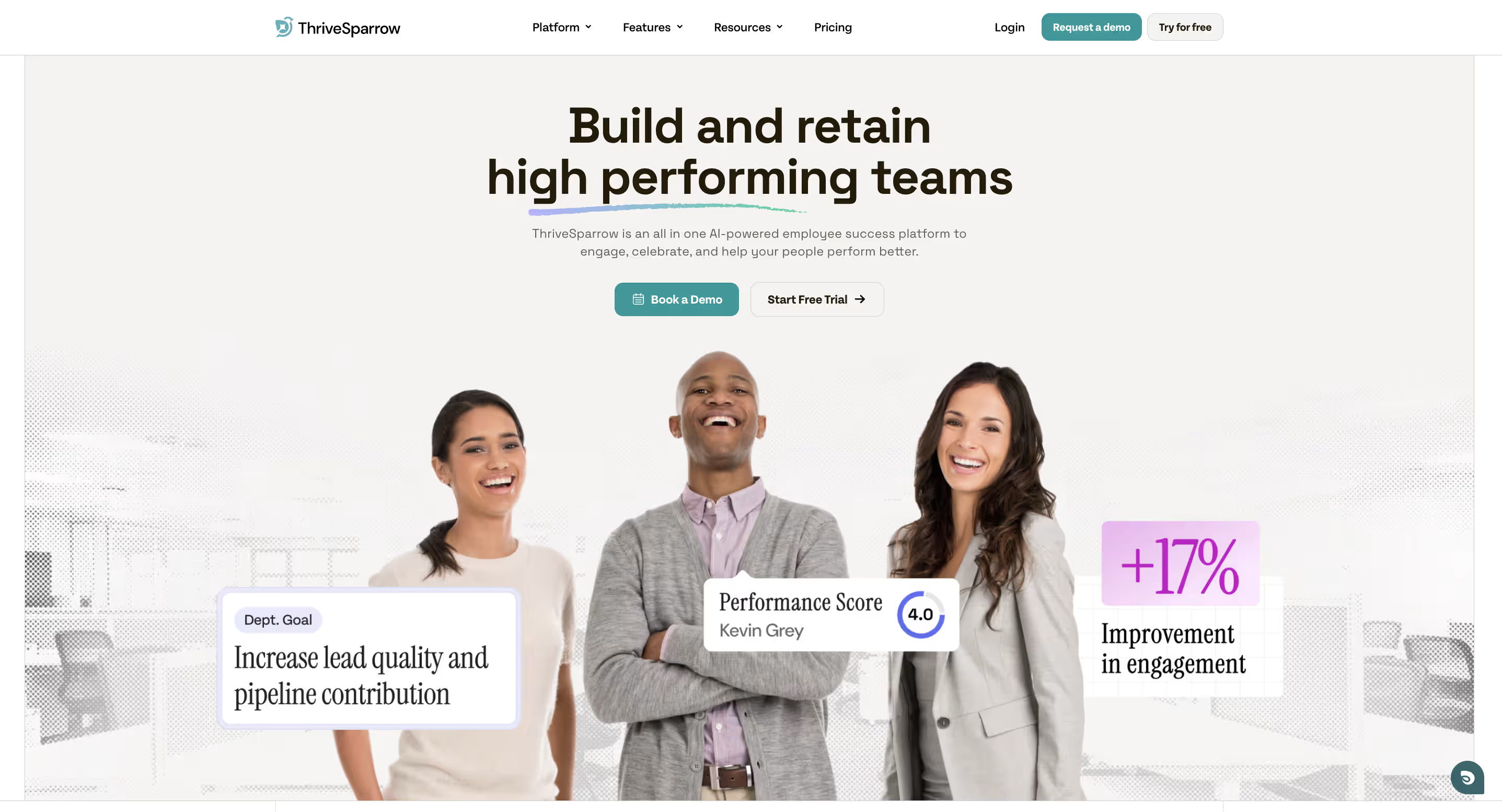
ThriveSparrow covers all of that in one platform, with clear per-module pricing starting at $2/user/month. Your first survey goes live in under 48 hours. No dedicated admin needed. No sales call before you see a number. (Full breakdown: ThriveSparrow vs. Culture Amp.)
But the real difference isn't the price. It's what happens once the data comes in.
Culture Amp shows you insights. ThriveSparrow shows you what to do about them. The AI-powered heatmaps and sentiment analysis don't just point out where engagement is low — they show you which teams, which managers, and which moments in an employee's time at the company are driving the pattern. That's the shift from data to action most tools promise and few actually deliver.
Why teams switch from Culture Amp to ThriveSparrow:
- Culture Amp needs HR expertise to read — ThriveSparrow is built for teams who want a clear answer, not a data project
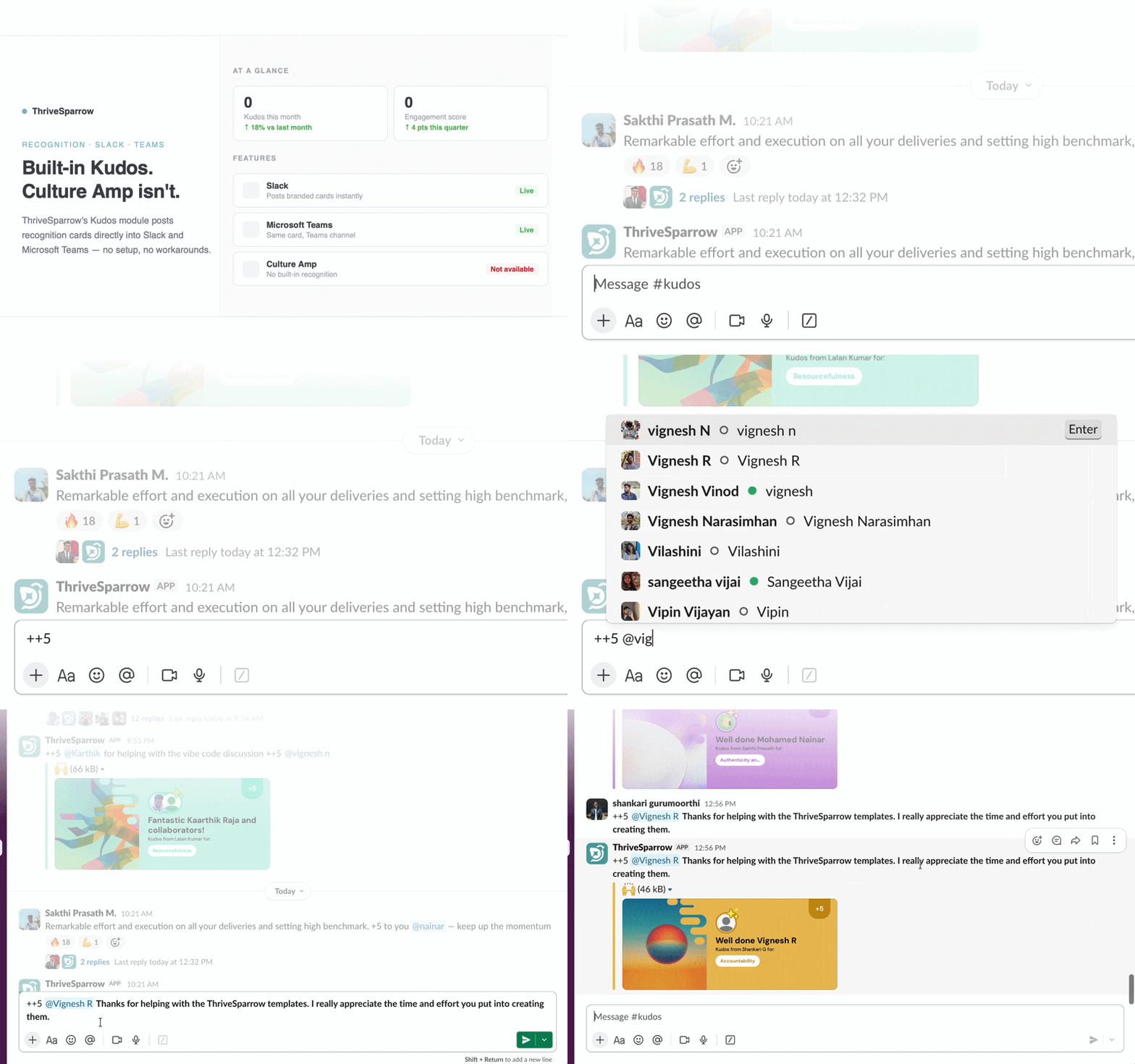
- Culture Amp has no built-in recognition — ThriveSparrow's Kudos module runs right inside Slack and Microsoft Teams
- Culture Amp's survey setup takes weeks — ThriveSparrow's takes days
Core strengths:
- AI-powered heatmaps and sentiment analysis that show patterns across teams — with action built in, not added on
- Pulse surveys, eNPS, and lifecycle surveys — onboarding, exit, and everything in between — all from one platform
- Kudos peer recognition built right into Slack and MS Teams — recognition where people already work, not in a tab nobody opens
- 360-degree feedback, goal tracking, and continuous feedback, all in one dashboard
- Multilingual surveys so your whole workforce is heard — not just the English-speaking, desk-based staff
Limitations:
- Fewer ready-made integrations than Culture Amp's top enterprise tier
- Best suited for teams up to about 2,000 employees; very large companies may want more customization
G2 rating: 4.3/5 (19 reviews) — a smaller review count than Culture Amp's 1,537+, which reflects ThriveSparrow's shorter time in the category, not lower satisfaction. 94% of reviewers rate it 4 stars or higher.
Quick decision helper: If getting the most features for the clearest price is your priority → ThriveSparrow. If your real problem is managers not acting on feedback, not the data itself → 15Five, next up.
Feature snapshot:
Pricing:
- Engage: $3/month/employee, billed yearly
- Performance: $5/month/employee, billed yearly
- Kudos: $2/month/employee, billed yearly
- Goals (OKRs): $3/month/employee, billed yearly
- 14-day free trial — no credit card needed
Full pricing: thrivesparrow.com/pricing.
Ease of use: most teams run their first survey within 48 hours. No dedicated admin needed.
Choose ThriveSparrow if you want the depth of Culture Amp — engagement, performance, recognition, and goals — without the setup work or the bill that comes with it.
Start your 14-day free trial — no credit card needed.
.svg)
Quick decision helper: If getting the most features for the clearest price is your priority → ThriveSparrow. If your real problem is managers not acting on feedback, not the data itself → 15Five, next up.
3. 15Five — Best for Remote and Hybrid Teams Where Manager Adoption Is the Real Problem
Type: Manager effectiveness + engagement platform
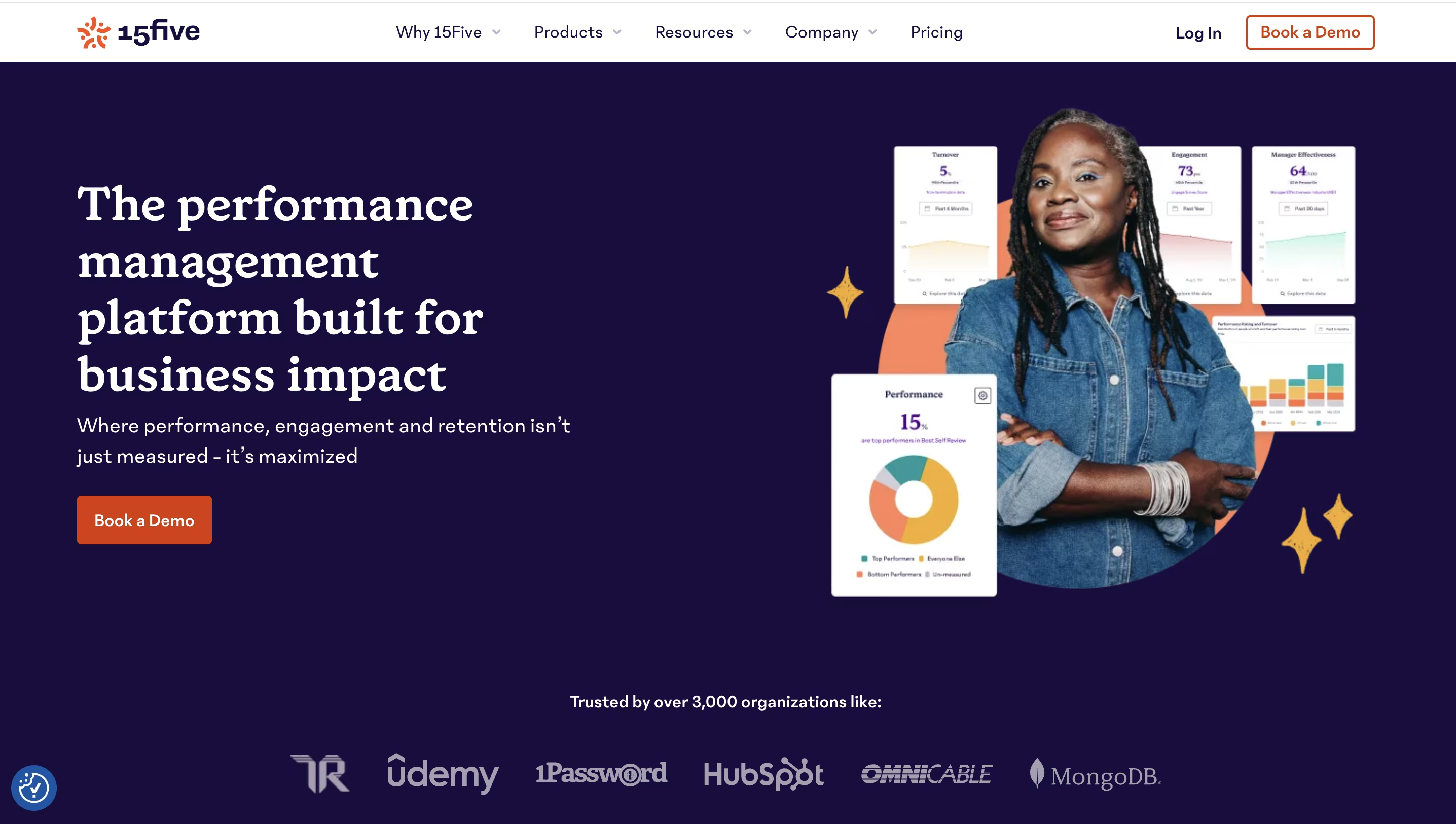
Most engagement software is built for HR teams. 15Five is built for managers — and that one difference changes everything.
Weekly check-ins take five minutes and give real signal. An AI coaching layer tells managers what to do with that signal. For remote and hybrid teams where the real gap is manager follow-through — not data collection — 15Five often wins the deal.
Compared to Culture Amp, it trades deep analytics for daily behavior change. Less benchmarking. More action. If your engagement scores look fine but nothing is actually shifting on the ground, that tradeoff is worth a closer look.
Core strengths:
- Weekly check-ins that catch engagement problems early, without wearing employees out on surveys
- Built-in AI coaching that flags at-risk team members in real time
- Built-in peer and manager recognition
- 1-on-1 agendas that pull in themes from recent feedback automatically
Limitations:
- HR analytics aren't as deep as Culture Amp's benchmarking tools
- Not the best fit for big companies running formal, large-scale review cycles
- Can feel too light for companies with complex, multi-stage reviews
Feature snapshot: Engagement ✓ | Performance ✓ | 360 feedback ✓ | Recognition ✓ | Goals/OKRs ✓ | AI ✓
Pricing (official page):
- Engage: $4/user/month (billed yearly) — confirmed on 15Five's own pricing page
- Perform: ~$10–11/user/month (billed yearly) — third-party trackers vary slightly on this middle tier
- Total Platform: $16/user/month (billed yearly) — confirmed on 15Five's own pricing page
- Free trial available
Choose 15Five if you want a tool your managers will actually open — with AI coaching built in and a weekly rhythm that doesn't feel like HR homework. See our full Culture Amp vs. 15Five comparison — including a G2 finding that cuts against 15Five's "lightweight" reputation — for the deeper breakdown.
4. Leapsome — Best for Organizations That Want a Genuinely Unified Talent Suite
Type: All-in-one people enablement platform

Type: All-in-one people enablement platform
Leapsome is the kind of tool that makes you wonder why more engagement software isn't built this way.
Performance reviews link straight to OKRs. 360 feedback creates personal growth plans on its own. Pulse surveys close the loop between what employees say and what the company does next. The result: a G2 rating of 4.9/5, earned through workflows that genuinely connect — not just marketing copy.
The difference from Culture Amp comes down to structure. Culture Amp's modules sit next to each other. Leapsome's modules talk to each other. If you've ever copied data from your survey tool into your goal tool into your review tool, you'll understand right away why that matters. (See also: Leapsome vs. Culture Amp.)
Core strengths:
- OKRs that link straight into review cycles — no manual work bridging systems
- Personal growth plans built automatically from 360 feedback
- Ongoing pulse surveys with anonymous feedback channels
- Recognition tools for both peers and managers
Limitations:
- Complex to set up — plan for 3–6 weeks
- No published pricing, which slows down early research
- Best value when you use every module — pricing per module costs more
Feature snapshot: Engagement ✓ | Performance ✓ | 360 feedback ✓ | Recognition ✓ | Goals/OKRs ✓ | AI ✓
Pricing: Custom. Demo available.
Choose Leapsome if you want one true all-in-one people platform, and you have the time to set it up right. It rewards that time with tools that actually connect.
Quick decision helper: Lattice, ThriveSparrow, and Leapsome all cover engagement, performance, and goals. The real difference is setup time versus clear pricing. If your program is really about large-scale survey research and not performance management, none of the three above fit — Qualtrics does.
5. Qualtrics — Best for Enterprise-Scale Survey Research Programs
Type: Enterprise experience management platform
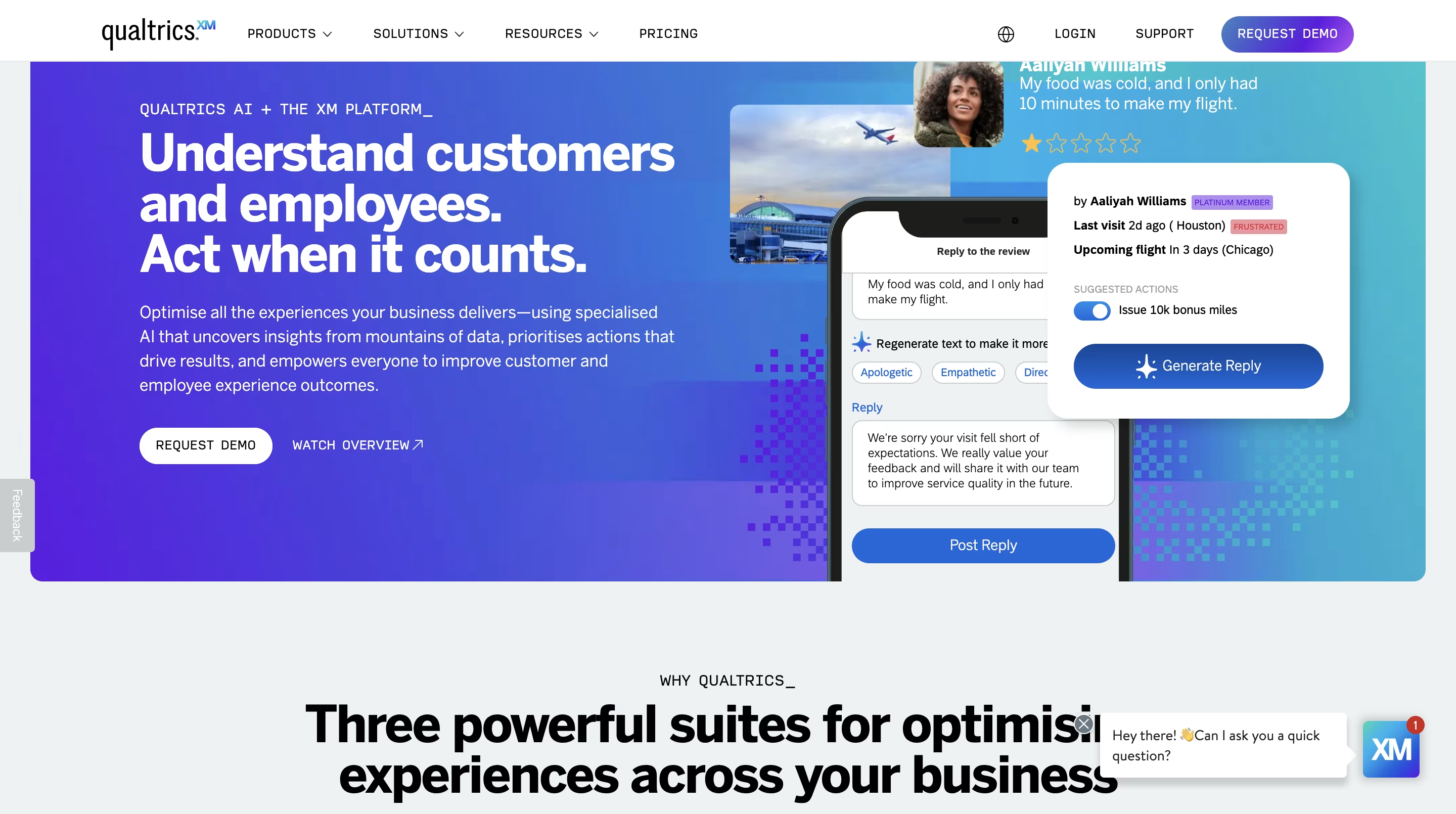
Qualtrics is in a different league than most tools here — and that's not a knock, it's just true.
It's not a fit for most HR teams looking for a Culture Amp replacement. It's what big companies reach for once they've outgrown other tools' data depth. Survey logic that branches dozens of levels deep. Conditional routing. Multilingual engagement programs running across the globe at once. And one of the largest benchmarking databases anywhere.
If performance management, peer recognition, or OKR tracking matter to you, Qualtrics won't cover them. But for companies where advanced, multi-channel survey work is the whole job — and the team running it knows analytics — nothing else on this list comes close. (See also: Qualtrics alternatives.)
Core strengths:
- Survey logic and routing far beyond what Culture Amp offers
- Global engagement programs in dozens of languages at once
- Data that spans both employee and customer experience
- Enterprise-grade benchmarking at real scale
Limitations:
- No built-in recognition, goals, or ongoing performance management
- Setup usually needs your IT team involved
- Built for analytics program owners, not self-service HR teams
Feature snapshot: Engagement ✓ | Performance: limited | Recognition ✗ | Goals ✗ | AI: limited
Pricing: Custom enterprise. No published pricing. Demo required.
Choose Qualtrics if your company runs large-scale experience programs and needs survey infrastructure that truly goes beyond what a standard engagement platform offers.
6. Workleap — Best for Hybrid Teams That Want Slack-Native Engagement
Type: Employee engagement and performance platform, built inside Slack and MS Teams
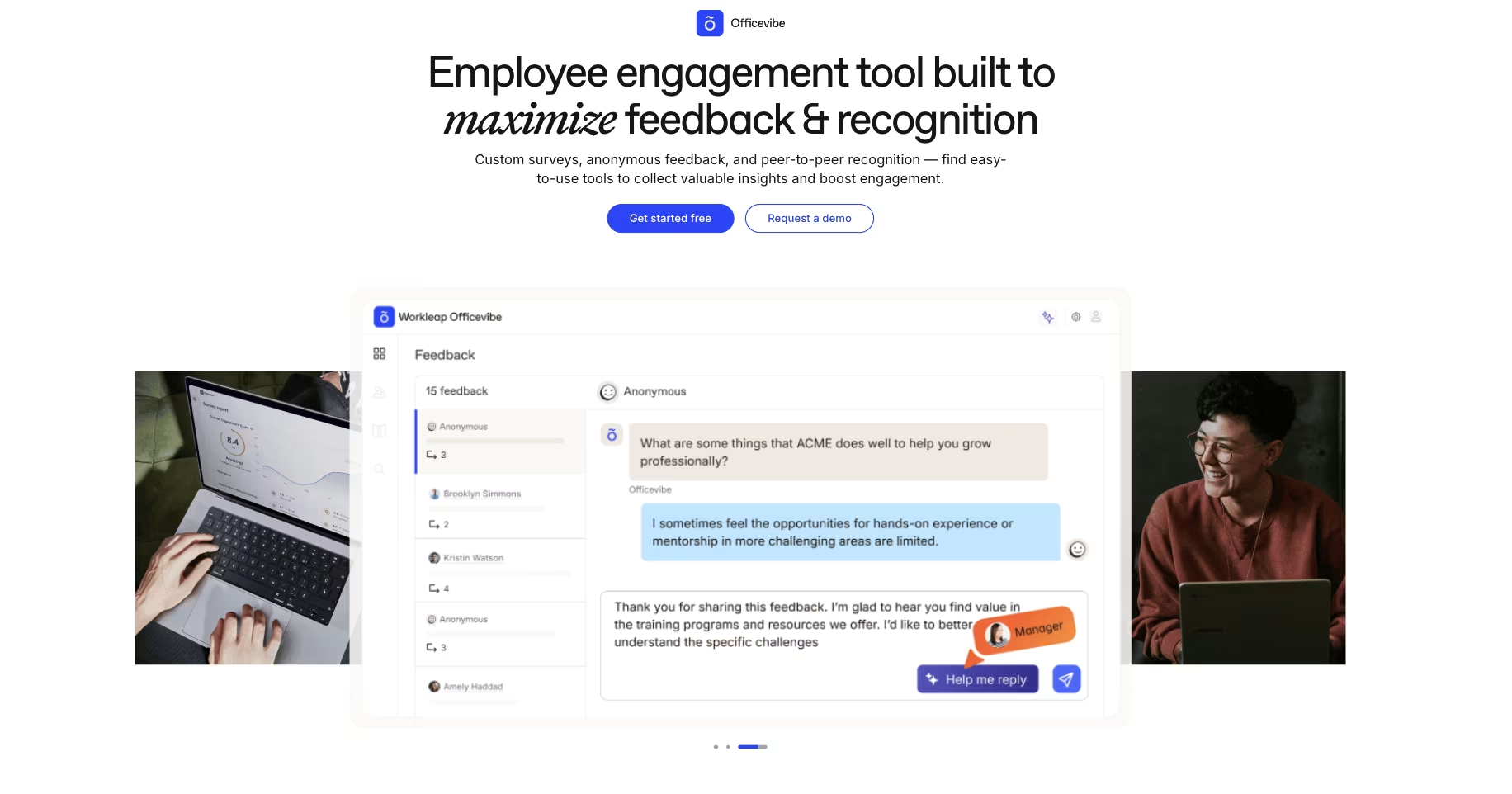
Workleap (formerly Officevibe) figured out something simple that most engagement software misses: the tool employees actually use is the one that's already open.
Teams move here from Culture Amp when they're tired of chasing people to log into a separate platform. Workleap runs inside Slack and MS Teams. Feedback happens right where work already happens. That one design choice — keeping engagement inside the flow of work — changes how many people actually respond, more than any survey redesign could. (See also: Officevibe vs. Culture Amp.)
Core strengths:
- Automatic pulse surveys that catch team mood without wearing people out
- Anonymous feedback with two-way replies — conversations stay honest over time
- Recognition and performance tools in one clean interface
- AI-driven alerts that flag engagement problems before they become retention problems
Limitations:
- Goal tracking is thinner than a dedicated OKR tool
- Not a full performance management replacement for bigger companies
- HR reporting is lighter than Culture Amp's for large-scale needs
Feature snapshot: Engagement ✓ | Performance ✓ | 360 feedback ✓ | Recognition ✓ | Goals/OKRs: limited | AI ✓
Pricing: From $3.50/user/month for the core Officevibe engagement plan — Workleap's full suite (performance, onboarding, LMS, skills) is sold as separate modules that each add cost, so the real total depends on which pieces you need. Demo available.
Choose Workleap if you want a solid engagement and performance tool that fits right into how your team already talks — with anonymous feedback built in from day one.
Quick decision helper: If Slack or Teams adoption matters most, but you still need performance tools → Workleap. If you just need simple pulse surveys with no performance module at all → TINYpulse, next.
7. TINYpulse — Best for Simple, Low-Friction Pulse Listening
Type: Pulse survey and peer recognition platform
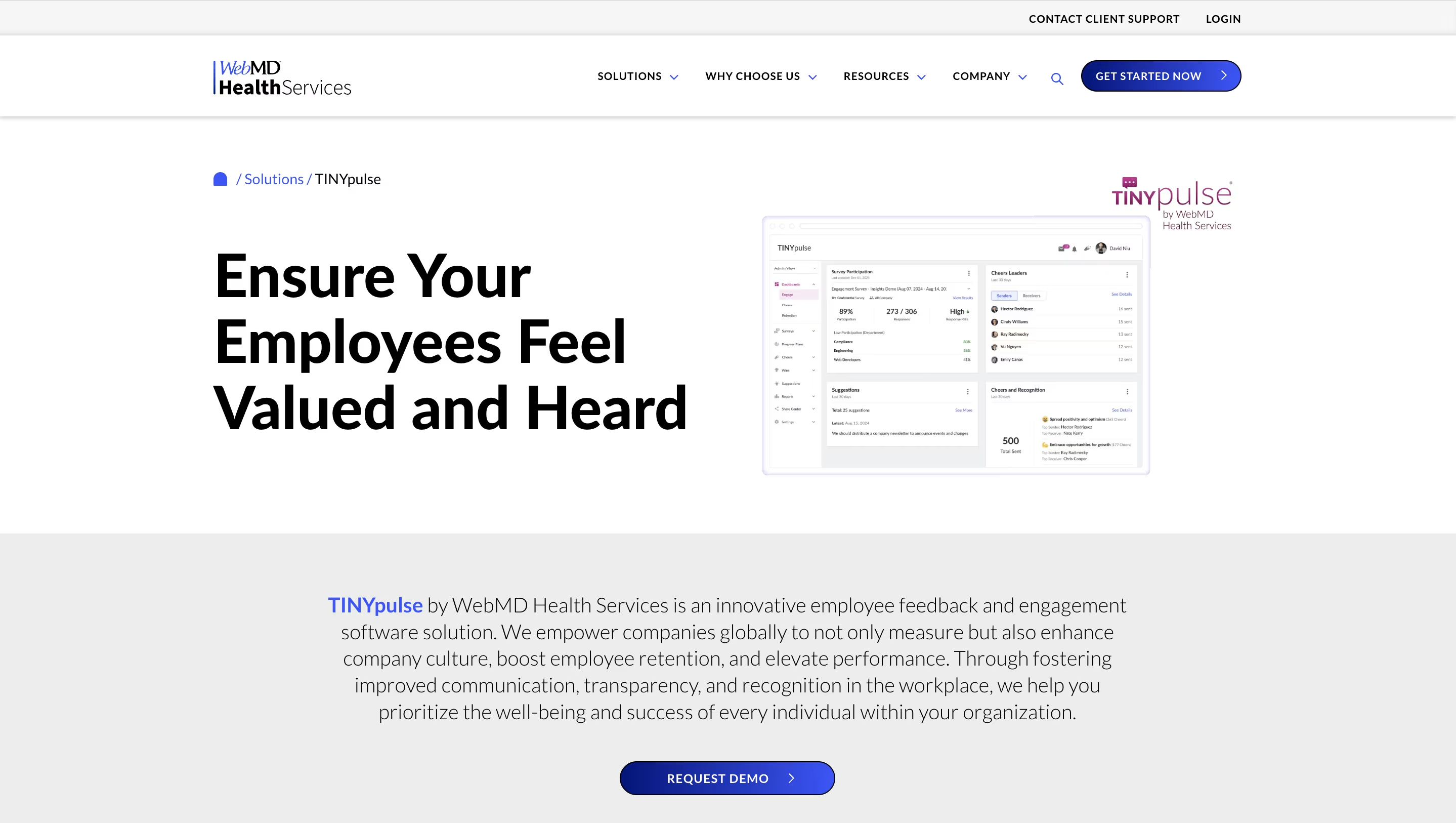
There's a version of the engagement problem that no amount of features can fix: employees who've stopped answering surveys at all.
TINYpulse is built for that moment. Short, frequent pulse surveys cut through survey fatigue and get more honest answers than a long quarterly survey ever will — especially once people have quietly checked out of longer formats.
It's not a full Culture Amp replacement on its own. No performance reviews. No OKR tracking. No 360 feedback. But for a company that just needs a focused listening and recognition tool that goes live in days and actually gets replies, it does exactly what it promises, without asking you to run a full platform to get there.
Core strengths:
- Short, frequent pulse surveys people can finish without friction
- Two-way, anonymous conversation so employees feel actually heard
- Peer recognition without HR needing to run it
- Sentiment trends tracked over time, without a lot of setup
Limitations:
- No performance management, 360 feedback, or goal tracking
- HR analytics are lighter than Culture Amp, ThriveSparrow, or Workleap
- Not enough for a company that needs a full engagement and performance platform
Feature snapshot: Engagement ✓ | Performance ✗ | Recognition ✓ | Goals ✗ | AI ✗
Pricing: Custom. Demo available.
Choose TINYpulse if you need a simple, low-friction listening tool and don't need performance or goal tracking alongside it.
Collecting feedback but not seeing real change? See how teams turn engagement data into action. Start free with ThriveSparrow →
8. Kudos — Best When Recognition Is Your Primary Gap
Type: Employee recognition and rewards platform
Recognition done badly is worse than no recognition at all. An automatic "great job!" alert that fires because a rule triggered — not because someone chose to say something real — doesn't build culture. It just teaches people to ignore notifications.
Kudos runs on the opposite idea. Recognition tied to real company values. Public walls that make appreciation visible and create real social proof. A points-and-rewards system that makes recognition feel tangible and easy to track over time.
McKinsey's State of Organizations 2026 Report found that 75% of companies struggle to build a high-performance culture, with 38% blaming disengaged employees as a top barrier. For companies where recognition — not surveys, not reviews — is the actual gap, a dedicated tool delivers more than a buried feature ever will. (See also: Kudos alternatives.)
Core strengths:
- Recognition tied to company values, not just logged effort
- Public recognition walls that create visibility and real peer motivation
- Points and rewards that make appreciation feel real
- Recognition tracking to see culture health trends over time
Limitations:
- No engagement survey tool — it's a pure recognition platform
- Needs to be paired with a separate engagement and performance tool
Feature snapshot: Engagement: limited | Performance ✗ | Recognition ✓ | Goals ✗ | AI ✗
Pricing: Custom. Demo available.
Choose Kudos if recognition is your main culture gap, and you want a tool built just for that — not a feature buried inside a bigger suite.
9. Engagedly — Best for SMBs That Want Performance + Learning in One Platform
Type: Performance management + engagement + learning platform
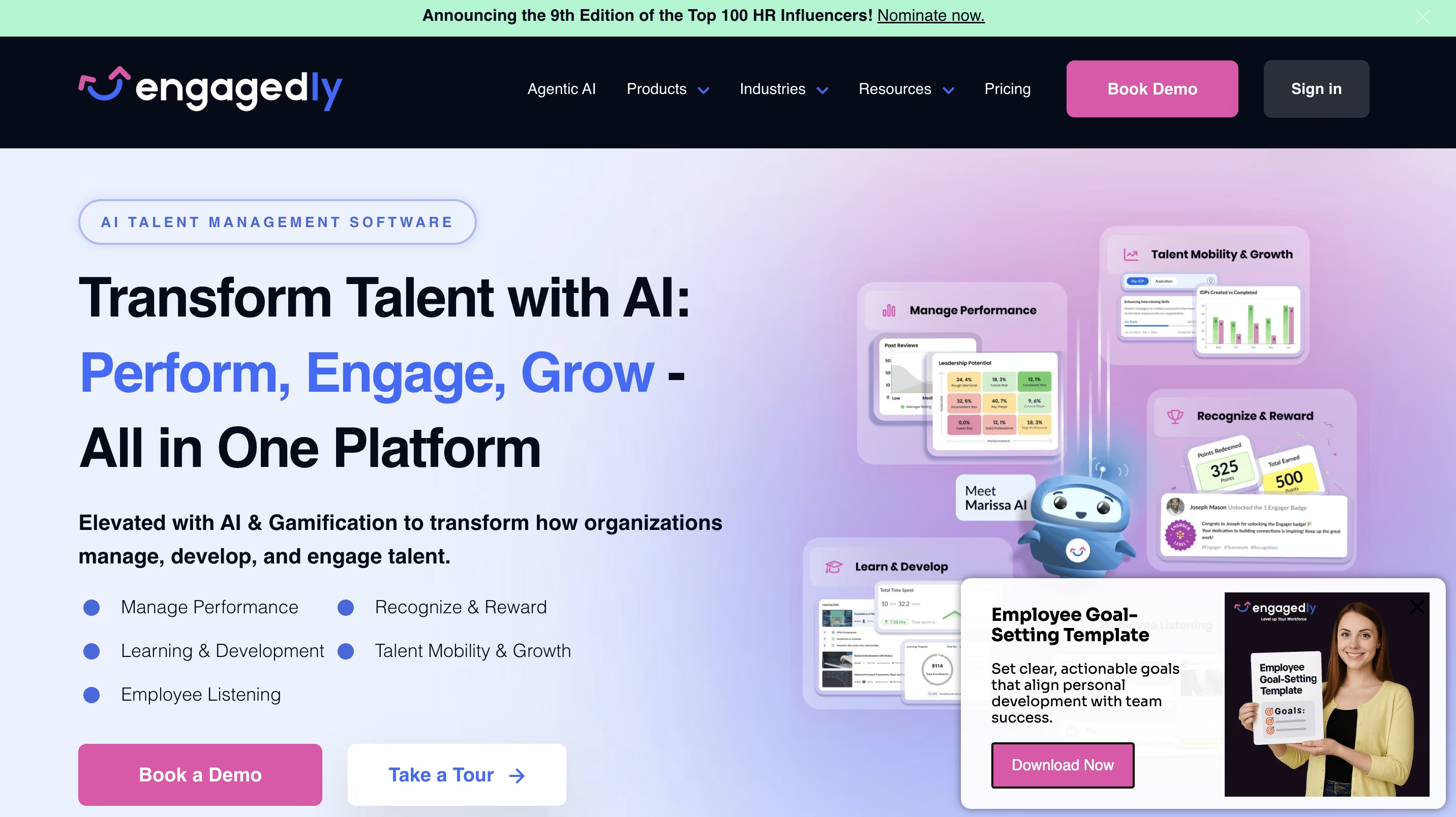
Engagedly makes a bet most engagement software won't: that performance, engagement, and learning belong together, and that smaller companies shouldn't have to pay enterprise prices to get all three.
It covers OKR tools, pulse surveys, performance reviews, and recognition in one place. The standout is the learning management piece, bundled right alongside the core tools at a price that works for growing companies. That combination is rare on this list.
The tradeoff is real: the interface is less polished than Culture Amp's or ThriveSparrow's, and the analytics don't go as deep. But for a company that genuinely needs performance, engagement, and learning without Culture Amp's price tag, Engagedly makes a solid case.
Core strengths:
- Pulse surveys, reviews, and learning in one connected workflow
- Two-way, ongoing feedback tools
- Game-like elements that boost how many people join surveys and reviews
- Goal tracking tied directly to performance and survey data
Limitations:
- Less polished interface than Culture Amp or ThriveSparrow
- Analytics are limited for complex reporting needs
- The learning module is an add-on, not part of base pricing
Feature snapshot: Engagement ✓ | Performance ✓ | 360 feedback ✓ | Recognition ✓ | Goals/OKRs ✓ | AI: limited
Pricing:
- Performance Suite: $9/member/month
- Rewards & Recognition: +$5/member/month add-on
- Growth & Learning: +$5/member/month add-on
- Demo available
Choose Engagedly if you're a smaller company that wants performance, engagement, and learning in one place, without Culture Amp's price tag.
Quick decision helper: If learning tools need to sit right next to performance and engagement → Engagedly. If your gap is narrower — just OKR tracking, not a full platform — see Weekdone below, or use ThriveSparrow's own goal tracking instead of running a separate OKR tool.
10. Weekdone — Best for OKR Alignment and Weekly Goal Visibility
Type: OKR tracking and weekly planning tool

Growing companies run into a specific problem Weekdone was built to fix: everyone is working hard, engagement scores look fine, but if you ask people how their daily work connects to company goals, you get a blank stare.
Weekdone closes that gap with clean, visual OKR tracking and a weekly planning rhythm simple enough that non-HR teams pick it up without hand-holding. It's not a Culture Amp replacement, and it never pretends to be. But paired with a real engagement platform, it closes the alignment gap most engagement tools don't even try to fix.
Core strengths:
- OKR tracking that flows from company to team to person, with a visual tree view
- A weekly planning rhythm that builds accountability without micromanaging
- Templates that keep goal tracking consistent across teams
Limitations:
- No engagement surveys, recognition, or 360 feedback
- Works best paired with an engagement tool, not on its own
Feature snapshot: Goals/OKRs ✓ | Engagement: limited | Performance: limited | Recognition ✗ | AI ✗
Pricing: Free for up to 3 users. $90/month (billed yearly) for 10 users. 14-day free trial.
Choose Weekdone if OKR alignment and weekly goal visibility are your main gap, and you're fine pairing it with a separate engagement tool.
11. CultureMonkey — Best for Flexible, Multi-Channel Survey Design
Type: Engagement survey and AI sentiment platform
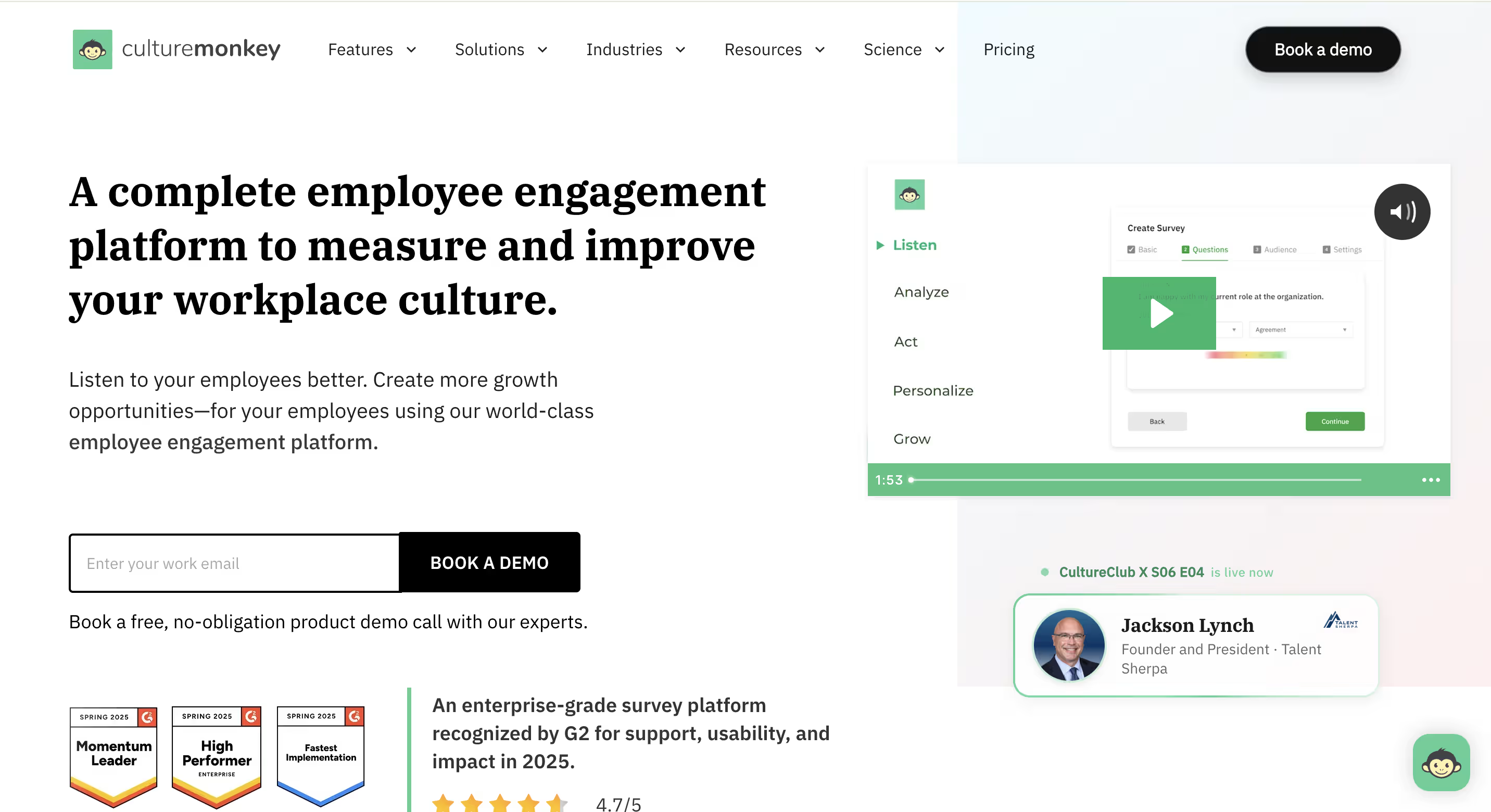
Sometimes the problem isn't that employees are disengaged. Sometimes your survey just isn't reaching them where they are — and the data you're using to make decisions has a hidden sample bias built in.
CultureMonkey is built to close that gap. It lets you design surveys for specific teams, departments, or career stages, and collect answers through email, web links, Slack, or mobile. For a company where low survey completion — not low engagement — is the real problem, this multi-channel setup changes how good your signal actually is.
No performance management, no goal tracking, no peer recognition. But the AI sentiment analysis is genuinely strong, surfacing culture patterns your team wouldn't catch from raw response data alone.
Core strengths:
- Custom surveys built for different teams and career stages
- Multi-channel collection that reaches people where they actually work
- Anonymous answers that meaningfully boost response rates
- AI sentiment analysis that finds workforce trends on its own
Limitations:
- No performance review, goals, or recognition module
- No published pricing — slows down early research
- Not a full standalone engagement and performance platform
Feature snapshot: Engagement ✓ | Performance ✗ | Recognition ✗ | Goals ✗ | AI ✓
Pricing: Custom. Demo available.
Choose CultureMonkey if flexible, multi-channel listening is your priority, and you already have separate tools covering performance and goals.
12. Deel — Best for Globally Distributed Teams Where Payroll Is the Real Problem
Type: Global HR operations and payroll platform
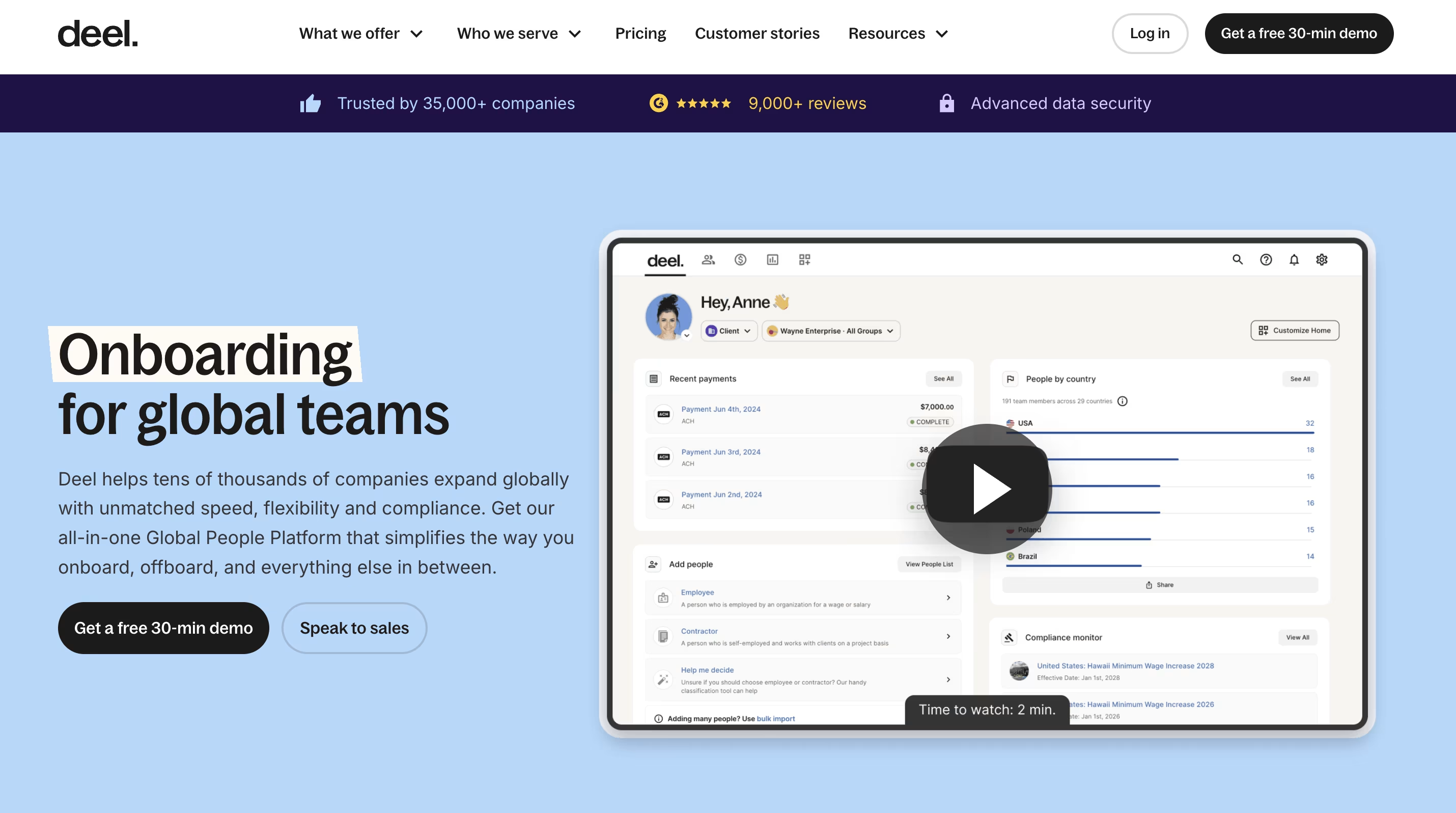
Most teams don't switch from Culture Amp to Deel. They add Deel when they're hiring across borders and suddenly realize international payroll, compliance, and contractor management are a full-time job — and none of their current tools handle it.
Deel is a global HR operations platform first. Engagement is a second thought. If admin work — not surveys or reviews — is the real bottleneck slowing your HR team down, Deel fixes the root problem. Just pair it with a real engagement platform for the people side.
Core strengths:
- International payroll and legal compliance across 150+ countries
- Automatic onboarding with compliance checks built in
- One dashboard for contractors and full-time staff
- Frees up HR time to focus on employee experience instead of admin
Limitations:
- Engagement features are basic — not a Culture Amp replacement
- No performance management, 360 feedback, or OKR tracking
Feature snapshot: Engagement: limited | Performance ✗ | Recognition ✗ | Goals ✗ | AI ✗
Pricing: Custom. Demo available.
Choose Deel if running a team spread across countries is your biggest operational challenge, and you'll pair it with a real engagement platform.
13. BambooHR — Best for SMBs That Need a Core HRIS Foundation First
Type: HRIS + basic performance management
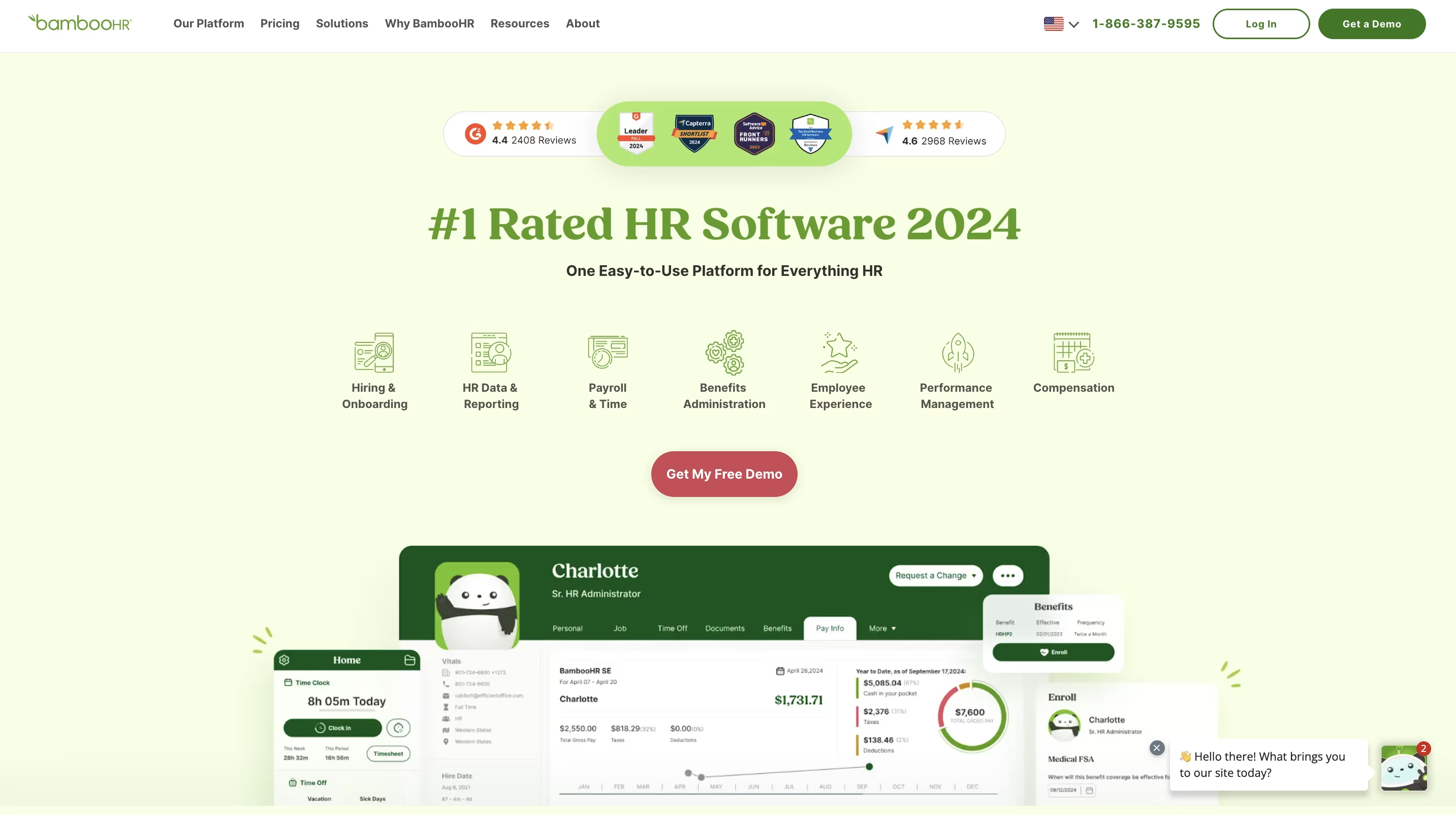
Before you can build a great engagement program, you need working HR systems in place. BambooHR is where teams start when the top priority is getting off spreadsheets, centralizing records, and making HR manageable for a small team.
Clean interface. Low training needed. Self-service that actually works. The engagement side is basic — no industry benchmarking, limited action planning. But for a team not yet ready for a dedicated engagement platform, BambooHR gives you a solid HR foundation with basic reviews built in. (See also: best HR software for small business.)
Core strengths:
- Centralized records, documents, and time-off tracking
- Automatic onboarding checklists that lower early turnover risk
- Self-service that meaningfully cuts down HR ticket volume
- Basic review cycles built into the platform
Limitations:
- Engagement data is minimal — not a standalone engagement platform
- No recognition, advanced OKR tracking, or AI tools
Feature snapshot: Engagement: limited | Performance ✓ | Recognition ✗ | Goals ✗ | AI ✗
Pricing: Custom. Demo available. Free trial available.
Choose BambooHR if you need a solid HR foundation with basic performance tools, and you're ready to add a dedicated engagement tool once that's in place.
14. Vantage Circle — Best When Rewards and Recognition Are Your Primary Culture Gap
Type: Employee rewards and recognition platform
Generic recognition doesn't move the needle. An automatic anniversary alert, a badge in a sidebar, a "kudos" button nobody uses after week two — none of that builds culture. It just creates the look of appreciation without the substance.
Vantage Circle is for companies whose current recognition tool is too thin to actually motivate anyone. The points system, global rewards catalog, and peer-to-peer recognition are built to make appreciation feel real, with a points system designed to keep reward value fair across countries.
It's not a standalone engagement platform. No surveys. No performance reviews. No goal tracking. It works best paired with an existing HR system or engagement tool.
Core strengths:
- Recognition tied to values that actually feels meaningful
- A global rewards catalog — gift cards, experiences, deals
- Automatic milestone recognition that cuts down HR admin work
- Recognition tracking to spot culture health trends
Feature snapshot: Engagement: limited | Performance ✗ | Recognition ✓ | Goals ✗ | AI ✗
Pricing: Custom. Demo available.
Choose Vantage Circle if rewards and recognition are your main culture gap, and you want a dedicated tool with a real global rewards system behind it.
15. Trakstar — Best for Connecting Recruiting and Performance in One Pipeline
Type: Talent acquisition + performance management platform

Hiring and onboarding usually live in one system. Growth and performance usually live in another. Culture Amp doesn't touch that handoff at all.
Trakstar connects those two steps. Teams move here when hiring and performance management need to live in one system — with data-driven hiring cutting time-to-fill, and early performance tracking spotting strong new hires before the 90-day mark. The growth plan that comes out of a review links back to the same skills that were checked during hiring. That link matters more than most companies realize.
No ongoing engagement survey tool. Most useful when hiring and performance management are both top priorities.
Core strengths:
- Structured hiring with team-based workflows
- Performance goals tied directly to growth plans from day one
- 360-degree feedback for accountability across the full review cycle
- Workforce data that flags performance gaps before they build up
Feature snapshot: Engagement ✗ | Performance ✓ | 360 feedback ✓ | Recognition ✗ | Goals ✓ | AI: limited
Pricing: Custom. Demo available.
Choose Trakstar if you need hiring and performance management connected in one pipeline, with a separate tool covering day-to-day engagement.
16. Workvivo — Best for Distributed and Deskless Workforces Where Connection Is the Problem
Type: Social intranet + internal communications + engagement platform
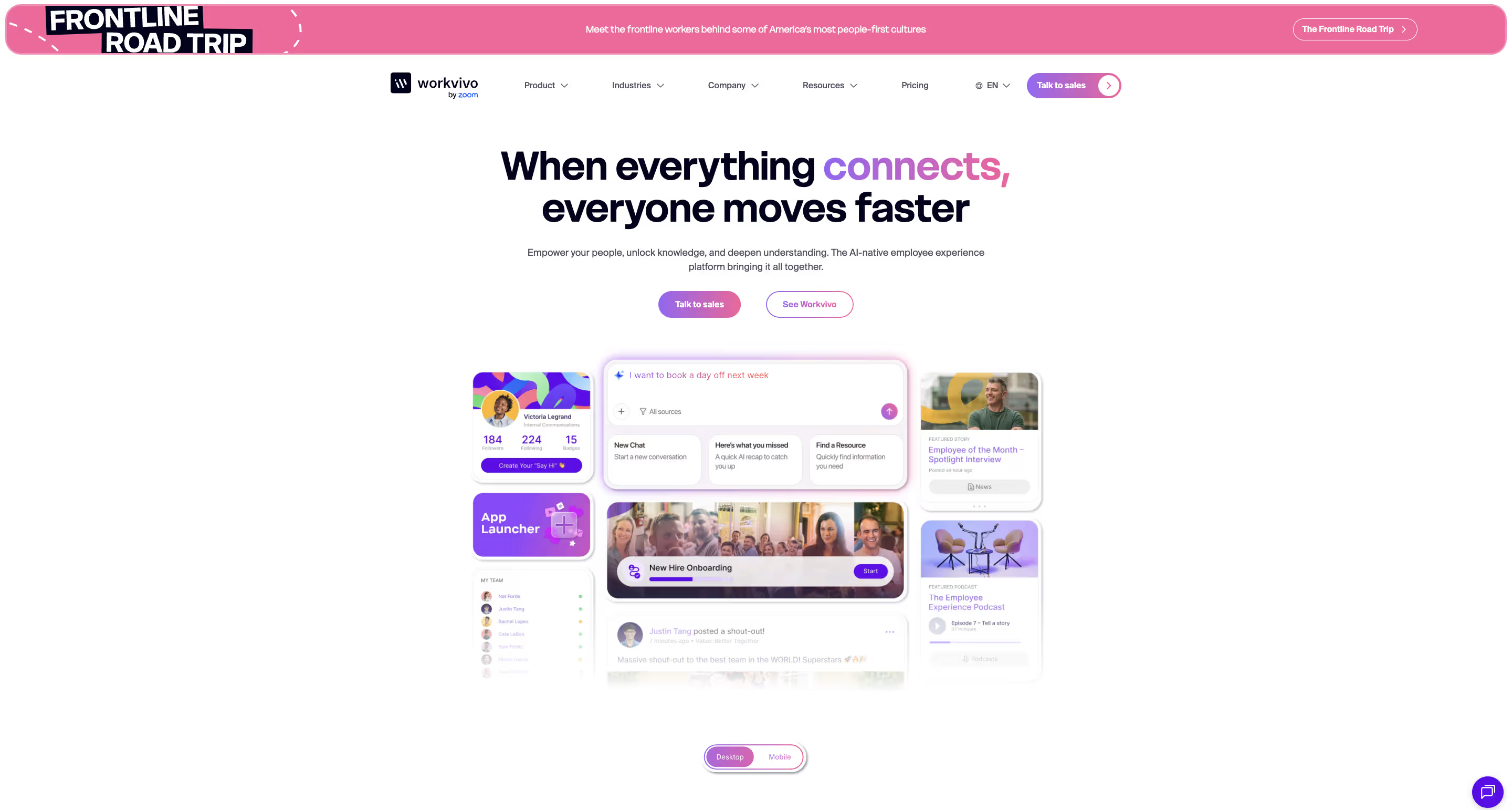
There's a version of the disconnection problem that surveys alone can't fix. You can survey a deskless workforce. You can measure how disconnected they feel. But if the tool you're using to reach them is one more app nobody opens on their own, that tells you something about the tool, not just the culture.
Workvivo is a social intranet first, with a mobile app built for workers who don't sit at a desk all day. Engagement and recognition are features inside a platform employees actually want to open daily — because it looks and feels like a social feed, not an HR system. For a spread-out or deskless workforce where disconnection shows up in daily life, not just survey scores, Workvivo builds the sense of community pure survey tools can't.
Note: Workvivo was bought by Zoom in 2023. Pricing now runs through Zoom's enterprise sales team.
Core strengths:
- A company feed employees actually visit daily — not just during onboarding
- A public, social-feed style for recognition that creates real visibility
- Pulse surveys built right into the app people already check
- Events and community tools for spread-out teams that need connection, not just data
Limitations:
- No performance review or goal tracking module
- Engagement data is lighter than dedicated survey tools
- Works best for spread-out or deskless teams — less suited to fully desk-based ones
Feature snapshot: Engagement ✓ | Performance ✗ | Recognition ✓ | Goals ✗ | AI ✗
Pricing: Custom (through Zoom enterprise sales). Demo available.
Choose Workvivo if internal communication and community matter as much as survey data, and your team is mostly spread out or deskless.
17. Leena AI — Best for Large Organizations Buried Under HR Service Requests
Type: AI-powered HR service delivery and automation platform
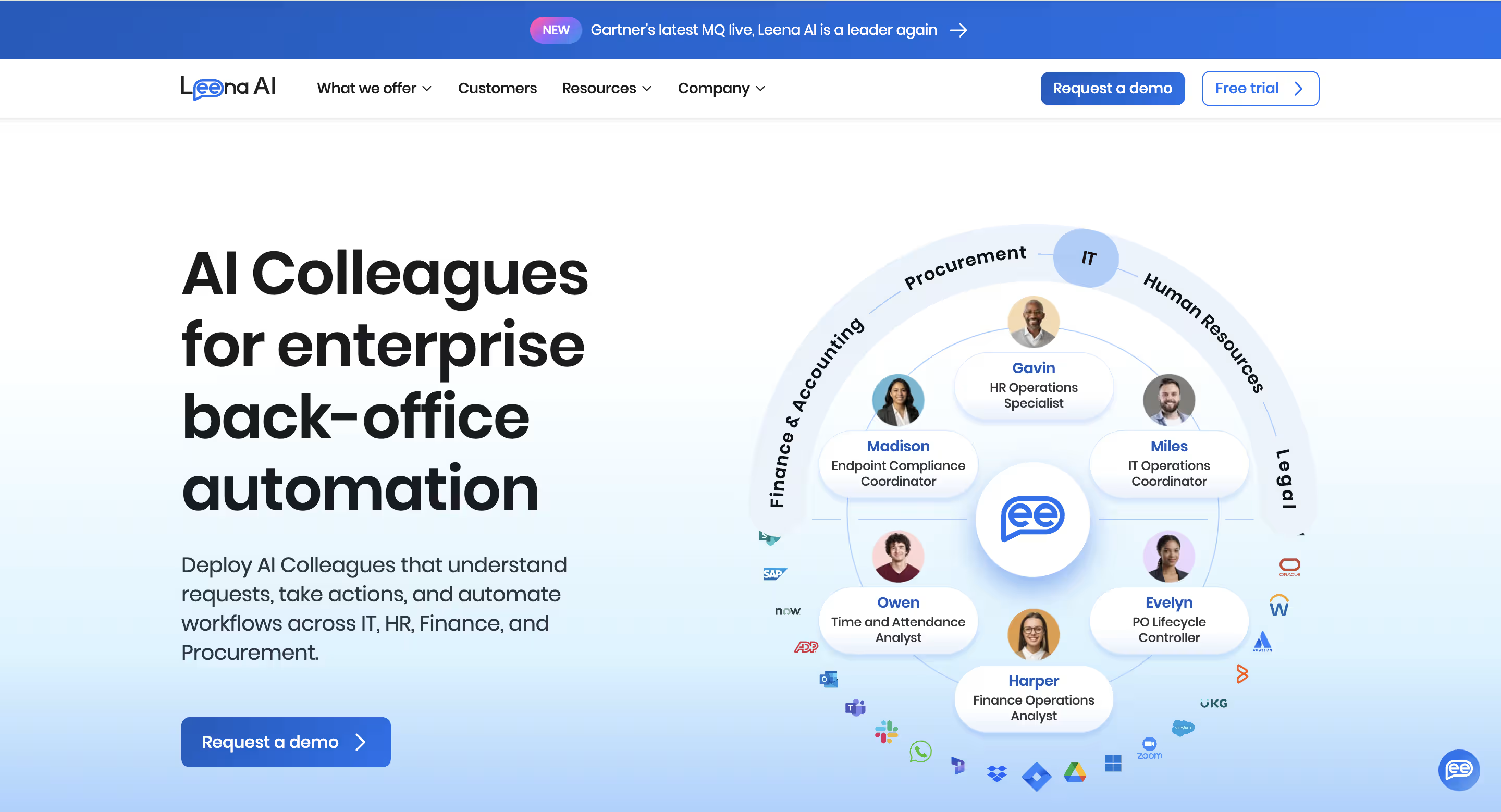
Leena AI solves a problem Culture Amp doesn't touch: sometimes your engagement program isn't working because your HR team is too buried in leave requests and policy questions to actually run it.
When HR's time is the real bottleneck — not the tool — Leena AI frees up that time by handling the repeat, routine work through AI chat. Employees get answers around the clock. HR gets their time back. And the engagement work that actually needs human judgment gets the attention it deserves.
No survey tool. No performance reviews. No recognition or OKR tracking. It also takes real setup work to connect. It pays off most for big companies with high volumes of HR requests — and a People team that's currently drowning.
Core strengths:
- 24/7 AI chat for employee questions — no HR needed each time
- Automatic handling of routine tasks: leave requests, expenses, policy lookups
- Personalized journeys by role, department, and time at the company
- Automatic ticket routing that cuts down resolution time
Feature snapshot: Engagement: limited | Performance ✗ | Recognition ✗ | Goals ✗ | AI ✓
Pricing: Custom. Demo available.
Choose Leena AI if your HR team is buried in service requests and needs AI to handle the volume — so your people can focus on the engagement and performance work that actually matters.
What Switching From Culture Amp Actually Involves
This is the part most comparison guides skip — and it's usually the real deciding factor. Before you sign anything, here are the exact questions HR teams ask once they're seriously weighing a Culture Amp replacement, answered directly:
1. Can I move over my Culture Amp surveys?
Not automatically. No tool on this list can import Culture Amp's survey templates directly. You can export your question sets as a reference and rebuild them in the new platform. Most teams treat this as a chance to cut questions nobody was acting on anyway, instead of copying everything over exactly. (If you're starting from scratch, these survey templates are a faster starting point than a blank page.)
2. Can I move over my review history?
Only partly. Culture Amp lets you export review records, but the actual scores usually don't carry over as live, searchable data in a new system. They land as fixed reference files. Treat past cycles as an archive, not as data your new platform will analyze alongside future reviews.
3. Does my HRIS connection carry over?
No — you'll need to reconnect your HR system (BambooHR, Workday, ADP, and so on) to the new platform on its own. Check that your new vendor has a real connection built for your specific HR system before signing. If it doesn't, you're stuck with manual file updates, which is a real ongoing cost.
4. What about single sign-on (SSO)?
This has to be set up again, not carried over. Confirm SSO support before rollout — losing single sign-on mid-switch is one of the fastest ways to kill adoption, since employees hit a login wall on day one.
5. What happens to past feedback — 1-on-1 notes, peer comments, ongoing feedback threads?
Same as review history: you can export it as a fixed file, but it won't load into the new system live. If ongoing feedback matters to specific teams, export it before your Culture Amp contract ends. Most export windows close soon after cancellation.
6. Can I move over active goals or OKRs?
Not directly. You'll need to re-enter active goals by hand, or bulk-import them with a CSV file, in the new platform. There's no automatic sync from Culture Amp to any other tool, so plan for a short window where goals exist in both systems while you switch.
7. What about calibration?
This is the hardest thing to carry over. Calibration sessions and the changes made during them are tied to Culture Amp's own scoring model and manager-review process. If your company runs formal calibration, plan to rebuild that process in the new tool rather than import past outcomes. This is a bigger job with Lattice or Leapsome, which both support calibration, than with lighter tools that skip it entirely.
Here's the fuller checklist, beyond those specific questions:
One practical note: if keeping historical performance data continuous is a must-have for your team, weigh that now. It's one of the few things no tool on this list — including Culture Amp itself, if you were switching to it — carries over cleanly.
Which Tool Is Right for You? The Fast-Filter Decision
Most teams switching from Culture Amp aren't looking for a bigger platform. They're looking for one that actually fits. Start with what you truly need — not what the flashiest demo can theoretically do.
- Most complete alternative at the clearest price → ThriveSparrow. Engagement, performance, recognition, goals, and AI insights — one platform, starting at $2/user/month, with a 14-day free trial.
- Performance management depth is the priority → Lattice or Leapsome. Both reward the extra setup time with genuinely deep tools.
- Manager adoption is the real gap → 15Five. Built for the manager, not the HR report.
- Enterprise-grade survey infrastructure → Qualtrics. The only tool here that truly beats Culture Amp on data depth.
- Recognition is the main culture gap → Kudos or Vantage Circle. Dedicated tools, not a buried feature.
- Slack-first adoption is the goal → Workleap. Feedback where work already happens.
- Global HR operations layer → Deel. Payroll and compliance first.
- HRIS foundation first → BambooHR. A solid base — add engagement separately.
Try ThriveSparrow free for 14 days. No credit card needed. Your first survey goes live in minutes.
Frequently Asked Questions
1. What are the best Culture Amp alternatives in 2026?
It depends on what you need most. ThriveSparrow covers the widest set of tools — engagement, performance, recognition, goals, and AI analytics — at the clearest price, starting at $2/user/month with a 14-day free trial. Lattice and Leapsome are the strongest picks if deep performance management is your top need. 15Five wins when manager adoption is the real problem. Qualtrics is the only real option for big companies that need to go beyond Culture Amp's data depth.
2. Why do companies switch from Culture Amp?
The most common reasons: pricing starts around $4,500/year with no public rate (so you need a full sales process just to check it), setup takes weeks with extra admin work to keep it running, and many features are overkill for teams under 200 people. The top complaint is the gap between the data you get and the action you can take — the insight is there, but it's not always clear what to do next. Fixed survey formats and rating scales that don't match how some teams run reviews come up a lot too.
3. Which Culture Amp alternative is best for small and mid-sized businesses?
ThriveSparrow and 15Five are the most natural fits for smaller and mid-sized companies — both offer real depth without the setup weight or enterprise pricing. ThriveSparrow is the stronger pick if you need engagement, performance, and recognition in one place. 15Five is the stronger pick if manager check-ins and AI coaching are the main gap.
4. What is the most affordable Culture Amp pricing alternative?
ThriveSparrow starts at $2/user/month (Kudos module) and covers engagement, performance, recognition, and goals — making it the most affordable all-in-one option with clear pricing. Culture Amp's minimum yearly cost runs about $4,500, no matter your team size. ThriveSparrow has no minimum yearly spend and includes a 14-day free trial.
5. Which tools are easier to use than Culture Amp?
15Five, ThriveSparrow, and Workleap are consistently easier to pick up — all three are built so HR teams and managers can use them without special training or admin support. ThriveSparrow's setup usually takes days; Culture Amp's takes weeks. 15Five's check-ins take five minutes per manager per week. Workleap runs inside Slack and Teams, so there's no separate login at all.
6. Are there true all-in-one platforms that replace Culture Amp?
Yes. ThriveSparrow and Leapsome both cover surveys, performance management, 360 feedback, recognition, and goal tracking in one platform. Leapsome adds learning paths. ThriveSparrow adds Kudos recognition and a global rewards catalog. Both are real full replacements for the right team size and budget — ThriveSparrow for teams up to about 2,000 employees at clear pricing, and Leapsome for companies willing to take on a more complex setup.
7. What should you look for in a Culture Amp alternative?
Start with three questions: Does it cover what you actually need — surveys, reviews, recognition, goals, or all four? Can your team really pick it up without months of onboarding? And does the price make sense for your headcount today, and where you're headed? The best tool is the one your HR team will actually keep using — not the one with the flashiest feature list in a demo.
8. Culture Amp vs. ThriveSparrow: how do they compare?
Culture Amp has stronger benchmarking and a bigger historical dataset from its People Science team. ThriveSparrow covers similar depth across engagement, performance, recognition, and goals — with AI insights built in, clear per-module pricing, setup measured in days, and a 14-day free trial. Culture Amp needs a sales call before you can even check pricing. ThriveSparrow doesn't. For teams under about 2,000 employees, ThriveSparrow gives you more value per dollar and far less setup friction.
9. How long does it actually take to switch from Culture Amp to a new platform?
It depends on the tool, not just the data. Lightweight platforms like ThriveSparrow or TINYpulse can go live within days, since setup doesn't take heavy configuration. Leapsome states a clear 3–6 week setup time. Lattice doesn't publish a timeline, but reviewers describe its setup as similarly complex to Culture Amp's — plan for a multi-week rollout, not a same-week one. Moving your data — exporting Culture Amp records and re-entering active goals — usually takes less time than setting up the new platform itself.
10. What happens to my Culture Amp survey history and benchmarking data if I switch?
Export your raw survey data and review records from Culture Amp before your contract ends — some export windows close soon after cancellation. That said, Culture Amp's benchmarks are built from its own dataset, so they don't carry over to a new platform no matter when you export. Most teams treat their first 1–2 survey cycles on the new platform as a fresh starting point, rather than trying to keep a running historical comparison.
11. Is Culture Amp vs. Lattice a close comparison, or are they solving different problems?
Close, but not the same — Culture Amp leads on engagement and survey science, Lattice leads on performance management and OKRs, and both take similar setup work. For the full breakdown, including where G2's own review data disagrees with itself, see our dedicated Culture Amp vs. Lattice comparison.
12. How does Culture Amp compare to 15Five specifically?
They're built around different bets — Culture Amp around survey science and benchmarking, 15Five around weekly manager coaching. One counterintuitive finding worth knowing: G2 reviewer data rates Culture Amp as easier to set up than 15Five, despite 15Five's lighter reputation. See our full Culture Amp vs. 15Five comparison for the complete breakdown.


