












Employee engagement worldwide fell to 20% in 2025, the lowest since 2020, according to Gallup's State of the Global Workplace report. Gallup estimates this costs the world economy $10 trillion a year in lost productivity.
That's usually when HR teams start comparing survey tools. But most vendor websites look the same: a dashboard, some logos, a "book a demo" button. What matters is harder to see: does the tool explain why people are unhappy, not just that they are? Does it help managers act? Is today's price the price you'll pay next year?
This guide compares 17 tools to measure employee engagement, including ThriveSparrow, which we make, judged by the same rules as everyone else.
The best employee engagement survey tools in 2026 are ThriveSparrow (best for growing and frontline teams), Culture Amp (best for large companies wanting deep benchmarking), and Qualtrics EmployeeXM (best for flexible survey design).
What Is Employee Engagement?
Employee engagement is how connected, motivated, and committed an employee feels toward their work, their team, and their company. It's different from job satisfaction, which just measures whether someone is content with their job. An engaged employee can be satisfied and still not be engaged, and the reverse happens too: someone can be mildly frustrated with a specific policy but still deeply invested in the company's success.
Engagement usually gets measured across a handful of specific drivers, not as one single feeling:
- Recognition — does the person feel their work is noticed and valued
- Growth — do they see a real path to develop or advance
- Manager trust — do they trust the person they report to
- Alignment — do they understand how their work connects to the company's goals
- Belonging — do they feel like part of the team, not just an employee number
Companies track engagement because it's tied to real outcomes: employees who score low on these drivers are more likely to leave, less productive while they're there, and more likely to spread that dissatisfaction to teammates. That's the entire reason the tools in this guide exist.
How Do You Actually Measure Employee Engagement?
The short answer: with a recurring survey, scored on a simple agreement scale (like "strongly disagree" to "strongly agree"), where the questions map back to the drivers above. You run it once a year for a full baseline, and more often (monthly or quarterly) as a shorter "pulse" check in between.
The tools below differ mainly in three places: how often you can survey without wearing people out, whether the platform can tell you which driver is actually dragging your score down instead of just showing an average, and whether a manager gets a next step or just a number to stare at.
How We Picked These 17 Tools
We looked at each company's own pricing page, their reviews on G2 and Capterra, and what they say about their own features. We compared them on five things:
- Is the price public? A real number beats "talk to sales."
- Does it explain the "why"? A score alone is just a number.
- Does it help you act? Some tools stop at a report. Good ones turn results into a task someone owns.
- Can everyone answer, even without a desk job? Many tools only work by email, which leaves out a lot of workers.
- How many people left a review? A 4.8 from 10 people means less than a 4.5 from 2,000 people.
If you just need something simple like Google Forms, you probably don't need a dedicated tool like the ones below.
All 16 Tools Compared
Prices are listed in USD. Some regionally focused vendors quote local currency directly, so confirm during your first call if that affects your budget.
Which Vendor Fits Your Situation
The table above tells you who's out there. This part narrows it down to who's actually worth a demo call, based on the two filters that matter most: how big you are, and how your workforce actually works.
Best Vendors by Company Size
Under 200 employees: ThriveSparrow, Officevibe, or 15Five. All three launch in one to two weeks without a dedicated HR ops team. Skip Culture Amp, Qualtrics, and Perceptyx here.
200 to 2,000 employees: ThriveSparrow, Quantum Workplace, or Lattice, depending on whether you also want performance reviews in the same system.
2,000-plus employees: Culture Amp for benchmarking, Qualtrics if you have in-house survey design skill, and Perceptyx for large global listening programs. Budget two to six months for implementation.
Best Vendors for Frontline and Deskless Teams
Roughly 80% of the global workforce does not sit at a desk, according to Emergence Capital's research on the deskless workforce. Email-only survey tools are built for the minority of most workforces, not the majority.
For frontline or deskless teams, ThriveSparrow, Workday Peakon, or Microsoft Viva Glint support QR code surveys, texts, or kiosk mode, so employees can respond without a company email address.
Take Dümmen Orange. The global agricultural company used ThriveSparrow's QR-based, visual surveys to reach farm workers who couldn't read or write in their own language, people email surveys had simply left out.
If most of your team doesn't sit at a desk, this filter matters more than company size does. Try ThriveSparrow free for 14 days, no credit card needed.
.svg)
The 16 Tools
1. ThriveSparrow
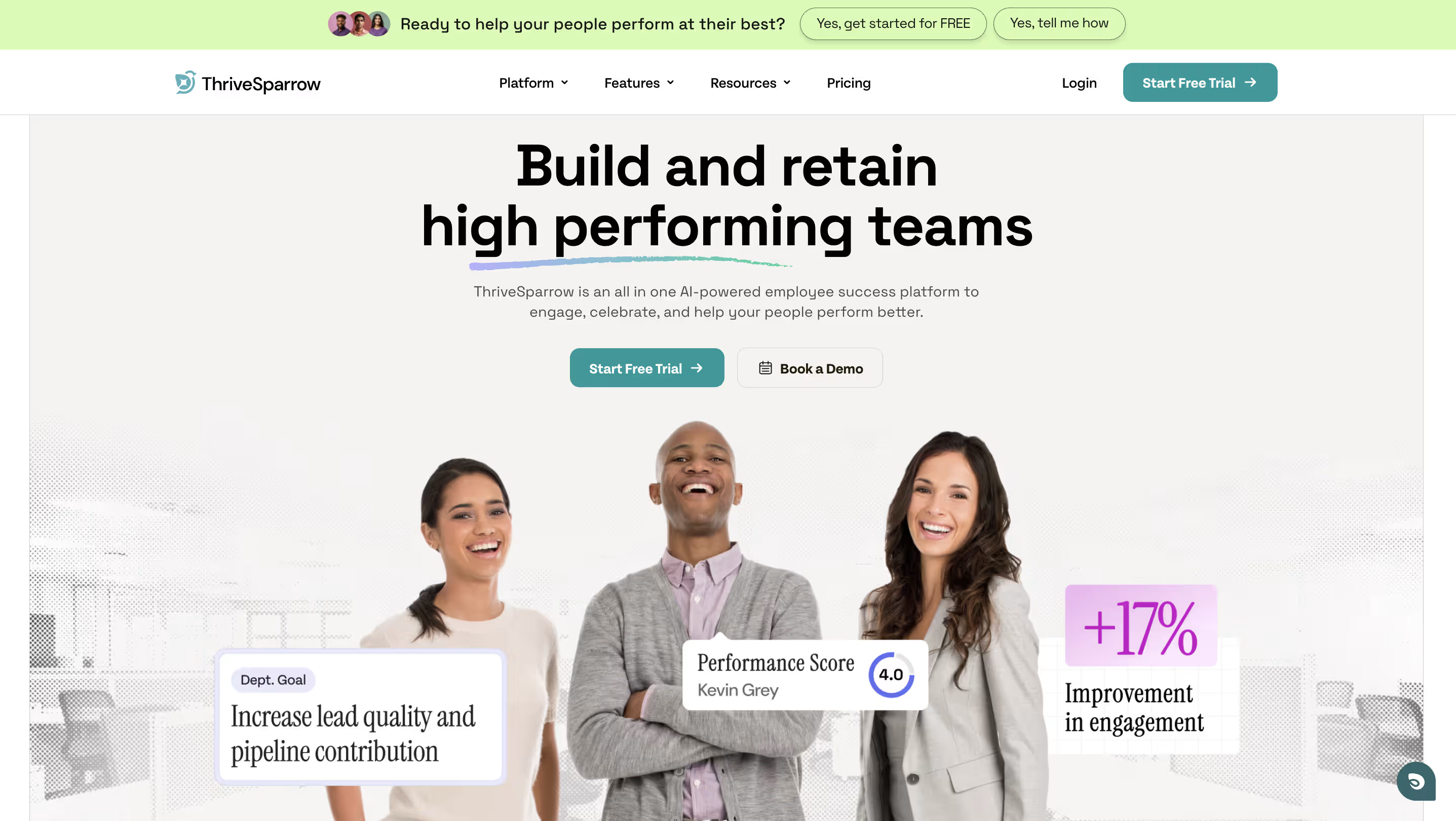
What it is: ThriveSparrow is an employee engagement platform built for growing companies, with a strong focus on reaching workers who don't sit at a desk. It combines surveys, AI-powered comment analysis, and built-in action plans, so results turn into a task someone owns instead of just a report.
Good for: Companies with 50 to 2,000 employees, especially with some frontline or deskless staff.
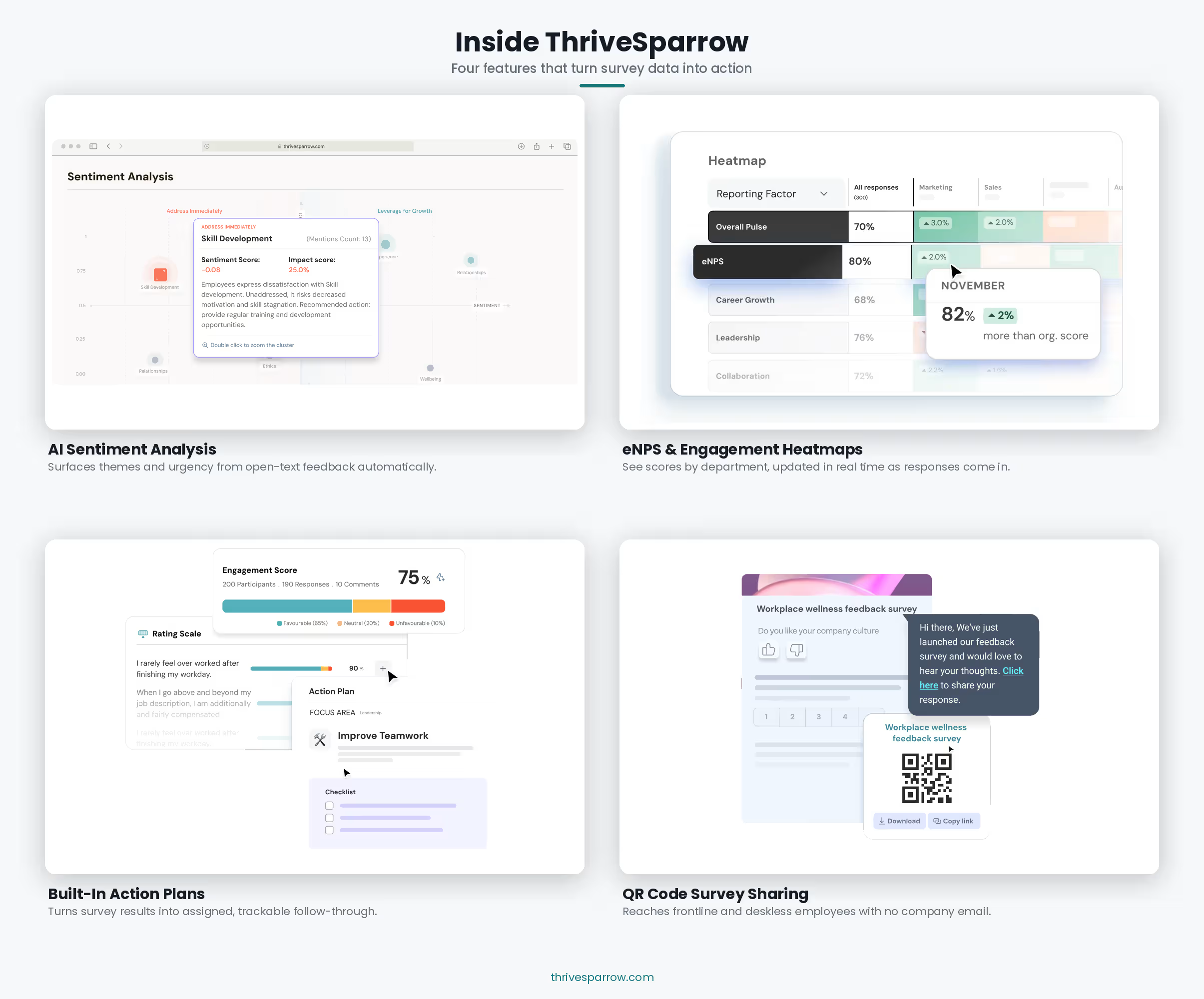
How the AI works, in plain terms: When an employee writes a comment like "I don't feel like my work gets noticed," most survey tools just store that text. ThriveSparrow's AI feature, called Infer AI, reads it, sorts it by topic (recognition, workload, management, and so on), and by tone (positive, negative, or neutral).
It does this for every comment, so instead of reading hundreds of answers one by one, you get a summary like "40 people mentioned feeling unrecognized this month, up from 25 last month." It also flags answers that look rushed or copy-pasted, so a lazy one-word response doesn't get weighted the same as a thoughtful one. This doesn't replace reading real feedback yourself, but it saves hours of manual sorting and catches patterns a person might miss.
Other things it does well:
- Employees can answer by scanning a QR code, so factory or warehouse workers without a company email can still respond
- Surveys go out in the employee's own language automatically
- Results show up as a heatmap by team, updated as answers come in
- Tracks eNPS (how likely people are to recommend working at your company) against your own past scores
What's good:
- Turns feedback into an actual task, not just a chart
- Fast to set up, usually one to two weeks
- Actually reaches workers without desks or company emails
What's not so good:
- No payroll or full HR system built in; it's just engagement, recognition, and reviews
- Bigger, more complex setups may need extra help from support
Analytics and integrations:
Department- and team-level heatmaps update in real time as responses come in, rather than requiring a manual export. Integrations include Slack, for survey delivery and reminders inside channels people already use, plus common HRIS tools for employee-data sync. Worth checking directly if you need a specific system we haven't listed here.
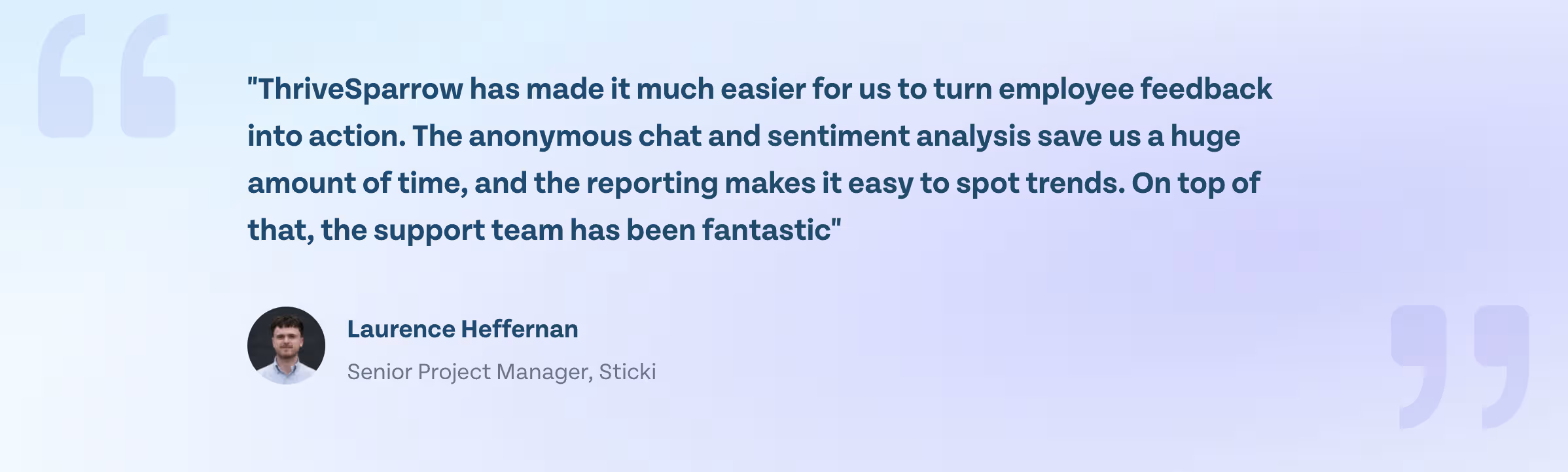
One example: Sticki, an Australian creator-marketing agency, was spending 6–7 hours per survey manually compiling trends and building leadership decks. After switching to ThriveSparrow, that dropped to roughly an hour, and their eNPS rose 11 points to 84.62%.
Pricing:
Free trial: 14 days, no credit card needed.
Reviews: 4.3 out of 5 on G2.
Start your free 14-day trial, no credit card required.
If speed and simplicity matter more to you than deep analytics, these next two are worth a look before anything heavier.
2. Officevibe by Workleap
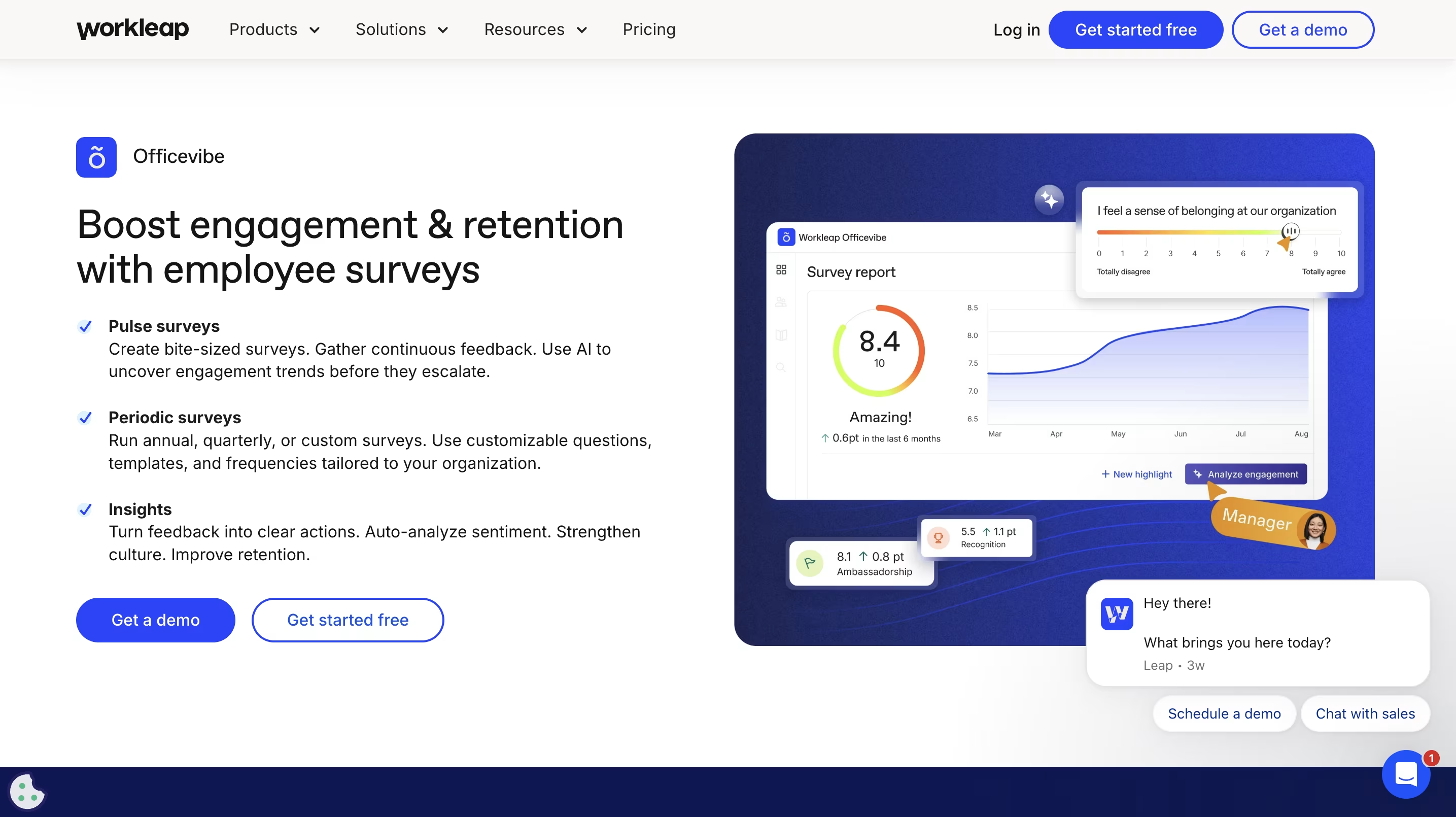
What it is: Officevibe is a simple pulse-survey tool made by Workleap, built for small teams that want something running today with almost no setup. It's closer to a lightweight check-in tool than a full engagement platform.
Good for: Small teams, under 200 people, who want the simplest possible setup.
What's good:
- The fastest tool on this list to get running
- Free for up to 10 people, so you can try it at no cost
- Very simple to use, almost nothing to learn
What's not so good:
- No charts that break results down by team or department
- No AI reading of open-text comments
- If a score drops, you have to figure out what to do about it yourself
Price: Free for up to 10 users. Paid plans start at $3.50 per person per month.
Free trial: No time limit on the free plan; paid features require signing up.
Reviews: 4.3 out of 5 on G2.
Not a good fit if: you have workers without desks or company email, or you want the tool to suggest what to fix. Our Officevibe alternatives page lists tools with more depth at a similar price.
3. 15Five
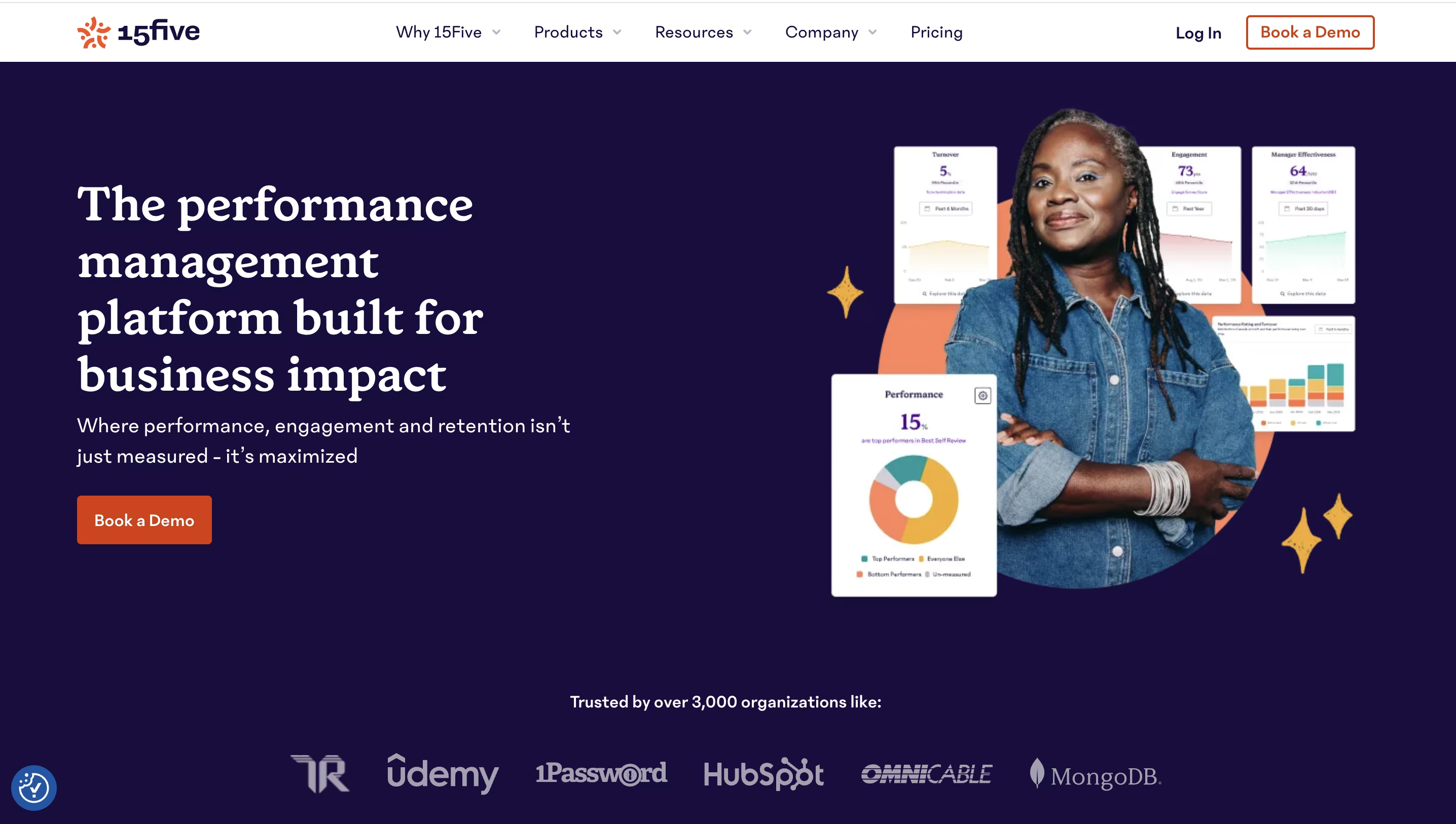
What it is: 15Five is a manager-and-employee check-in tool that treats engagement as an ongoing weekly conversation rather than a once-a-year survey. Occasional engagement surveys sit on top of that weekly rhythm.
Good for: Teams that want engagement built around a weekly conversation between managers and employees.
What's good:
- Builds a weekly habit of feedback instead of once-a-year surveys
- Comes with useful advice for managers, not just raw scores
- Good fit if you already want to improve manager-employee conversations
What's not so good:
- Not built to show a company-wide heatmap; it's more about individual conversations
- Not the strongest pick if you mainly want one big yearly survey with deep analysis
- Full pricing feels steep at the top tier
Price: Starts at $4 per user per month. The full package with performance reviews costs up to $16 per user per month.
Free trial: Not published; please contact sales for current terms.
Reviews: 4.6 out of 5 on G2.
Not a good fit if: you want a single, organization-wide engagement score with detailed team breakdowns.
4. Microsoft Viva Glint
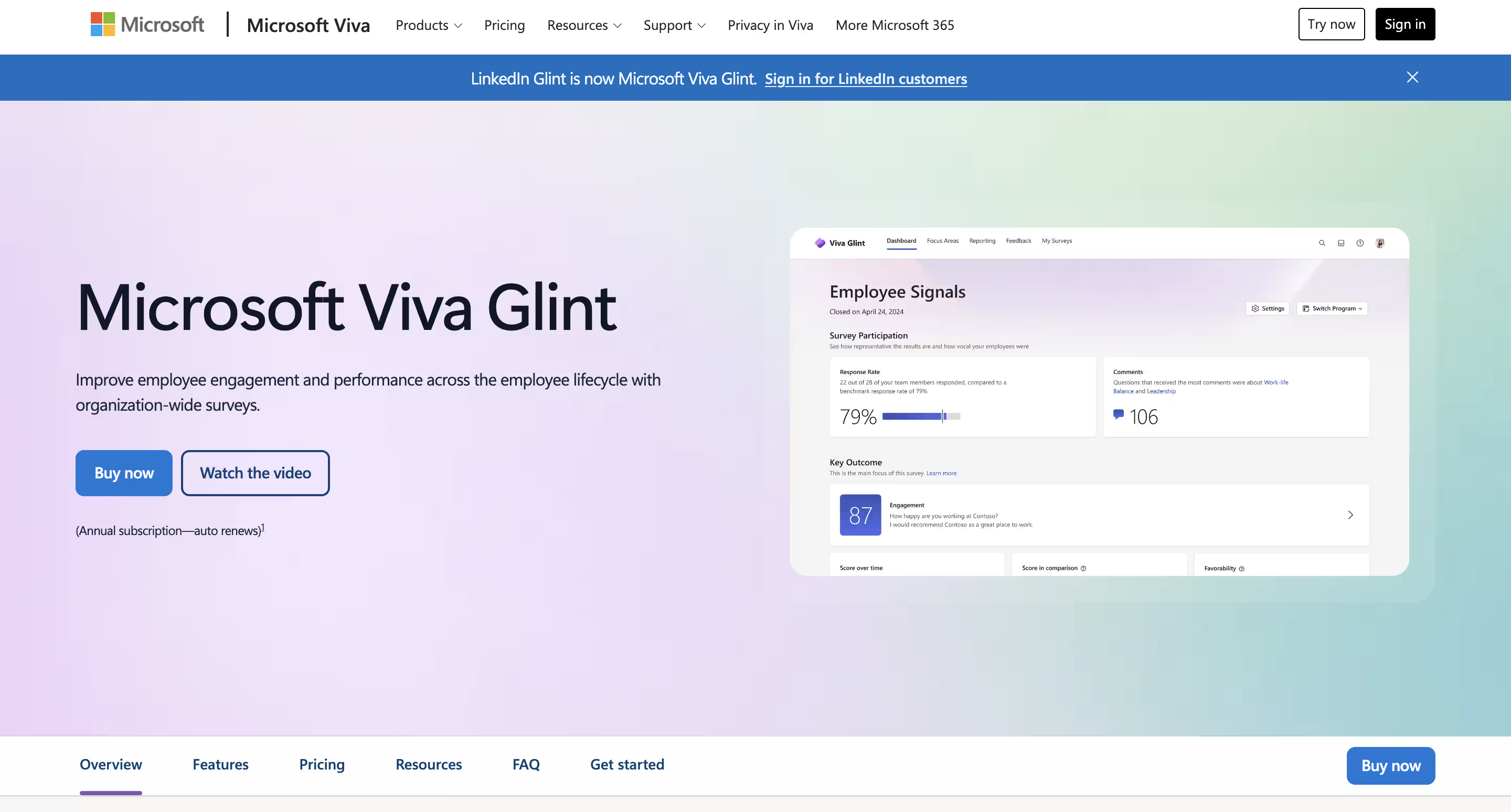
What it is: Viva Glint is Microsoft's engagement survey tool, built to live entirely inside Microsoft Teams. Its main selling point is that employees never leave the tools they already use to answer a survey.
Good for: Companies that already run their entire workplace on Microsoft 365.
What's good:
- No extra login for employees, which usually means more people respond
- Fits naturally if your company already lives inside Microsoft's tools
- Strong security, inherited from Microsoft's existing systems
What's not so good:
- Not much use if your company doesn't run on Microsoft 365
- Setting it up reportedly takes real technical effort
- Less flexible survey design than a dedicated survey company
Price: Usually bundled into a Microsoft Viva Suite license. Please contact your Microsoft representative for current pricing.
Free trial: Depends on your existing Microsoft agreement.
Reviews: 4.6 out of 5 on G2.
Not a good fit if: your company isn't built around Microsoft 365.
5. Quantum Workplace
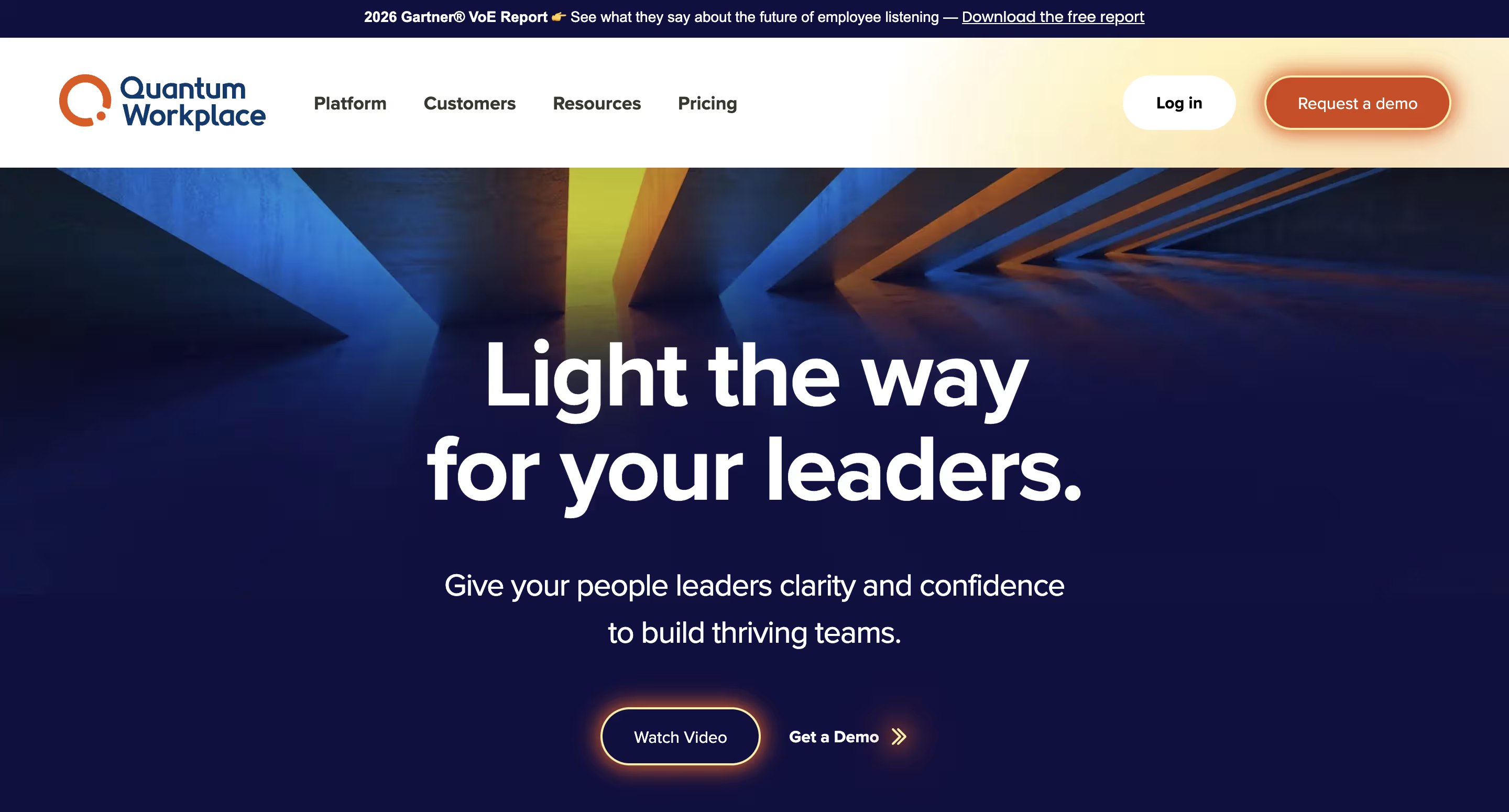
What it is: Quantum Workplace is an engagement survey platform built around comparing your company to thousands of others, using a scoring model it's refined for roughly 20 years through its "Best Places to Work" program.
Good for: Mid-size companies that care a lot about how they compare to similar organizations.
What's good:
- Genuinely strong at showing how your company compares to others like it
- The scoring model is well-tested, so you're not guessing what to ask employees
- A solid middle ground between a simple pulse tool and a huge enterprise system
What's not so good:
- Some users say the interface feels older compared to newer tools
- Less customization of the analysis than bigger enterprise platforms
- No public pricing; every quote starts with a sales call
Price: Please contact sales; pricing is based on company size.
Free trial: Not published; please contact sales for current terms.
Reviews: 4.3 out of 5 on G2, around 4.6 out of 5 on Capterra (check their listing for the current number).
Not a good fit if: you're under 200 employees, or want a very modern, self-serve interface above everything else. Comparing it against a faster, cheaper option? ThriveSparrow launches in one to two weeks with published pricing, versus Quantum Workplace's typical one-to-two-month setup and sales-only quotes.
6. Lattice

What it is: Lattice is a people-management platform where engagement surveys sit alongside performance reviews, goals, and 1-on-1 meetings, so everything about an employee lives in one dashboard.
Good for: Companies that want engagement surveys and performance reviews in the same tool.
What's good:
- Everything lives in one place, so managers aren't switching between tools
- The interface is well-liked and easy for managers to pick up
- Lots of public reviews, so it's easy to check other people's experience
What's not so good:
- The survey part itself isn't as deep as a tool built only for surveys
- Costs add up fast since engagement, performance, and other features are priced separately
- Not the top pick if surveys are your main need rather than a bonus feature
Price: Performance and goals start at $11 per person per month. Engagement adds $4 per person per month, billed yearly.
Free trial: Not published; please contact sales for current terms.
Reviews: 4.7 out of 5 on G2, around 4.5 out of 5 on Capterra.
Not a good fit if: engagement is your main goal rather than a nice extra. See our full ThriveSparrow vs. Lattice comparison.
7. Leapsome
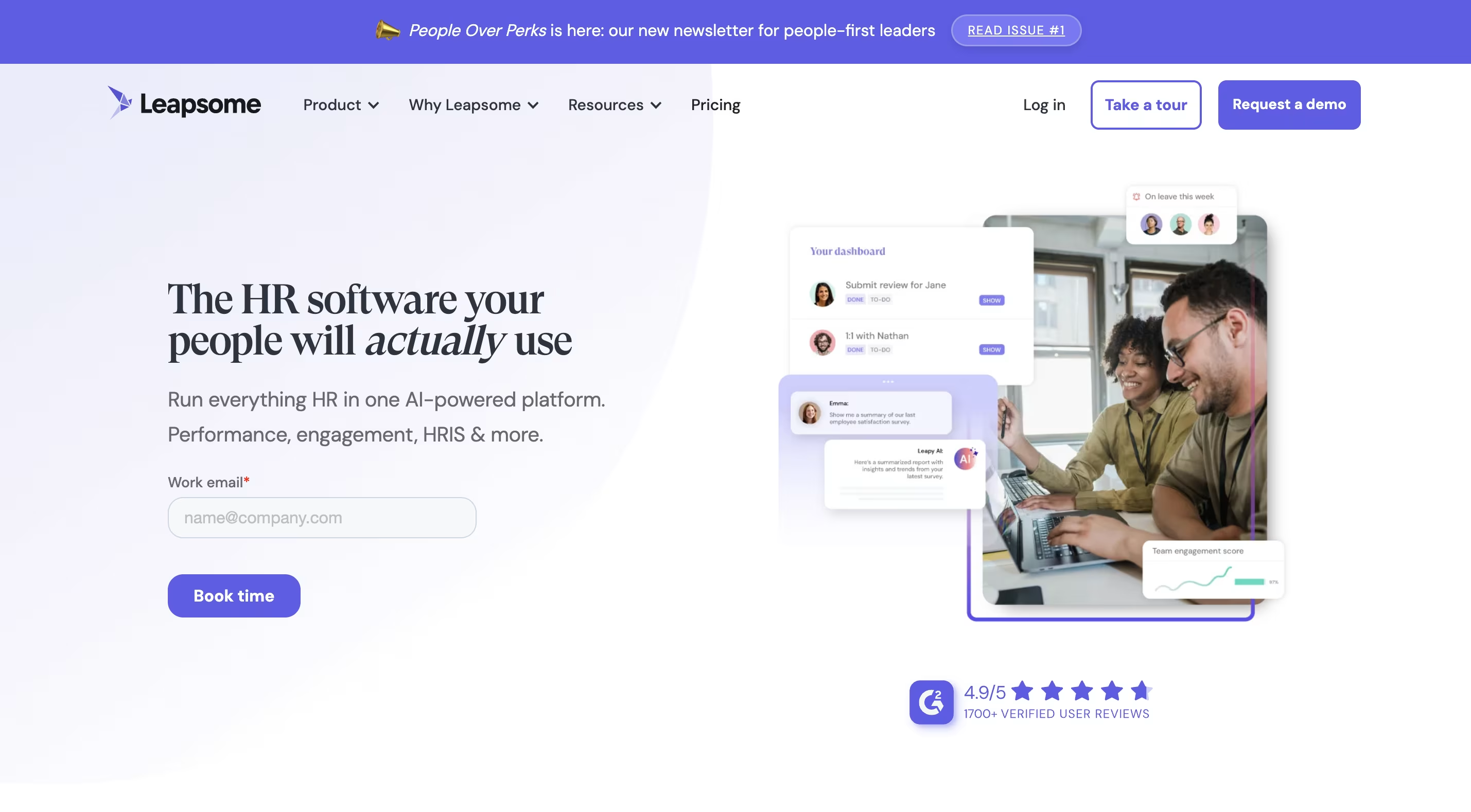
What it is: Leapsome is a European HR platform combining engagement surveys, performance reviews, goals, and training, built with strict European data-privacy rules (GDPR) in mind from the start.
Good for: Companies in Europe, especially Germany, the UK, or the Nordics, that need strong data-privacy compliance.
What's good:
- Real GDPR compliance built in, not just a checkbox claim
- Combines a lot of HR tools in one place, so you're not paying for five separate systems
- Well-researched, tested survey questions instead of ones written from scratch
What's not so good:
- US-based teams may find the survey tool secondary to the bigger HR suite here
- Some features are still being built out
- Takes some time to learn given how many features are packed in
Price: Please contact sales; pricing depends on company size and which modules you use.
Free trial: 14 days, no credit card needed.
Reviews: 4.8 out of 5 on G2, 4.6 out of 5 on Capterra.
Not a good fit if: you're US-based and want a standalone survey tool. See ThriveSparrow vs. Leapsome.
8. Rippling
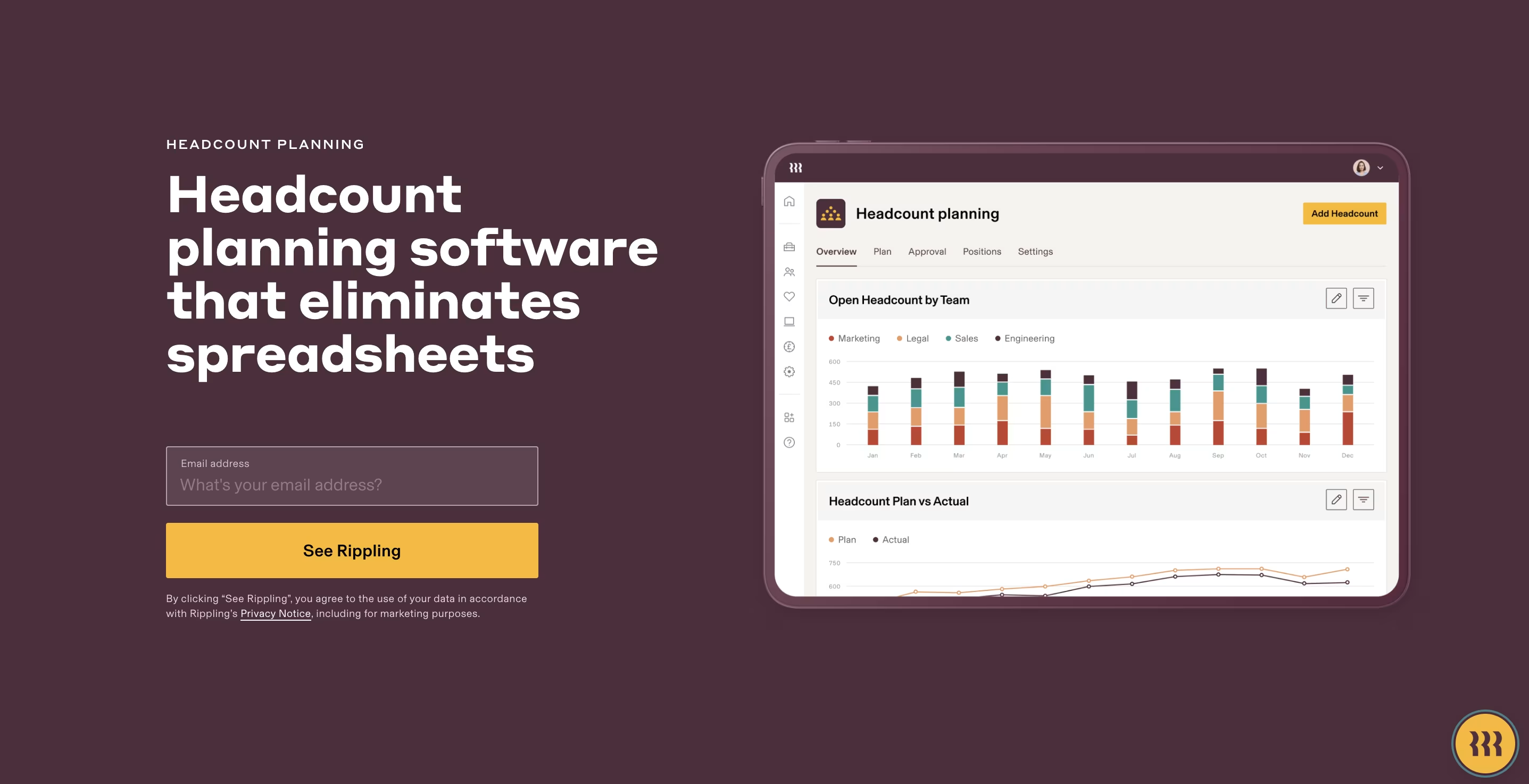
What it is: Rippling is mainly a payroll and HR system, with a survey tool built on top of the same employee data it already stores. It's less a dedicated survey company and more a survey feature inside a bigger HR platform.
Good for: Companies already using Rippling for payroll and HR.
What's good:
- One less tool to manage if you're already using Rippling
- You can mix survey answers with any HR data you already have, like pay level or job title
- Surveys can trigger automatically from HR events, like sending an exit survey the day someone resigns
What's not so good:
- No heatmaps and no AI reading of comments
- Survey features are much lighter than a tool built just for engagement
- Not worth switching HR systems for; only makes sense if you're already a Rippling customer
Price: Please contact sales; pricing is part of your Rippling plan.
Free trial: Please contact sales for current terms.
Reviews: Around 4.8 out of 5 on G2 and 4.9 out of 5 on Capterra for Rippling overall (no separate listing just for the survey feature).
Not a good fit if: you don't already use Rippling for payroll and HR. Looking for a lighter, dedicated engagement tool instead? ThriveSparrow and Officevibe both offer published, self-serve pricing without requiring a broader HRIS switch.
9. CultureMonkey
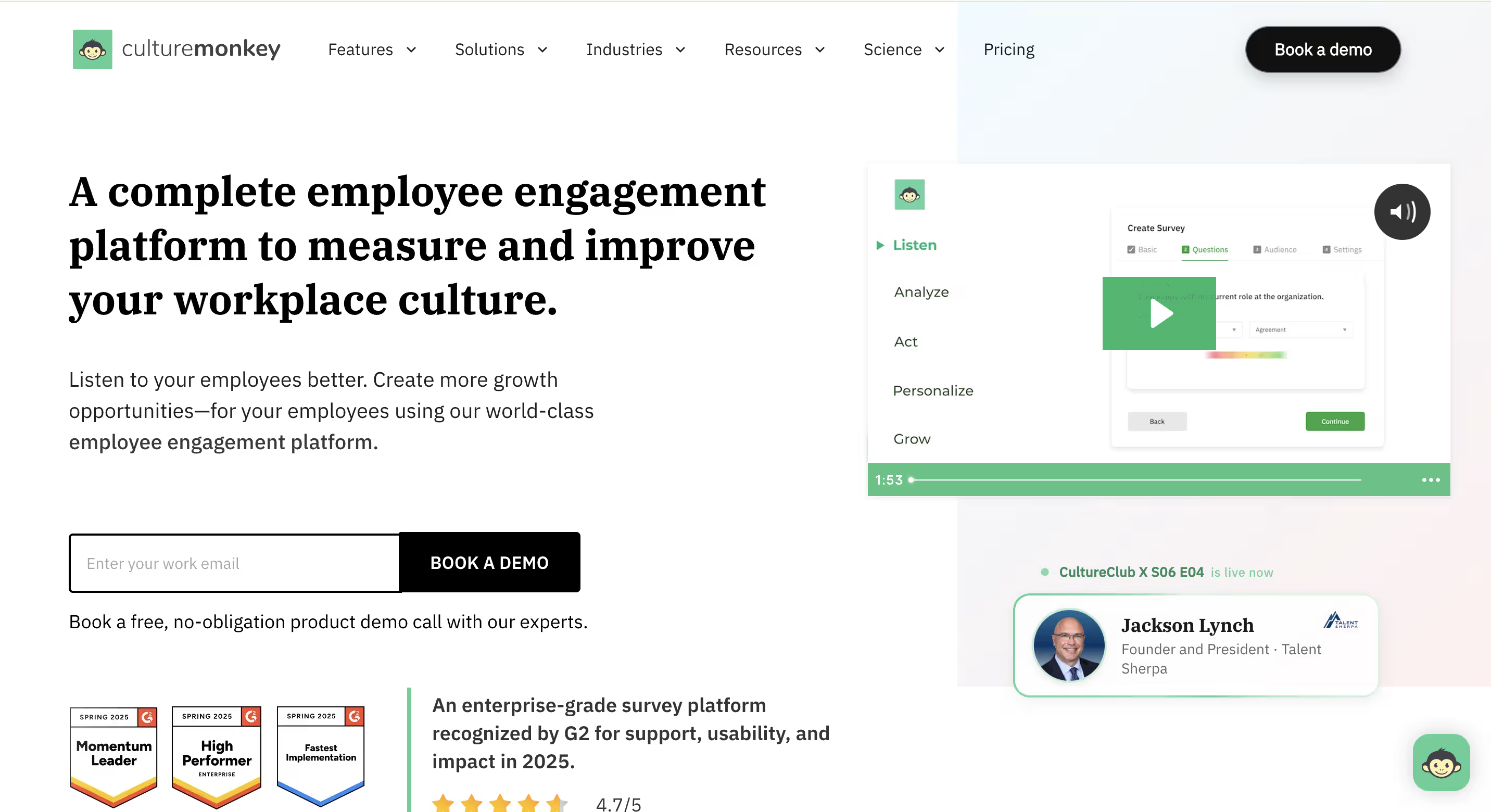
What it is: CultureMonkey is an engagement survey tool built specifically for reaching workers who don't sit at a desk, using QR codes, WhatsApp, and text messages instead of relying only on email.
Good for: Companies with teams spread across Asia-Pacific, or anywhere with a lot of frontline workers.
What's good:
- Probably the best tool on this list for reaching workers who don't sit at a desk
- Strong privacy controls, like hiding written comments from certain managers, which helps people feel safe being honest
- Sends surveys in each person's own language automatically
What's not so good:
- No public pricing; you'll need to talk to sales for any number
- No performance review or goal-setting tools built in
- Less well known outside Asia-Pacific, so fewer reviews from other regions
Price: Please contact sales.
Free trial: Please contact sales for current terms.
Reviews: 4.7 out of 5 on G2.
Not a good fit if: you're mostly US or Europe-based and want deep benchmarking, or want performance reviews in the same tool.
10. BambooHR
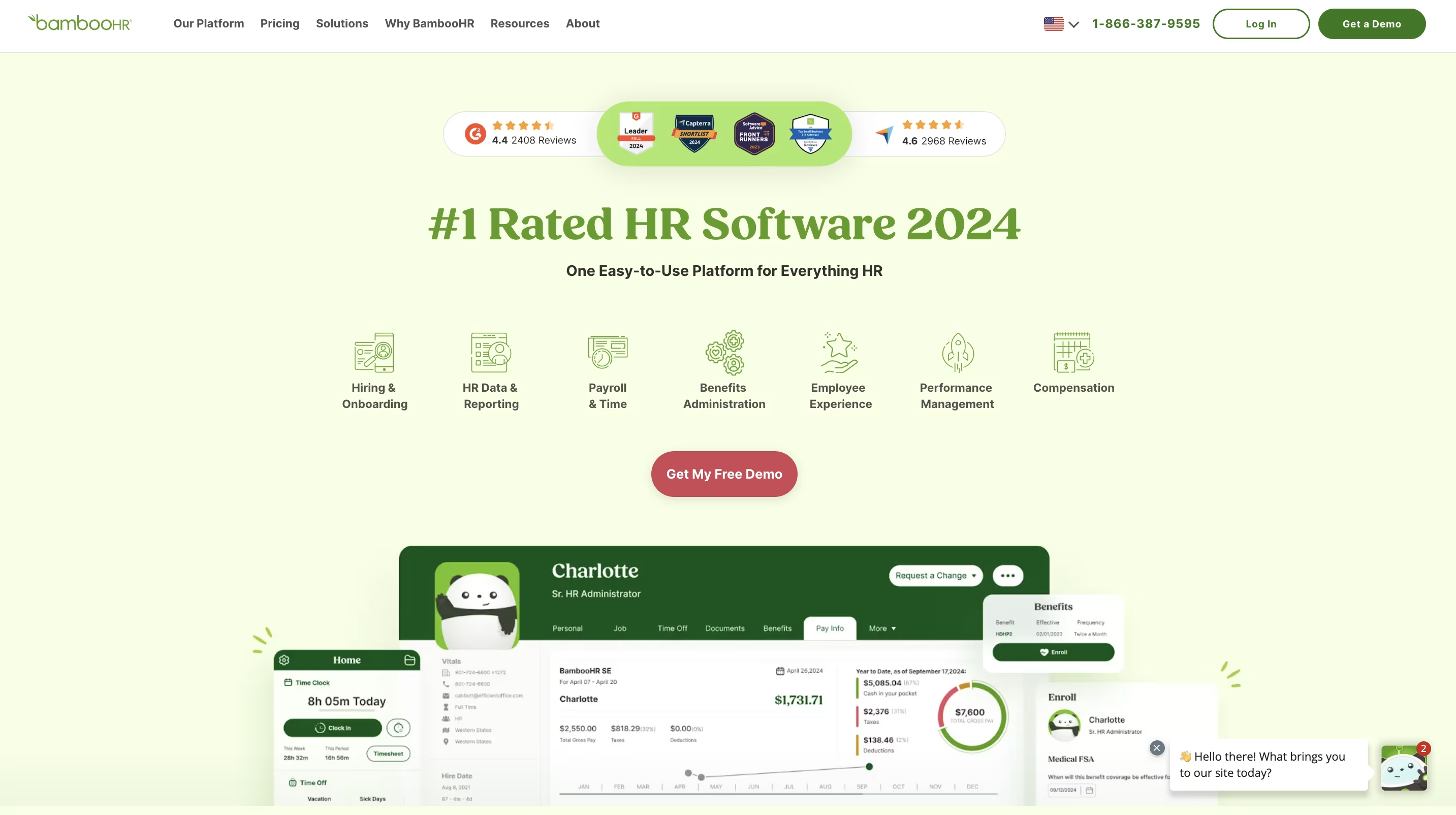
What it is: BambooHR is a small-business HR system with a built-in engagement feature that scores employee satisfaction and uses AI to summarize the reasons behind that score.
Good for: Small businesses already using BambooHR as their main HR system.
What's good:
- Consistently praised across thousands of reviews for its clean, intuitive interface, this isn't a minor perk, it's the single most-cited reason companies stick with it
- Works with data you already have in BambooHR, no extra setup
- Combines a score with a plain-English reason, not just a number
What's not so good:
- G2 reviewers specifically flag configuration challenges when your workflow doesn't match BambooHR's defaults, meaning the engagement feature works well out of the box but resists customization if your process is unusual
- No heatmaps and no built-in way to plan next steps
- Feels like an add-on to your HR system, not a full engagement program
Price: Please contact sales; pricing is part of your BambooHR plan.
Free trial: Check if it's included in your BambooHR trial.
Reviews: 4.4 out of 5 on G2 (5,700+ reviews, one of the largest review bases of any vendor on this list), around 4.6 out of 5 on Capterra.
Not a good fit if: engagement is a real priority for you, not just a bonus feature on your HR system.
11. Culture Amp
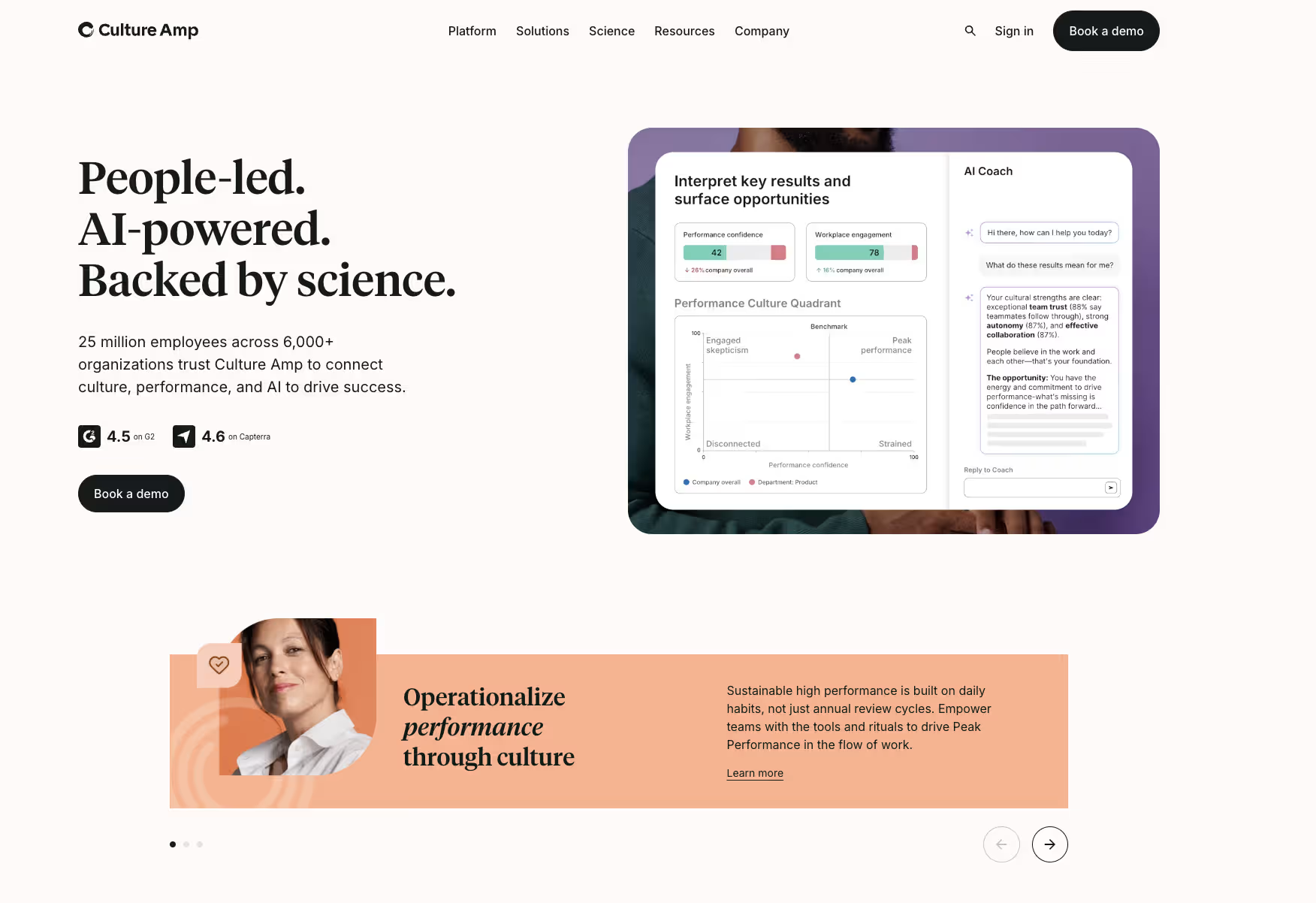
What it is: Culture Amp is a research-driven engagement platform built by an in-house people science team, best known for comparing your results against a huge global database of other companies' scores.
Good for: Large companies (2,000+ employees) that want strong comparison data.
What's good:
- The deepest, most trusted comparison data on this list
- Lots of guides and training material beyond just the software itself
- Can grow into performance reviews and employee development later
What's not so good:
- No public pricing; expect a sales process
- Some users say reports feel rigid when you want a very specific view of the data
- Not built with much focus on reaching workers without desks
Price: Please contact sales.
Free trial: Demo available; no self-serve trial.
Reviews: 4.5 out of 5 on G2, around 4.6 out of 5 on Capterra.
Not a good fit if: you're under 500 employees; both the cost and the two-to-four-month setup will feel like too much.
12. Qualtrics EmployeeXM
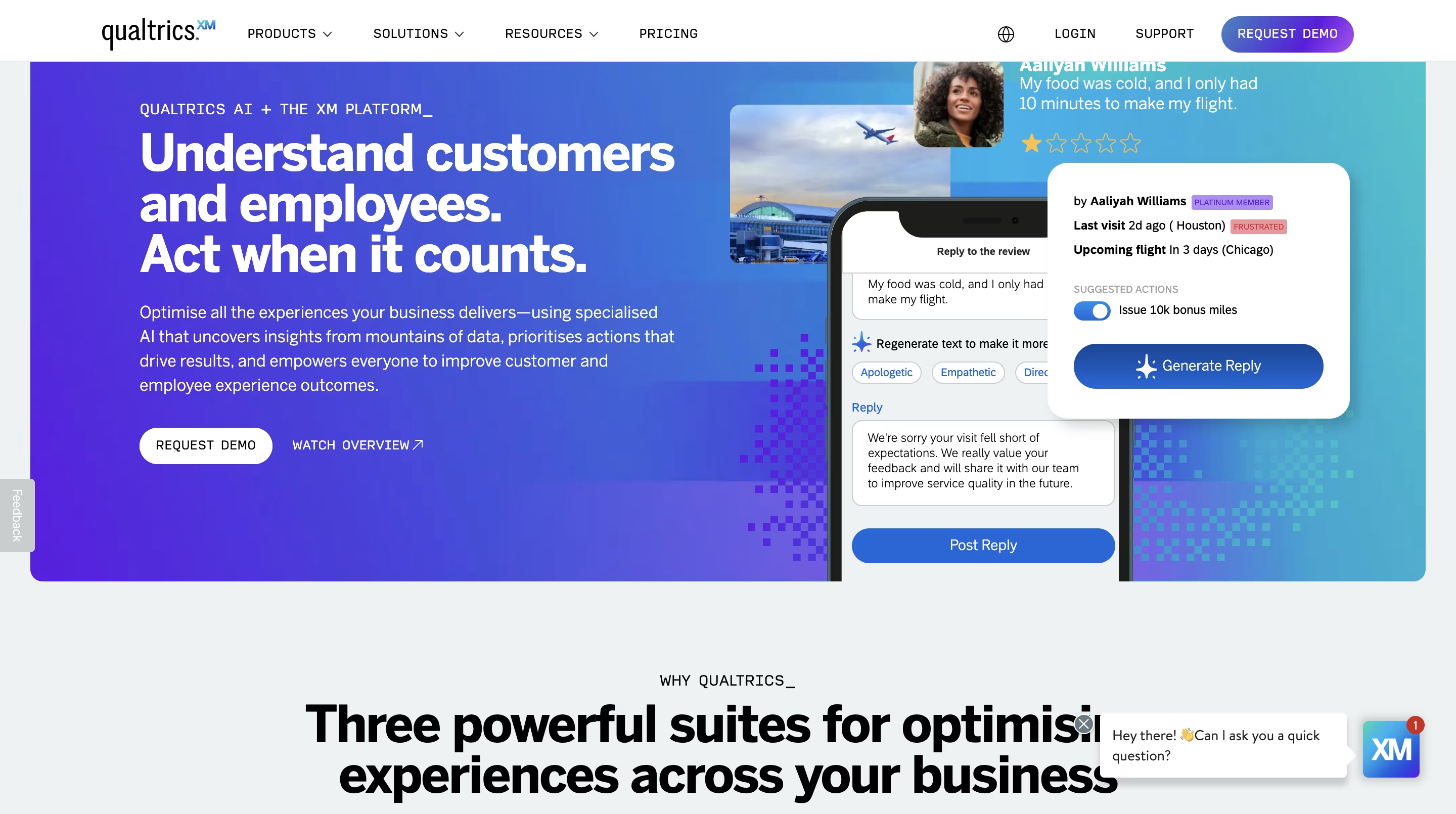
What it is: Qualtrics is an advanced survey-building platform, part of a much larger experience-management company, built for teams that need very flexible, custom survey design rather than a simple pre-built template.
Good for: Teams with someone on staff who really knows how to build surveys.
What's good:
- The most flexible survey design tool on this list, by far
- Very deep AI analysis of open-text answers
- Great if you already use Qualtrics for other kinds of surveys, like customer feedback
What's not so good:
- You really need someone with survey or data experience to use it well
- Costs rise quickly as you add more features or send more surveys
- Overkill if you just want simple, regular pulse checks
Price: Please contact sales.
Free trial: Please contact sales for current terms.
Reviews: 4.4 out of 5 on G2, around 4.7 out of 5 on Capterra.
Not a good fit if: you just want reliable, simple pulse surveys without a dedicated analyst.
13. Workday Peakon Employee Voice
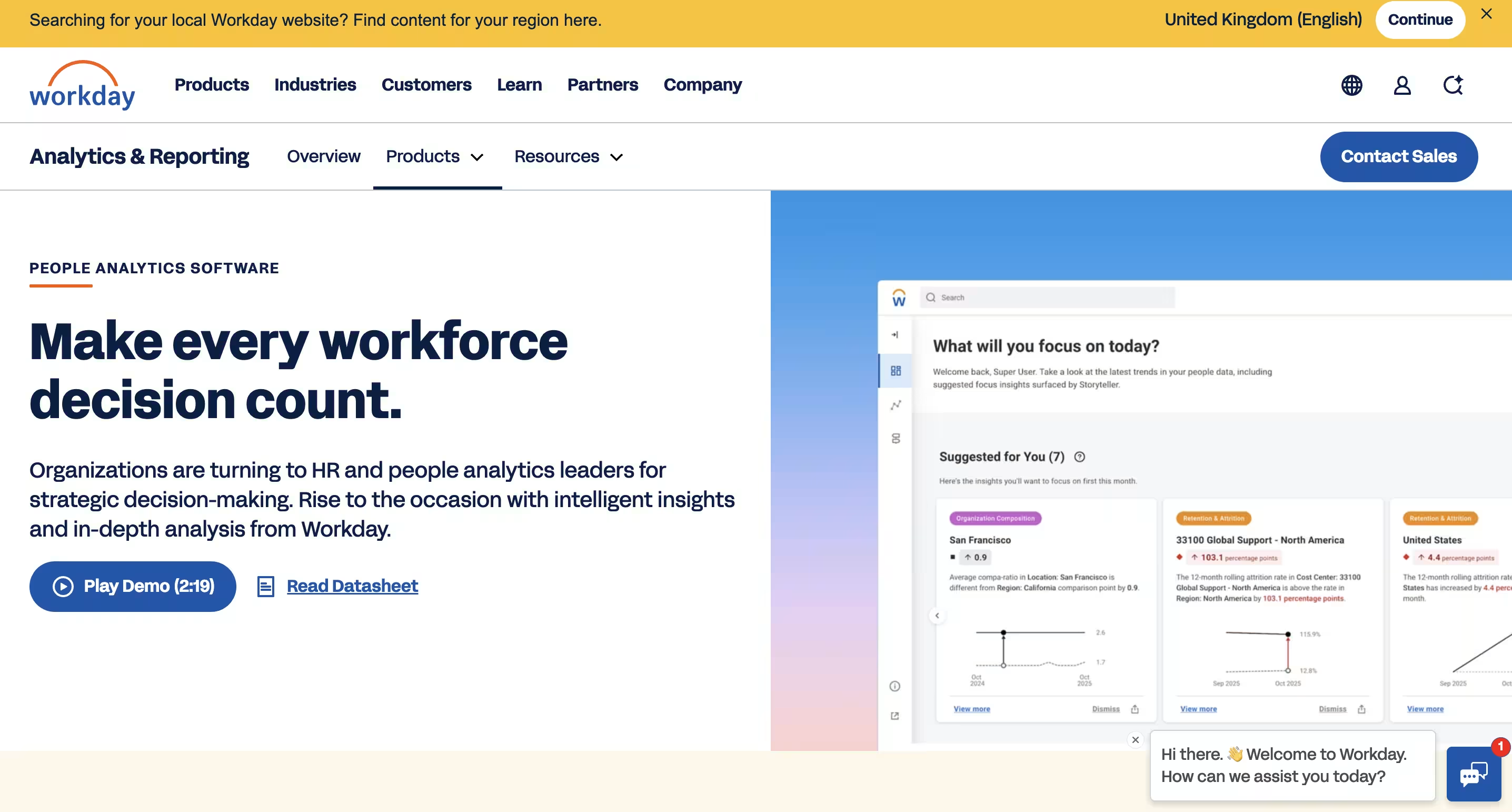
What it is: Workday Peakon is an engagement survey tool built specifically to plug directly into Workday's HR system, so employee and org-chart data stay in sync without any manual work.
Good for: Companies that already run Workday as their main HR system.
What's good:
- Zero manual work keeping your employee list current, since it pulls straight from Workday
- Runs continuously in the background without needing much admin attention
- Engagement data sits right next to your other Workday HR data
What's not so good:
- Its whole advantage disappears if you're not using Workday
- Less flexible survey design than a dedicated survey tool
- Not worth considering unless Workday is already your system of record
Price: Bundled with your Workday HCM plan.
Free trial: Please contact your Workday representative for current terms.
Reviews: 4.6 out of 5 on G2.
Not a good fit if: you're not already on Workday.
14. Perceptyx
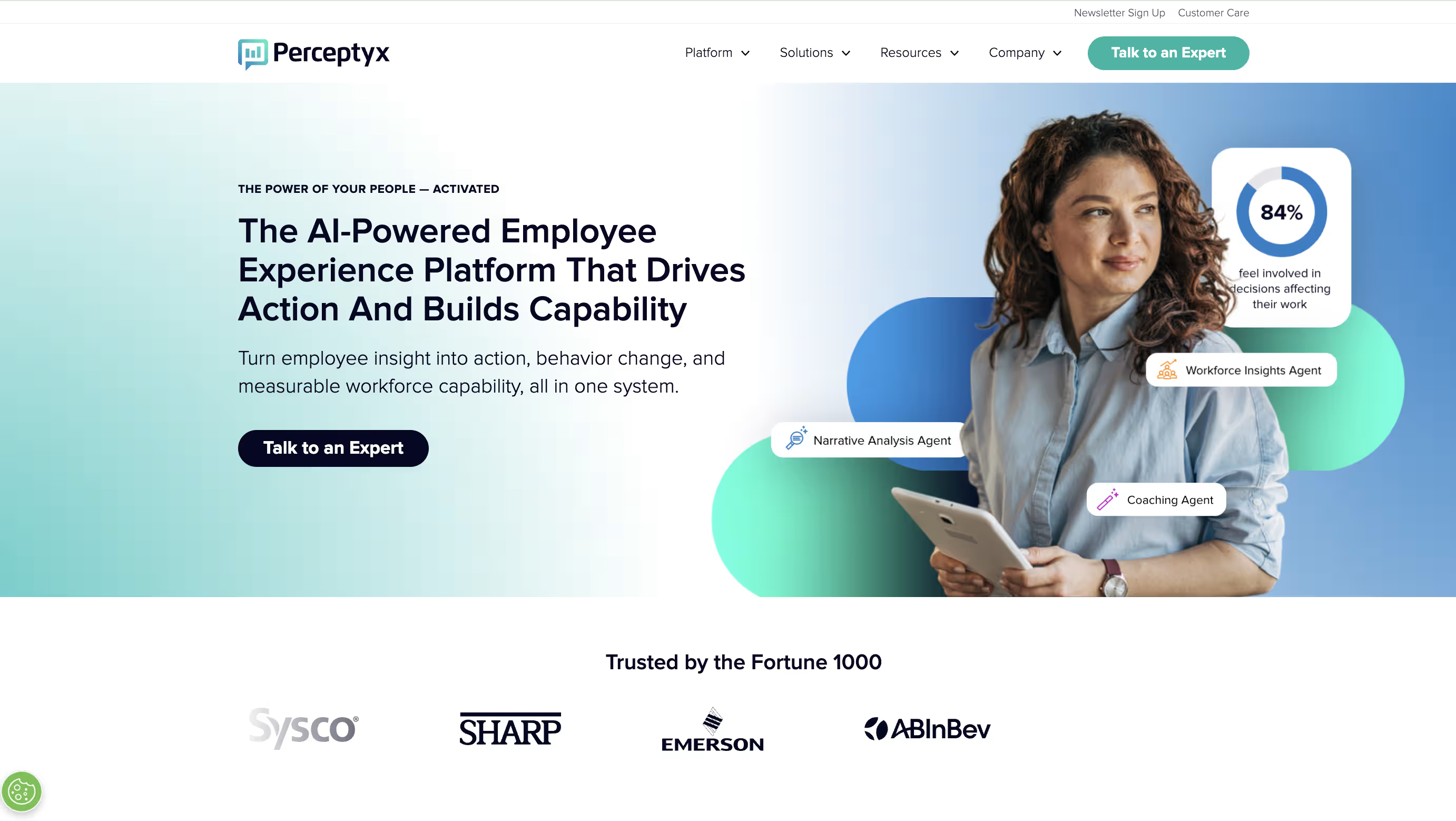
What it is: Perceptyx is a fully managed, research-driven employee listening service for very large companies, closer to hiring a consulting team than signing up for self-serve software.
Good for: Very large companies (5,000+ employees) that want expert help running the whole program.
What's good:
- Built to handle huge, complex organizations without breaking
- Comes with expert help, useful if you don't have your own research team
- Handles thousands of open-text comments at once
What's not so good:
- Less self-serve than other tools; you're working with a team, not just clicking around a dashboard
- Fewer public reviews to check compared to bigger-name competitors
- Takes real time to set up, since it's more of a partnership than a quick signup
Price: Please contact sales.
Free trial: Not applicable; this is a managed service, not a self-serve tool.
Reviews: 4.5 out of 5 on G2.
Not a good fit if: you're under 2,000 employees or want to move fast without outside help.
15. Medallia
What it is: Medallia is a large experience-management platform that combines employee and customer feedback in one system, so a company can see whether unhappy employees connect to unhappy customers.
Good for: Companies that specifically want to connect employee feedback with customer feedback.
What's good:
- The only tool here built to link employee and customer feedback together
- Handles huge amounts of feedback from many different sources
- Useful if leadership wants to prove engagement affects revenue
What's not so good:
- Setup usually takes six months to a year
- Needs a dedicated team to run properly
- Way more than you need if you only care about employee surveys
Price: Please contact sales.
Free trial: Not applicable at this scale.
Reviews: Around 4.5 out of 5 on G2 (for their broader customer-experience product; there's no listing just for employee surveys).
Not a good fit if: you only need employee surveys, not a full customer-and-employee data platform.
16. TinyPulse
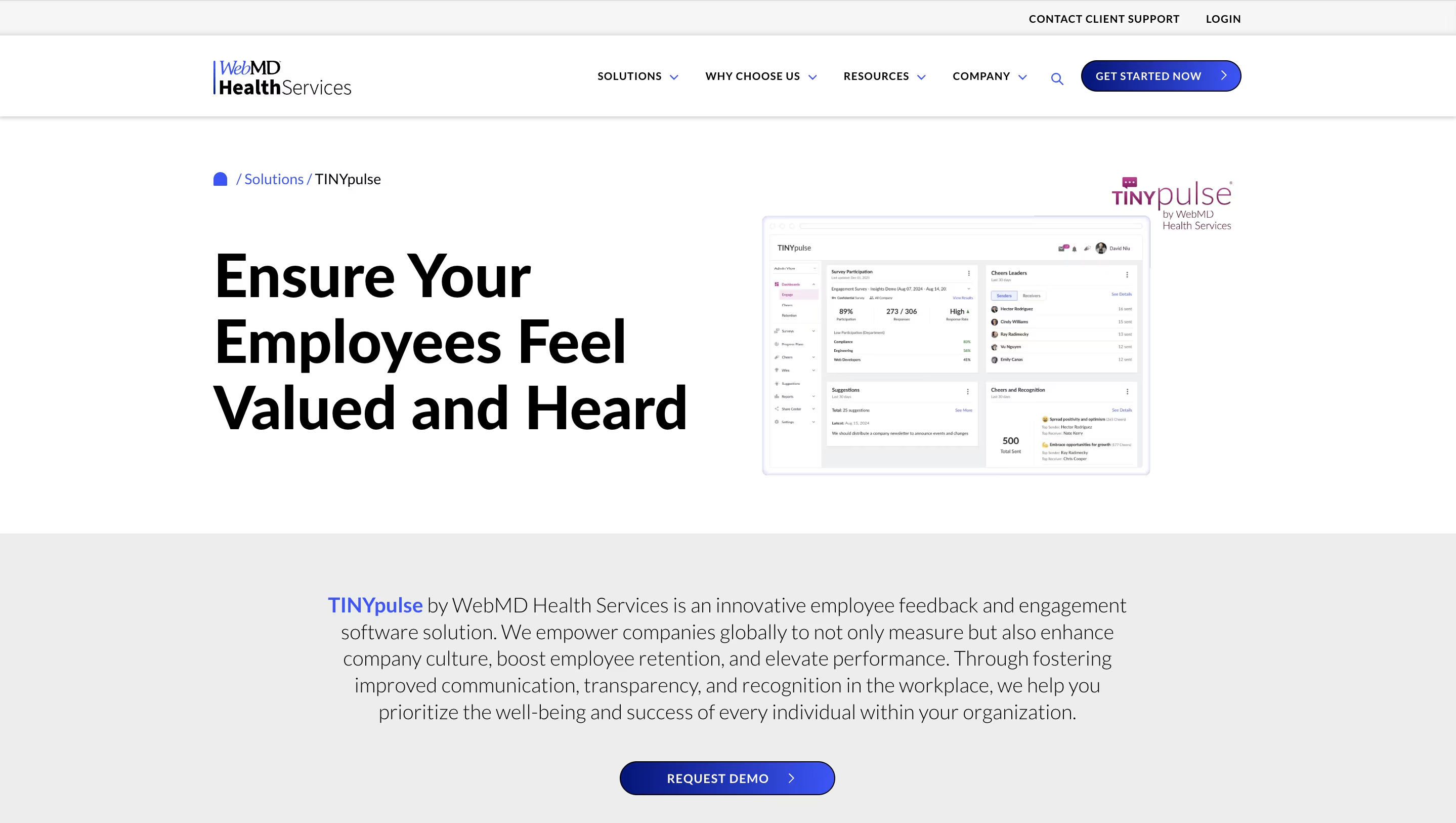
What it is: TinyPulse (now sold under WebMD Health Services, following its earlier acquisition by Limeade) is one of the original weekly pulse-survey tools, built around a simple, anonymous "one quick question a week" format that's stayed close to its original design since it launched in 2012.
Good for: Small to mid-size teams that want the simplest possible weekly check-in, without much extra analytics on top.
What's good:
- One of the most established names in pulse surveys, with a long track record
- Very lightweight: employees answer one short question a week, so response fatigue is rare
- Free plan available for smaller teams to test the format
What's not so good:
- Reviewers note there's little incentive built in to boost response rates, so participation can drop off over time in larger teams
- No published pricing beyond the free tier; paid plans require a sales conversation
- Feature depth (heatmaps, driver analysis, action planning) is lighter than newer, purpose-built platforms
Price: Free plan for small teams. Paid plans require contacting sales for current pricing.
Free trial: Free plan available; no separate time-limited trial listed.
Reviews: 4.4 out of 5 on G2 (214 reviews), 4.6 out of 5 on Capterra (48 reviews).
Not a good fit if: you want built-in action planning or department-level heatmaps; TinyPulse's strength is simplicity, not analytical depth.
Red Flags to Watch For
Most engagement programs don't fail because a vendor is bad. They fail in a few specific, recognizable patterns.
1. The Silent Dashboard. Great data with no way to use it. If a vendor has no manager dashboards or action-planning tools at all, only HR ever sees the results, and managers never act on them.
2. The Fatigue Spiral. Fatigue rarely comes from surveying too often. It comes from employees watching their feedback disappear with no visible follow-up, cycle after cycle. This is closely tied to survey fatigue: once people stop believing a survey leads anywhere, honest responses drop off fast, and the next cycle's data gets worse, not better.
3. The Vague Anonymity Promise. You want a clear, stated minimum, such as five responses per group, before results display, and ideally the ability to see that suppression demonstrated live during a demo. A vague answer here is a real warning sign.
4. The Custom API Promise. "We can build a custom API for that" usually means no ready integration exists yet, and you'd be the one funding its development.
5. The Invisible Price. No pricing, not even roughly, usually signals expensive or complicated licensing that the vendor would rather explain live than let you compare in writing.
Mistakes buyers make, even with a good vendor:
- Choosing on feature count instead of fit. The platform with the most features isn't the best choice if your team never uses most of them. Match complexity to your actual HR ops capacity, not an ideal one.
- Underestimating implementation time. A vendor quoting "a few weeks" for a rollout that actually needs three months delays the value you're trying to create. Ask for a timeline based on companies your size, not a general estimate.
- Not involving managers before signing. HR often chooses the platform, then hands managers a dashboard they've never seen. Get 2–3 managers into a demo before you commit. If they can't say what they'd do with the report, the tool won't get used.
- Ignoring integrations until after signing. If your HRIS doesn't sync automatically, someone on your team becomes the manual data-entry point every time headcount changes. Ask specifically how employee data flows in and stays current, not just whether an integration "exists."
- Not asking about contract terms upfront. Whether a plan is month-to-month or requires an annual commitment, and what happens automatically at the end of a free trial, rarely shows up on a pricing page. Ask before you start a trial, not after it ends.
Which One Should You Pick?
If your team mostly sits at a desk and you want deep data to compare yourself to other companies, Culture Amp or Qualtrics are worth a demo. If your team includes people who don't sit at a desk all day, and you're still growing, that's exactly the gap ThriveSparrow was built to fill.
Explore ThriveSparrow's full engagement survey software, or try it free for 14 days. No credit card needed.
.svg)
A few questions still tend to come up at this stage, so here they are, answered directly.
Frequently Asked Questions
1. How much do enterprise employee engagement tools cost per user?
Enterprise tools rarely list a per-user price. Based on public reports, most cost between $10 and $20 per employee per month once you actually negotiate. Cheaper tools like ThriveSparrow, Officevibe, and 15Five publish real rates of $3 to $5 per employee per month.
2. Who offers the best deals or free trials on enterprise employee engagement platforms?
ThriveSparrow and Leapsome both have 14-day free trials with no credit card needed. Officevibe and TinyPulse have free plans instead of a time-limited trial. Most enterprise tools, like Culture Amp, Qualtrics, and Perceptyx, don't publish trial terms and want a sales call first.
3. What are the best tools to measure employee engagement?
Dedicated platforms like ThriveSparrow, Culture Amp, and Qualtrics measure engagement through recurring surveys scored on drivers like recognition, growth, and manager trust, then tracked over time. The right one depends on whether you need continuous pulse checks, deep benchmarking, or both.
4. What are good TinyPulse alternatives?
ThriveSparrow and Officevibe both offer similar simplicity with more built-in analytics, like heatmaps and AI comment analysis, that TinyPulse doesn't include at the same price point.
5. Which tool has the best reviews?
Leapsome has the highest G2 score at 4.8 out of 5, with Lattice and CultureMonkey close behind at 4.7. A high score with very few reviews means less than a slightly lower score with hundreds of reviews, so check both numbers.
6. Which tools let me try before I buy, with no credit card?
ThriveSparrow and Leapsome both offer a 14-day free trial with no card needed. Officevibe and TinyPulse have free plans for small teams instead of a trial.
7. Which tools tell me their price without a sales call?
ThriveSparrow, Officevibe, 15Five, Lattice, and SurveySparrow all show real prices on their websites. Most of the bigger tools, like Culture Amp and Qualtrics, require you to contact sales first.
8. Should I just trust the star rating on G2 or Capterra?
Not on its own. Check how many people actually left a review, and how recent those reviews are.
9. How does the AI in these tools actually help?
Most of them use AI to read written comments and sort them by topic and tone, saving you from reading hundreds of answers by hand. The better ones, like ThriveSparrow, CultureMonkey, and Qualtrics, go further and suggest what to do next, or flag comments that seem rushed or fake. AI here is a shortcut to noticing patterns, not a replacement for actually talking to your team.
Last updated September 2026. Written by the ThriveSparrow People Team. Reviewed by ThriveSparrow's People Ops practitioners for accuracy against each vendor's current public pricing and features.


