












Choosing the best performance review software depends on more than the number of features a platform offers. The right tool should make performance reviews easier to run, help managers give better feedback, connect goals to employee development, and make it easier to follow through after the review.
In this guide, we compare 17 performance review platforms across features, use cases, pricing, integrations, feedback capabilities, development planning, and overall fit.
The shortlist includes tools for small businesses, mid-market companies, enterprise HR teams, continuous feedback programs, and organizations looking for performance reviews alongside employee engagement, recognition, learning, or HRIS capabilities.
Quick answer: ThriveSparrow is the strongest fit for HR and People Ops teams at 50–500 employee companies looking for AI-powered performance reviews, 360-degree feedback, personal development plans, employee engagement surveys, and recognition in one platform.
Larger enterprises with complex calibration, compensation, or succession requirements may prefer Lattice or Workday, while smaller teams may prefer Effy AI or Zoho People.
Best Performance Review Software at a Glance
What Is Performance Review Software?
Performance review software helps organizations evaluate employee performance, collect feedback from managers and peers, and track progress against goals. It brings this information together to support decisions about employee development, pay, and promotion.
HR teams, managers, and employees can use it throughout the employee lifecycle, from setting employee goals and sharing ongoing feedback to conducting formal performance reviews and managing review cycles.
An annual review only captures a snapshot of performance. Trying to cover an entire year in one conversation can leave important feedback, achievements, and development opportunities behind.
In simple terms: Performance review software replaces spreadsheets and manual processes with a connected system for managing employee goals, feedback, and performance reviews throughout the year.
Regular feedback can also have a measurable impact on performance. Gallup research found that employees who receive daily feedback from their manager are 3.6 times more likely to be motivated to do outstanding work than those who receive annual feedback. Another Gallup study of more than 65,000 employees found that strengths-based feedback was associated with 14.9% lower turnover.
Remote and hybrid work make continuous feedback even more important. With fewer informal conversations between managers and employees, opportunities for quick feedback can be harder to come by between formal review cycles.
That’s why effective performance review software goes beyond running reviews. It helps managers give regular feedback, track performance, and turn reviews into meaningful employee development.
Prefer to watch? Here's the 4-minute version, covering 5 Best Performance Review Software for HR Teams. The written guide below covers all 17, with every source linked.
The 17 Best Employee Performance Review Software Platforms in 2026
1. ThriveSparrow — Best Overall for 50–500 Person Companies
Type: AI-powered employee performance review software with 360° feedback, personal development plans, engagement surveys, and peer recognition
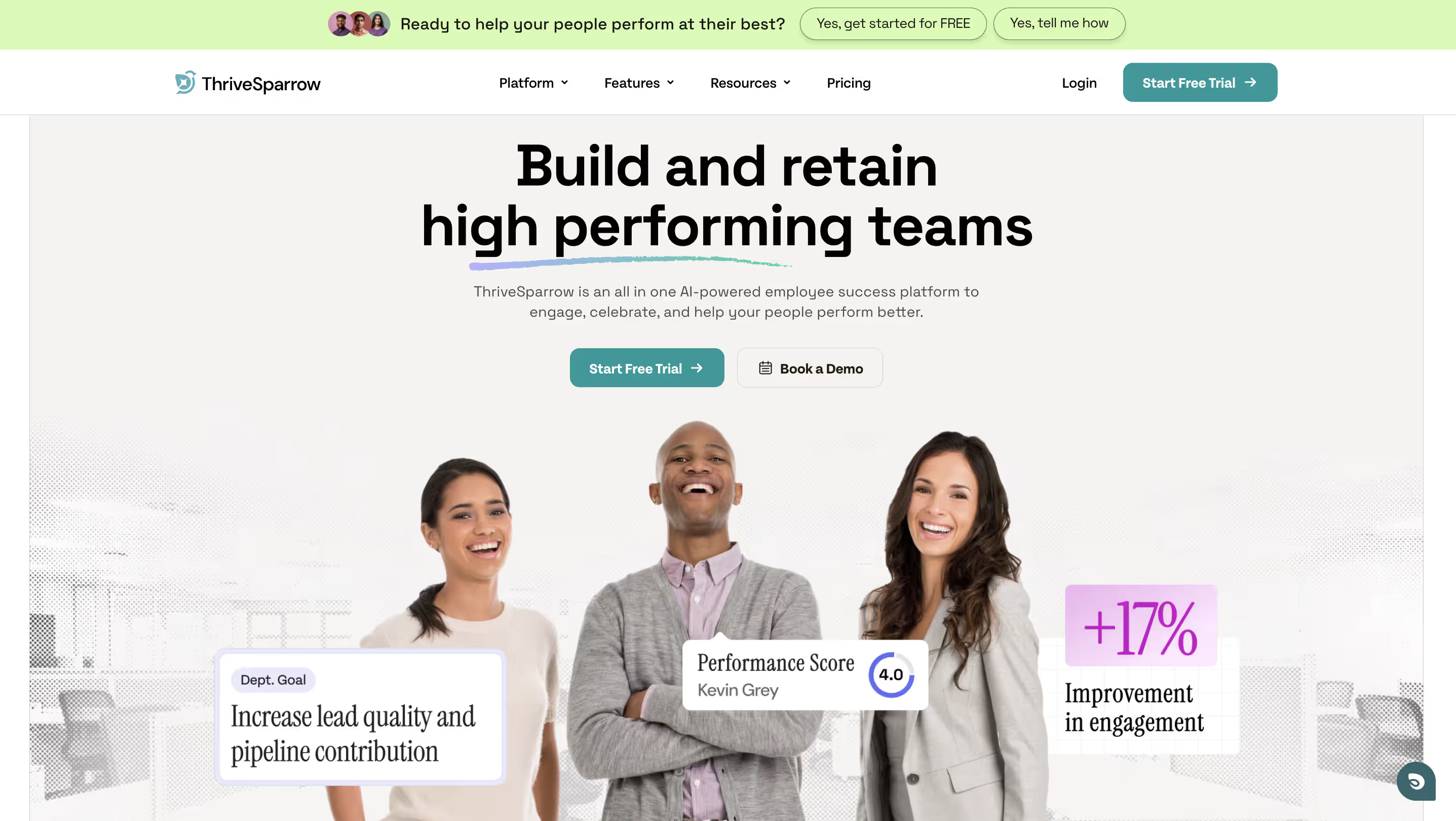
Best for: HR and People Ops teams that want performance reviews, 360-degree feedback, employee engagement, recognition, and development planning in one platform.
Type: AI-powered employee performance review software with 360-degree feedback, personal development plans, engagement surveys, and peer recognition.
ThriveSparrow is a strong option for mid-market companies that want more than a standalone performance review tool.
The platform connects AI-powered performance reviews, 360-degree feedback, employee engagement surveys, personal development plans, and recognition in one system.
Key ThriveSparrow features
- AI-powered personal development plans
- 360-degree feedback
- Customizable performance review questions
- Competency frameworks
- Performance review calibration
- Performance analytics
- Competency gap analysis
- Employee engagement surveys
- Pulse surveys
- eNPS surveys
- Lifecycle surveys
- Self-evaluation templates
- Peer feedback
- Manager feedback
- Employee recognition
- Goal tracking
- Slack and Microsoft Teams integrations
- 100+ language support
- HRIS integrations
Why ThriveSparrow stands out
Many performance review platforms focus primarily on collecting ratings and feedback.
ThriveSparrow's approach connects review information to personal development planning.
After a review, the information can be used to identify skill gaps and create development actions. Managers can review those recommendations before employees use them as part of their development process.
The broader platform also connects performance information with employee engagement and recognition.
That makes ThriveSparrow a useful option for organizations that want performance reviews to become part of a broader employee success platform.
What you may like
- Performance and engagement capabilities in one platform
- AI-assisted personal development planning
- 360-degree feedback
- Recognition capabilities
- Multilingual surveys
- Integrations with common HR systems
- 24×5 email and chat support
What you may not like
- Smaller integration ecosystem than some large enterprise platforms
- Very large organizations may require additional enterprise capabilities
- Organizations with highly complex compensation and succession workflows should compare it with enterprise-focused platforms
Pricing
The source draft lists ThriveSparrow at $5/employee/month with a 14-day free trial. Pricing should be confirmed on the current pricing page before publication.
Best fit
ThriveSparrow is best suited to HR and People Ops teams at 50–500 employee companies that want performance review software connected to employee engagement, recognition, and development.
💡 Start your free 14-day ThriveSparrow trial →No credit card required. Full AI-powered reviews, 360° feedback, engagement surveys, and recognition from day one.
.svg)
2. ClickUp
Type: All-in-one project management with native performance review capabilities
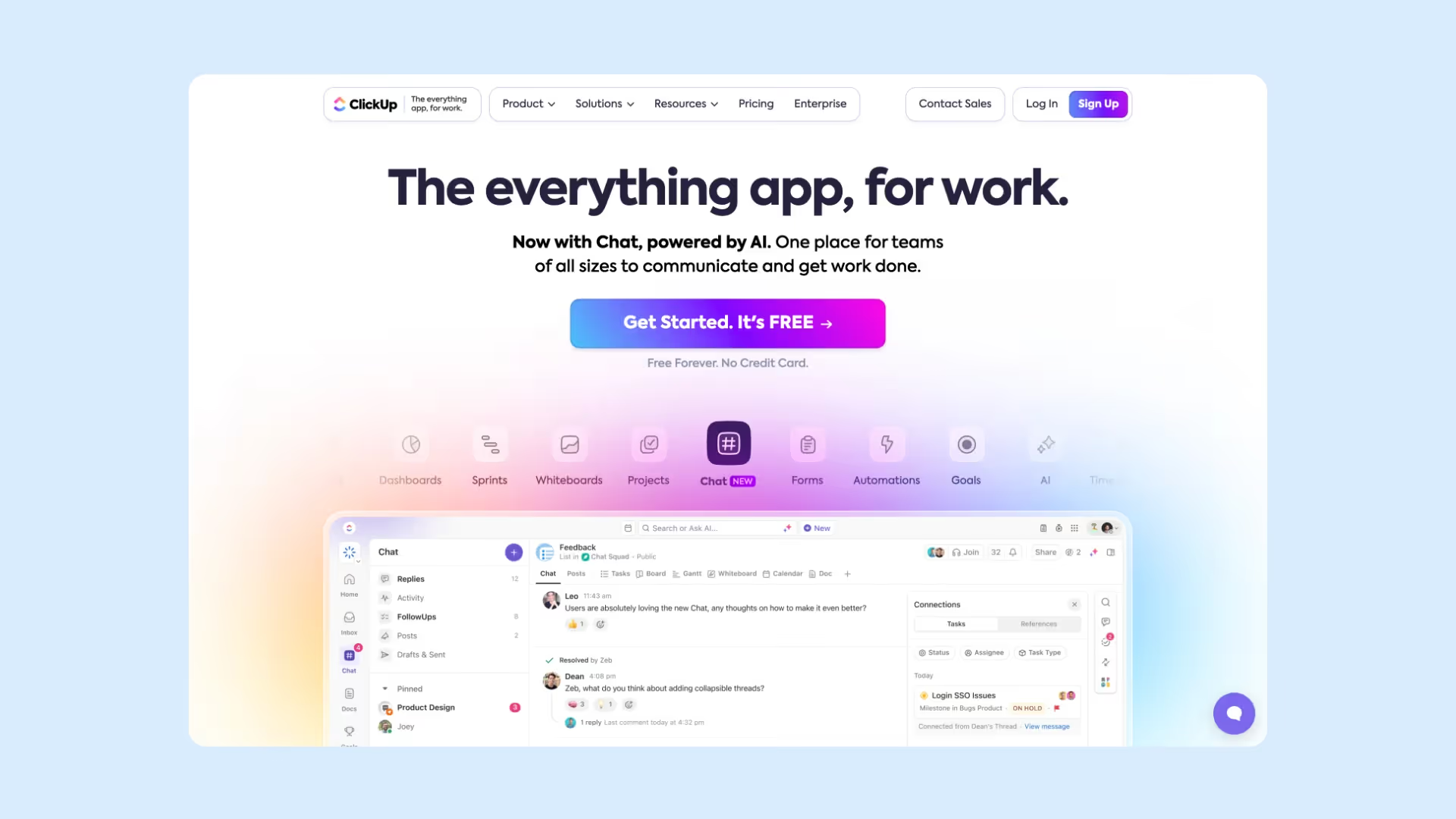
Best for: Teams that already use ClickUp for project management and want performance goals and review workflows in the same environment.
ClickUp is not a traditional HR-first performance management platform. Its advantage comes from connecting work, tasks, goals, and review processes.
Key features
- Performance review templates
- Goal tracking
- Task management
- Workflow automation
- Dashboards
- Productivity reporting
- Custom review workflows
What you may like
If employees already work in ClickUp, adding performance goals and review templates can reduce context switching.
Goals can also connect with tasks and projects.
What you may not like
ClickUp is not purpose-built for HR.
Organizations looking for advanced 360-degree feedback, calibration, competency management, or dedicated review-cycle workflows may need a more specialized platform.
3. Lattice
Type: Comprehensive performance management software with OKRs, calibration, and compensation
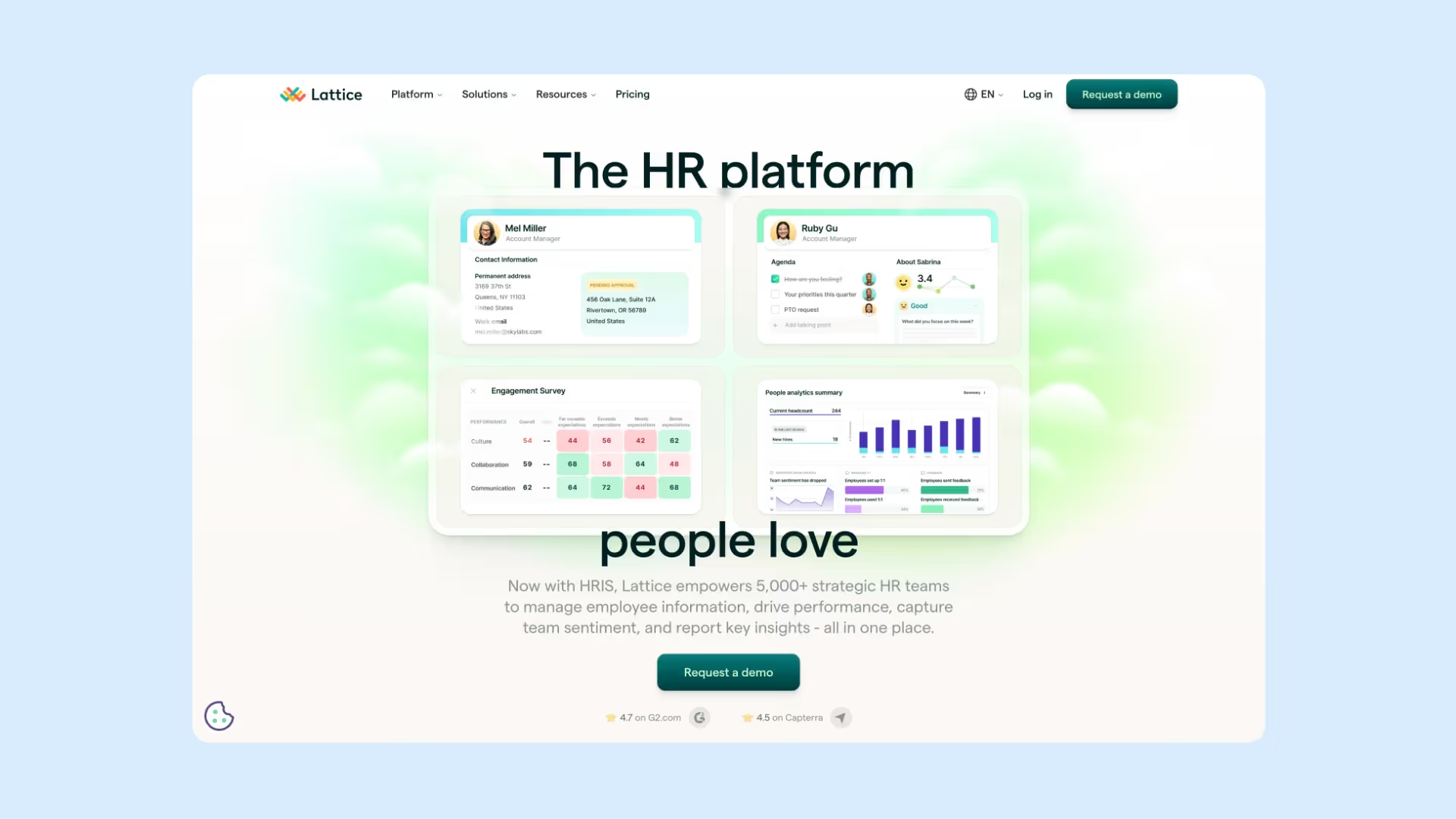
Best for: Organizations that need structured performance management, OKRs, calibration, career development, and compensation planning.
Lattice is a broader performance management software platform rather than simply a review tool.
Key features
- Performance reviews
- 360-degree feedback
- OKRs
- Goal management
- Performance calibration
- Career development
- Succession planning
- Compensation management
- Performance analytics
- Performance coaching
- 1:1s
Lattice is particularly relevant for organizations with established HR teams and structured performance programs.
Its calibration and compensation capabilities can make it a better fit for companies that need formal talent-management processes.
What you may like
- Broad performance management capabilities
- Strong goal and OKR alignment
- Calibration
- Career development
- Enterprise-oriented workflows
What you may not like
- Higher cost than many SMB-focused tools
- More implementation work
- May be more platform than a small organization needs
The source draft lists pricing from $11/user/month for Performance + OKRs with a minimum annual commitment. Verify current pricing before publication.
4. BambooHR
Type: All-in-one HR platform with performance review module
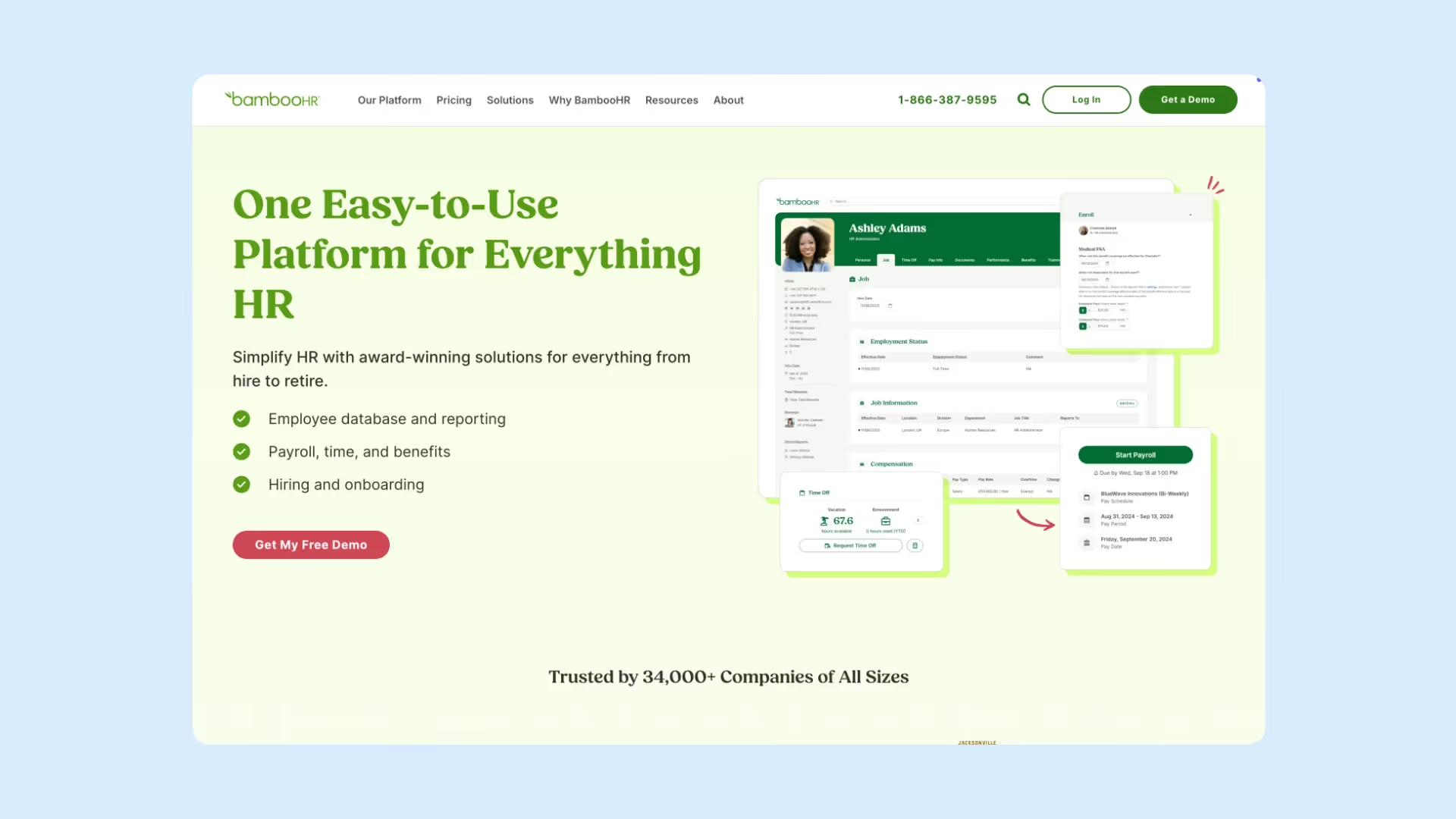
Best for: Growing companies that want performance reviews within a broader HRIS.
BambooHR combines HR administration with performance management.
Key features
- Performance reviews
- Self-assessments
- Manager evaluations
- Peer reviews
- 360-degree feedback
- Goal tracking
- Employee records
- Payroll and benefits integrations
The main advantage is consolidation.
Companies that already use BambooHR for employee records and HR administration may prefer keeping performance data within the same system rather than adding another platform.
What you may like
- Broad HR functionality
- Familiar HRIS workflow
- Performance reviews alongside employee records
- Payroll and benefits integrations
What you may not like
Advanced performance management and calibration capabilities may be less extensive than those of dedicated performance management platforms.
Curious what a performance report actually looks like in ThriveSparrow? [Here's a sample report you can explore →]

.svg)
5. 15Five
Type: Continuous performance management process with weekly check-ins, OKRs, and engagement
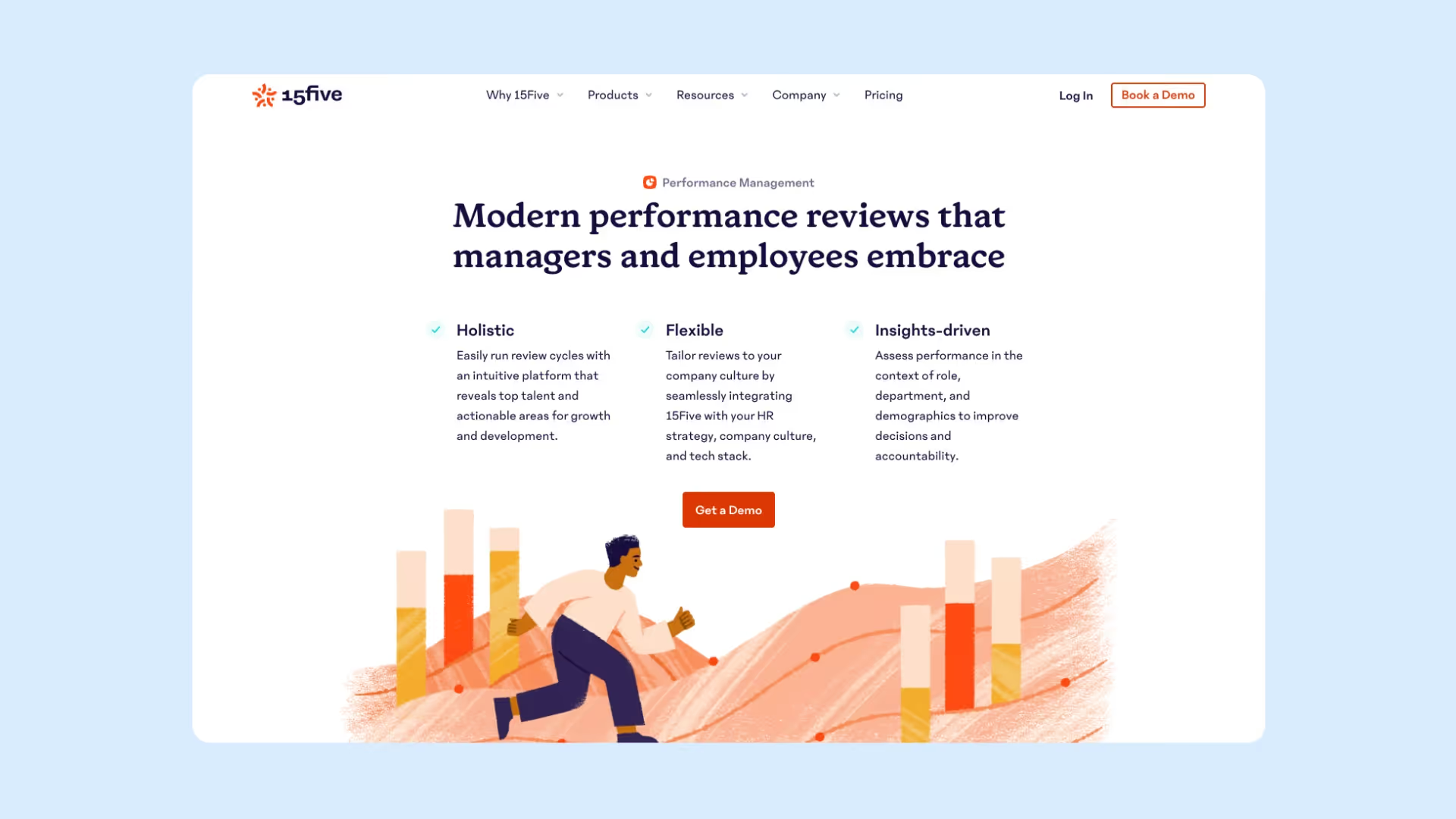
Best for: Organizations that want weekly check-ins, continuous feedback, OKRs, and regular performance conversations.
15Five is designed around the idea that performance management should happen continuously.
Key features
- Weekly check-ins
- Performance reviews
- 360-degree feedback
- OKRs
- 1:1 agendas
- Peer feedback
- Recognition
- Career development
- Performance coaching
- Employee engagement
The platform is a strong fit for organizations that want to make performance conversations a regular management habit rather than an annual event.
What you may like
- Continuous check-ins
- Strong feedback workflows
- OKR integration
- Regular manager-employee conversations
- Employee engagement capabilities
What you may not like
Full performance functionality is available at higher tiers, which can make the platform more expensive for teams that need comprehensive reviews and OKRs.
6. Culture Amp
Type: People analytics platform combining performance management and employee engagement
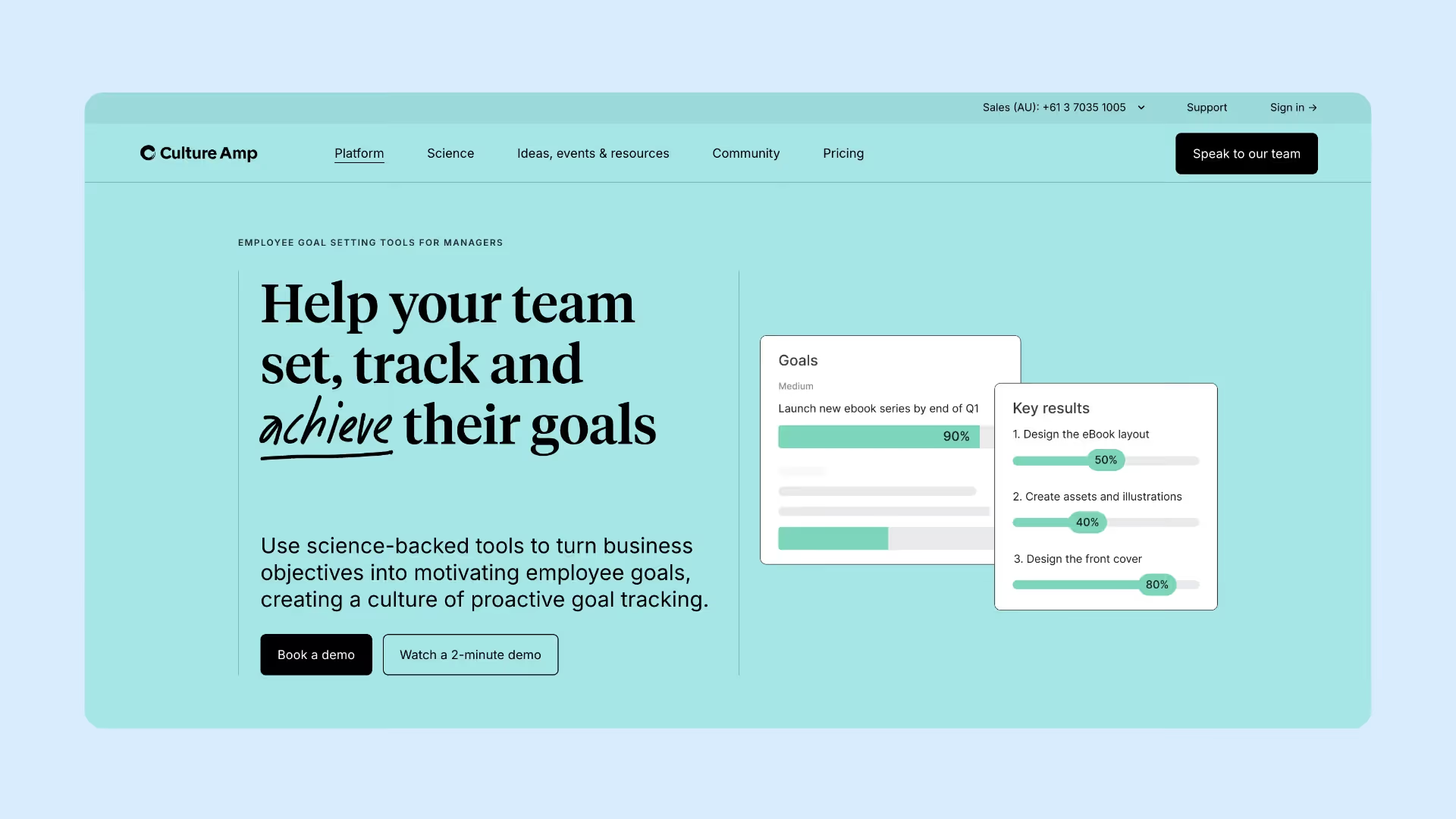
Best for: Organizations that want to connect employee engagement, performance, feedback, and people analytics.
Culture Amp combines employee engagement and performance management.
Key features
- Performance reviews
- Employee engagement surveys
- Feedback collection
- Goal alignment
- Calibration
- Performance analytics
- People analytics
Its strength is the relationship between employee experience data and performance processes.
What you may like
- Strong employee engagement capabilities
- Analytics
- Performance and engagement connection
- Structured review processes
- Focus on evidence-based people management
What you may not like
Pricing can be high for smaller businesses, particularly when additional analytics or modules are required.
7. Workday
Type: Enterprise HR, payroll, and performance management suite
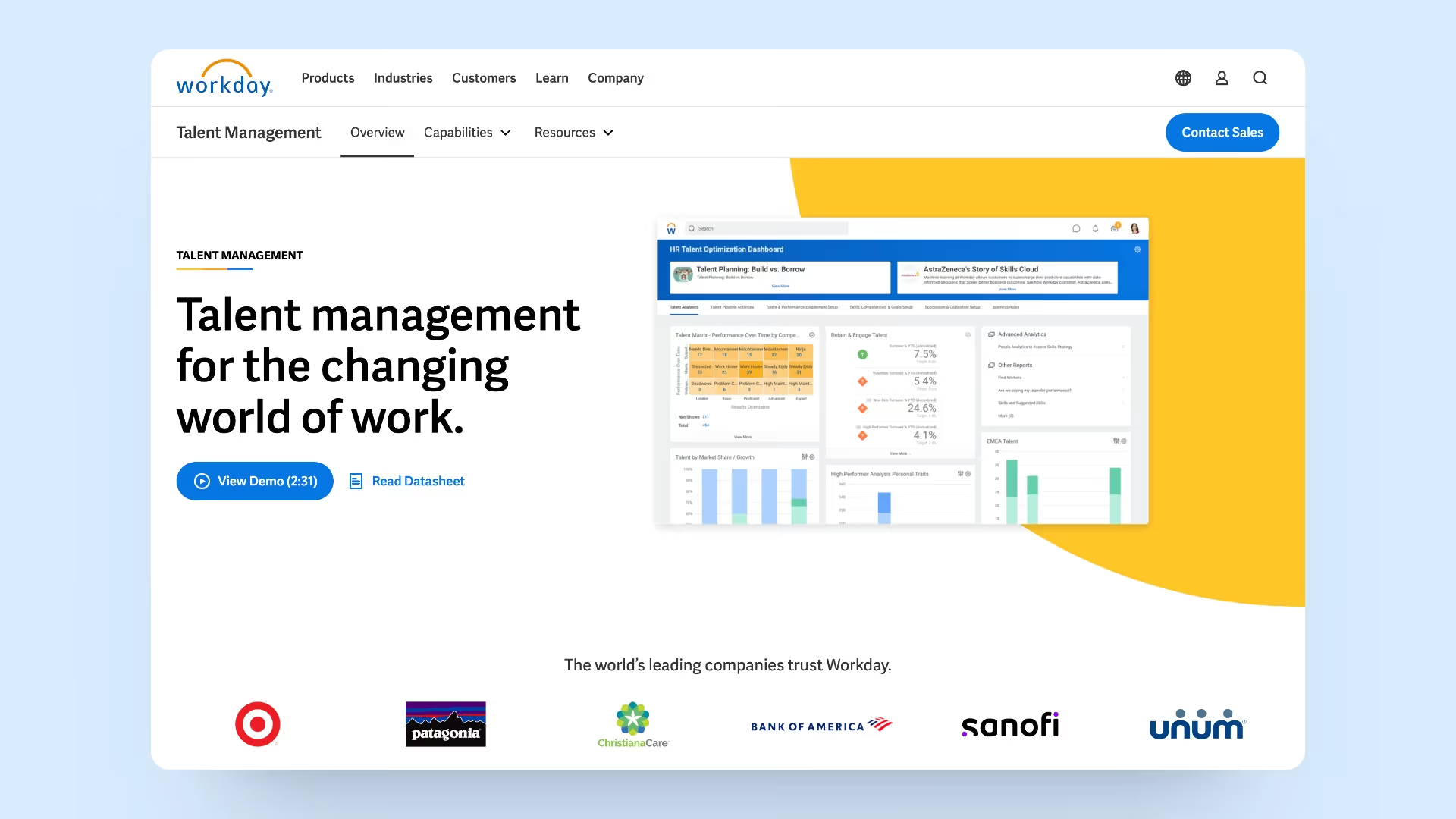
Best for: Large organizations that need enterprise HR, payroll, performance management, skills intelligence, and succession planning.
Workday is designed for organizations with complex HR requirements.
Key features
- Performance management
- Employee reviews
- Goal management
- Skills intelligence
- Succession planning
- Career development
- Workforce analytics
- Payroll
- HR management
- Enterprise reporting
Workday is more appropriate for large enterprises than small businesses because of its implementation complexity and broader HR scope.
What you may like
- Enterprise scalability
- Broad HR functionality
- Workforce analytics
- Payroll integration
- Succession planning
- Skills management
What you may not like
- Complex implementation
- Higher cost
- More difficult navigation for some users
- May be excessive for SMB requirements
8. Teamflect
Type: Performance management and employee engagement software built for Microsoft Teams and Outlook
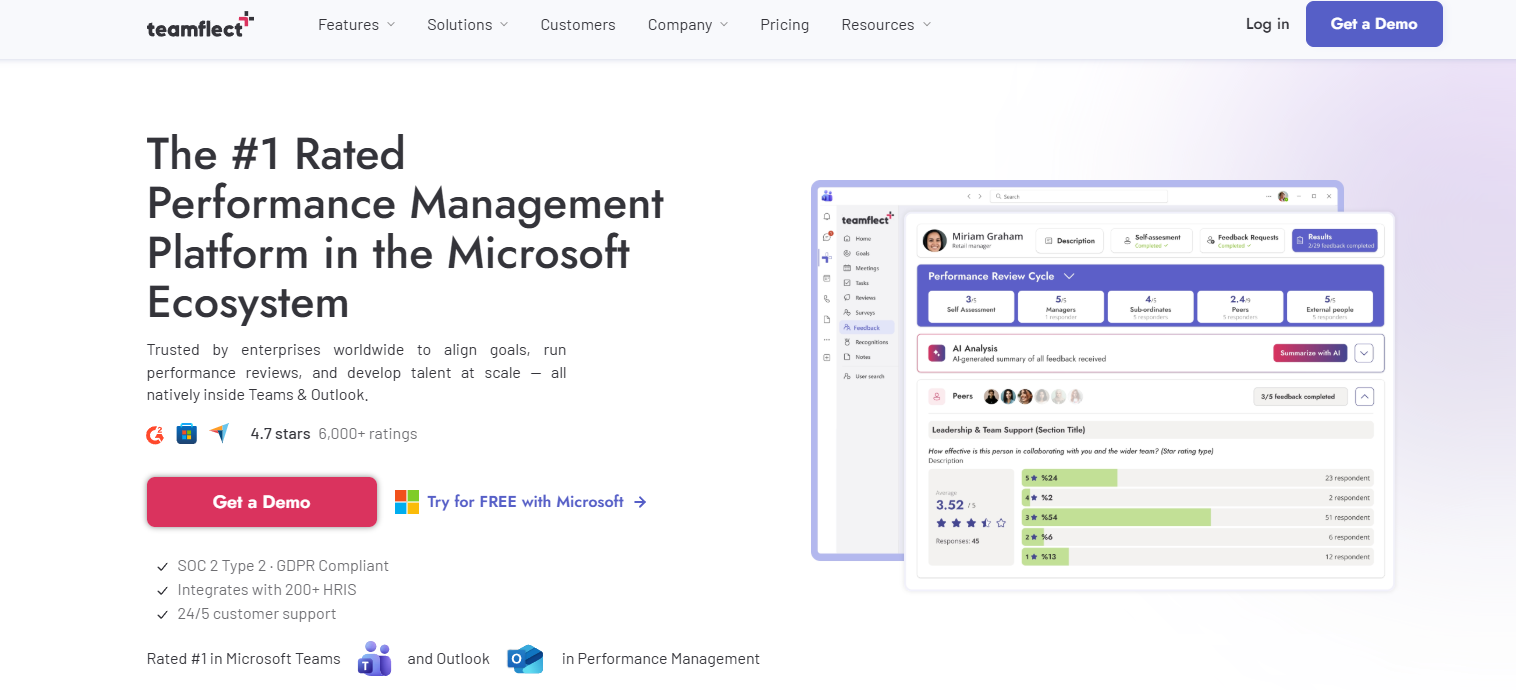
Best for: Organizations that use Microsoft Teams and Outlook as their primary workplace tools.
Teamflect brings performance management into the Microsoft environment.
Key features
- Performance review cycles
- 360-degree feedback
- Goals and OKRs
- 1:1 meetings
- Employee recognition
- Continuous feedback
- Engagement surveys
- Microsoft Teams integration
- Outlook integration
The biggest advantage is workflow integration.
Employees can manage reviews, goals, meetings, feedback, and recognition without constantly switching between platforms.
What you may like
- Strong Microsoft 365 fit
- Native Teams experience
- Broad performance functionality
- Goals and OKRs
- Recognition
- 1:1 management
What you may not like
Teams that primarily use Slack or Google Workspace may not receive the same adoption benefit.
9. Effy AI
Type: AI-powered 360° review tool for small and mid-sized organizations
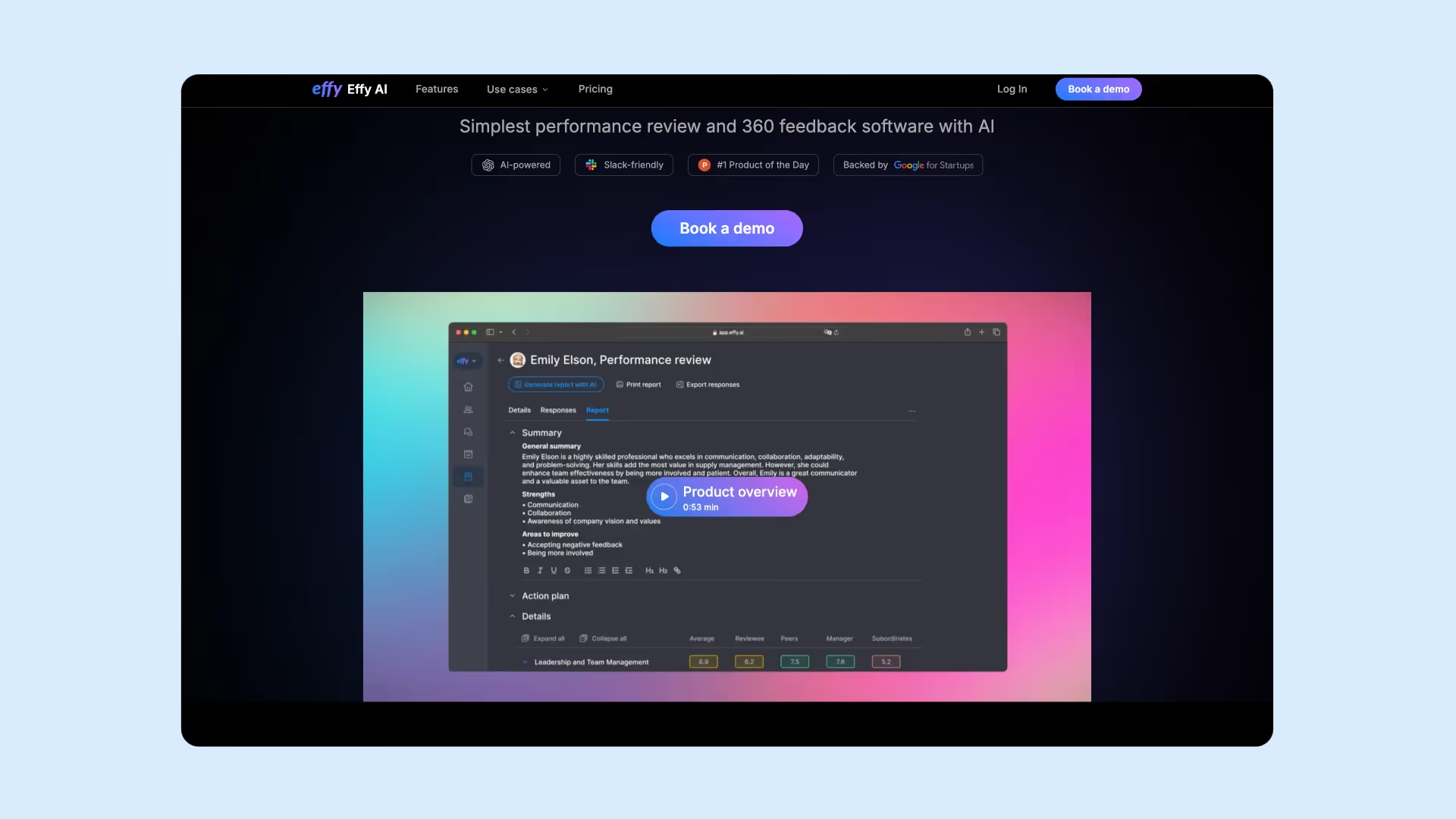
Best for: Small organizations that want to launch 360-degree reviews quickly.
Effy AI focuses on lightweight performance reviews and AI-assisted analysis.
Key features
- AI-generated review summaries
- 360-degree feedback
- Review templates
- Slack integration
- Microsoft Teams integration
- Visual performance reports
- Review analytics
The platform can be attractive to small teams that don't want a complex performance management implementation.
What you may like
- Fast setup
- Free option for small teams
- AI-generated summaries
- 360-degree reviews
- Collaboration-tool integrations
What you may not like
Organizations looking for deeper career development, calibration, or broader talent management may need a more comprehensive platform.
10. PerformYard
Type: Flexible performance management process platform with custom review cycle design
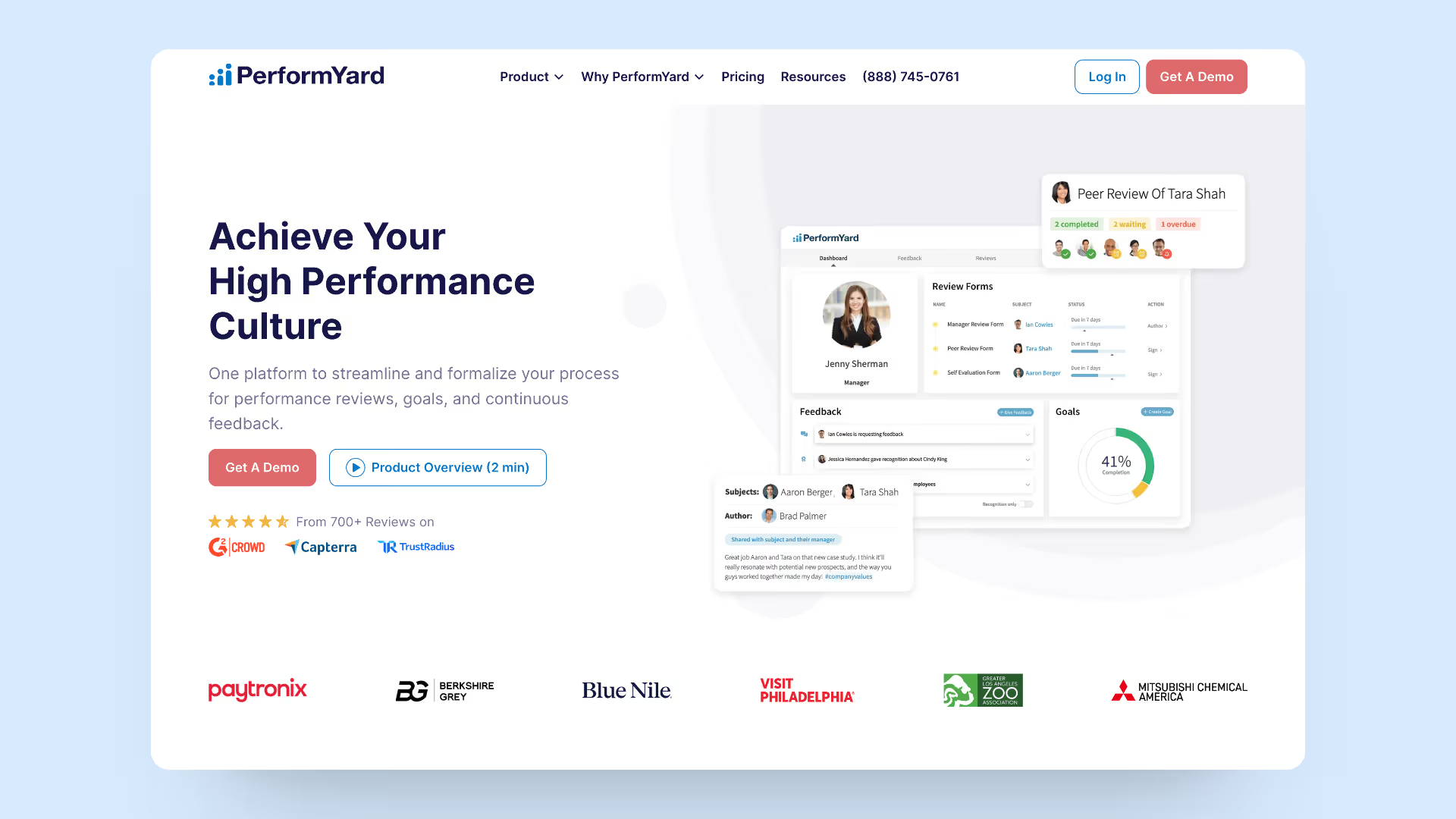
Best for: Organizations that need highly customizable performance review workflows.
PerformYard focuses heavily on flexibility.
Key features
- Custom review cycles
- Custom rating scales
- Review templates
- Continuous feedback
- Goal tracking
- Employee engagement surveys
- Performance dashboards
- Automated reminders
This makes PerformYard a useful option when standard review templates don't match how an organization evaluates performance.
What you may like
- Flexible workflows
- Custom review cycles
- Goal alignment
- Customer success support
- Performance dashboards
What you may not like
- No free plan
- Reporting may be less extensive than premium enterprise platforms
- Interface can feel complex in some workflows
11. Leapsome
Type: People enablement platform connecting performance reviews, OKRs, learning, and engagement
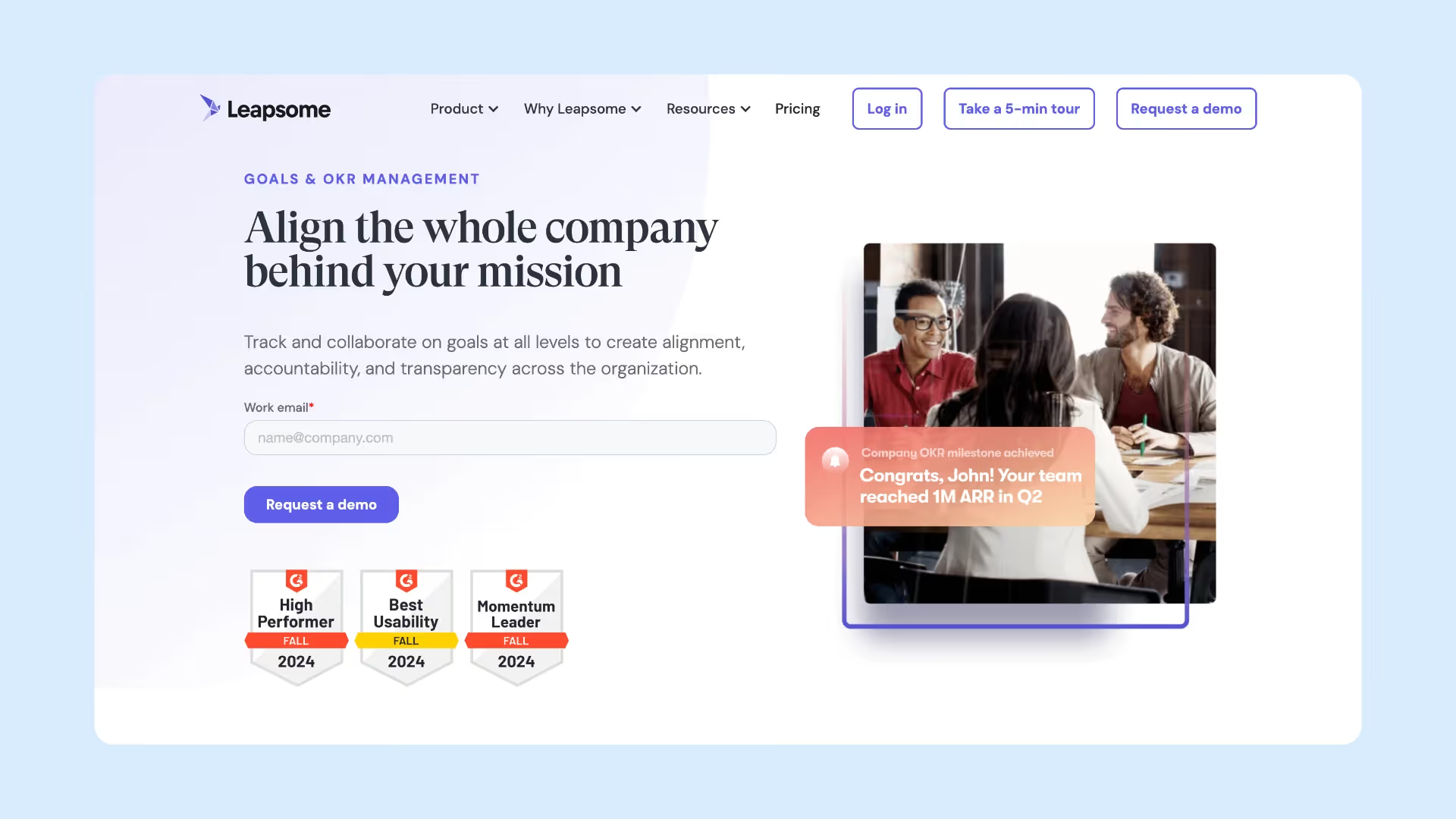
Best for: Organizations that want performance reviews connected to learning, competency frameworks, and career development.
Leapsome connects performance management with employee development.
Key features
- Performance reviews
- 360-degree feedback
- Performance calibration
- Competency frameworks
- Individual development plans
- Learning paths
- Career development
- OKRs
- Engagement surveys
- Feedback analytics
The platform is particularly relevant to organizations where performance reviews are expected to lead directly into learning and development.
What you may like
- Strong connection between reviews and development
- Learning paths
- Competency frameworks
- Career development
- Performance analytics
What you may not like
Advanced configuration can require more administrative expertise.
12. Reflektive
Type: Real-time feedback platform integrating with email and collaboration tools
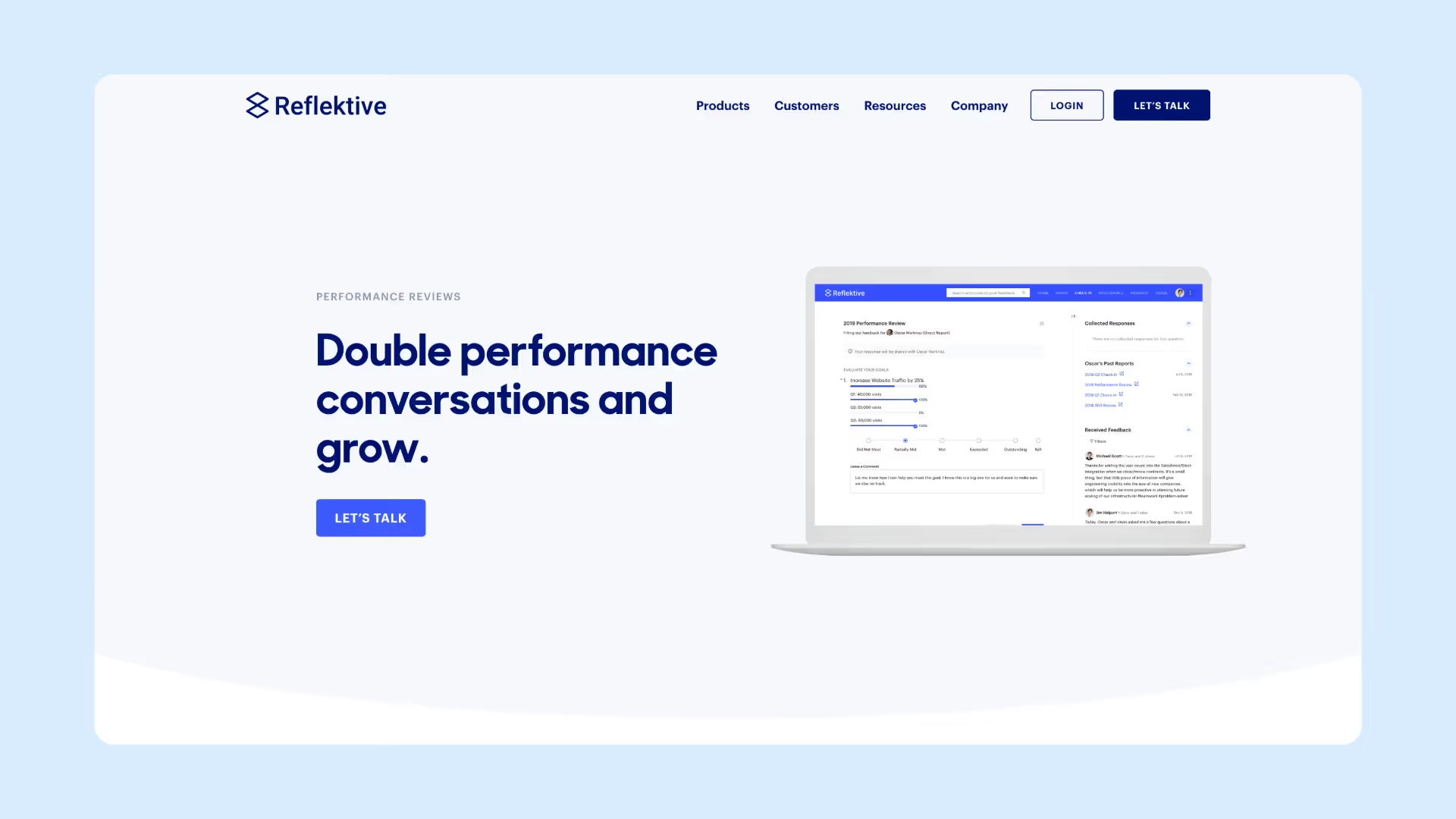
Best for: Organizations focused on real-time feedback through email and collaboration tools.
Reflektive emphasizes feedback that happens close to the work itself.
Key features
- Real-time feedback
- Performance reviews
- Goal tracking
- OKRs
- Recognition
- Collaboration-tool integrations
- Historical feedback
Historical feedback can also help managers avoid relying only on recent events when completing performance reviews.
The source material notes that Reflektive was acquired by Lyra Health in 2021. Its current product availability and pricing should therefore be verified before publication.
13. Cornerstone
Type: Enterprise learning management system with integrated performance reviews
Best for: Large organizations that want performance management integrated with learning and skills development.
Cornerstone combines learning management with performance capabilities.
Key features
- Performance reviews
- Goal management
- Skills assessments
- Competency management
- Learning recommendations
- Training
- Development planning
- Multi-language support
- Enterprise reporting
Its strongest use case is an enterprise environment where performance data needs to connect directly to learning and workforce development.
What you may like
- Enterprise LMS
- Performance and learning integration
- Skills assessment
- Training recommendations
- Global capabilities
What you may not like
- More complex implementation
- Less suitable for SMBs
- Interface may feel less modern than newer SaaS platforms
14. Sage HR
Type: Modular HRIS with performance reviews as an add-on module

Best for: Organizations that want to add performance management to an existing modular HR system.
Sage HR offers performance capabilities as part of a broader HR platform.
Key features
- Goal setting
- 360-degree feedback
- Performance reviews
- Competency tracking
- 1:1 meetings
- Development goals
- Mobile access
Its modular approach can appeal to organizations that don't want to purchase a large all-in-one platform.
15. Synergita
Type: Automated performance review platform with NLP-based sentiment analysis
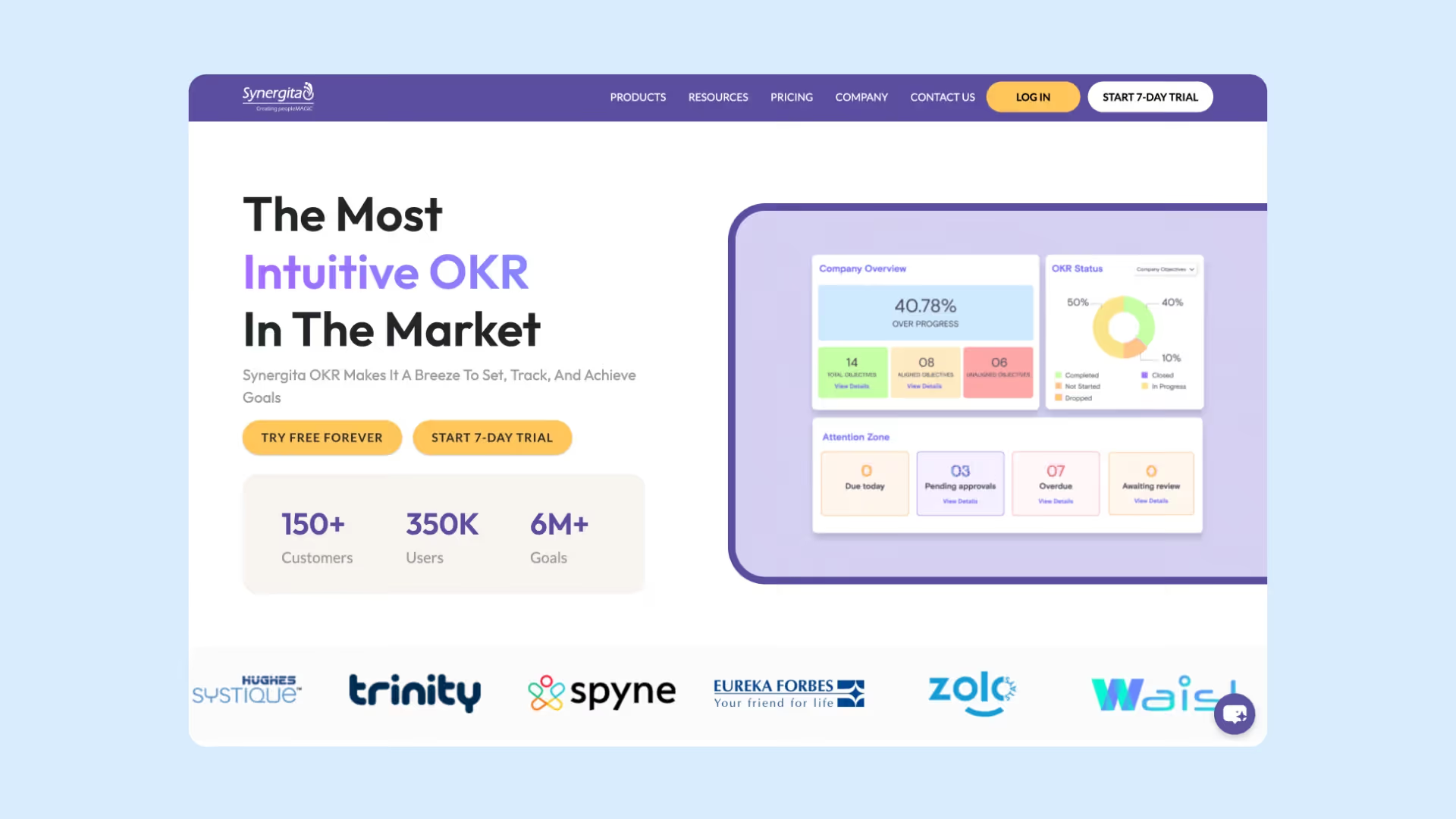
Best for: Organizations looking for automated performance review processes and sentiment analysis.
Synergita combines performance review automation with employee sentiment analysis.
Key features
- Automated review workflows
- Performance review templates
- 360-degree reviews
- Sentiment analysis
- Goal management
- One-on-one meetings
- Performance analytics
Its sentiment analysis capabilities can add context to open-ended employee feedback rather than relying only on numerical ratings.
16. Zoho People
Type: Budget-friendly HRIS with 360° feedback and SMART goals tracking
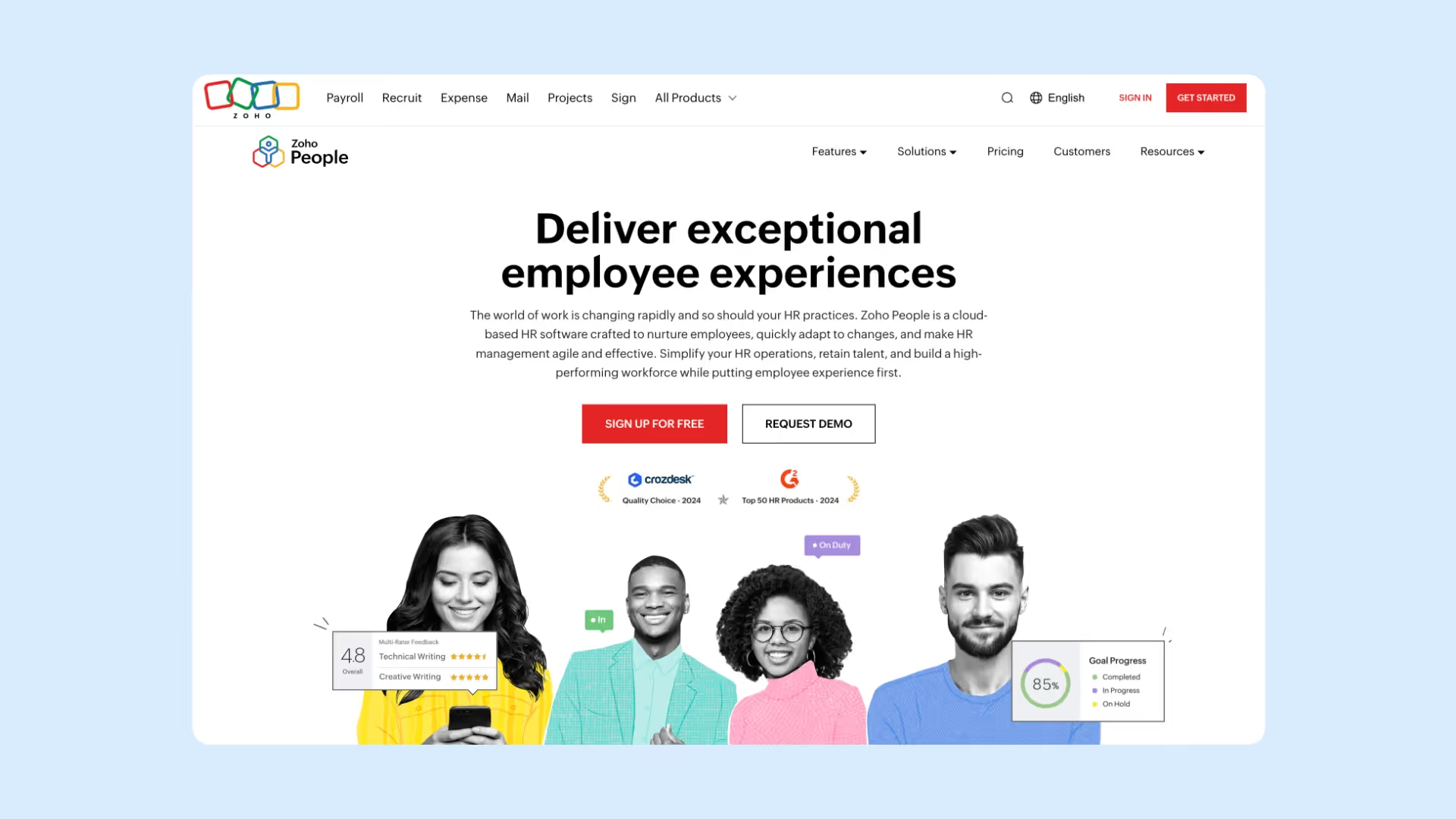
Best for: Small and budget-conscious organizations that want performance management inside an HRIS.
Zoho People provides performance capabilities alongside broader HR functionality.
Key features
- 360-degree feedback
- SMART goals
- Competency assessments
- Performance analytics
- Self-evaluation
- Goal tracking
- HR management
Its pricing can make it attractive to organizations that need structured performance reviews without investing in a large enterprise platform.
What you may like
- Low entry price
- Broader Zoho ecosystem
- SMART goals
- 360-degree feedback
- Competency management
What you may not like
Some advanced analytics and functionality may require higher-tier plans.
17. ClearCompany
Type: Talent management platform bridging talent acquisition and performance reviews
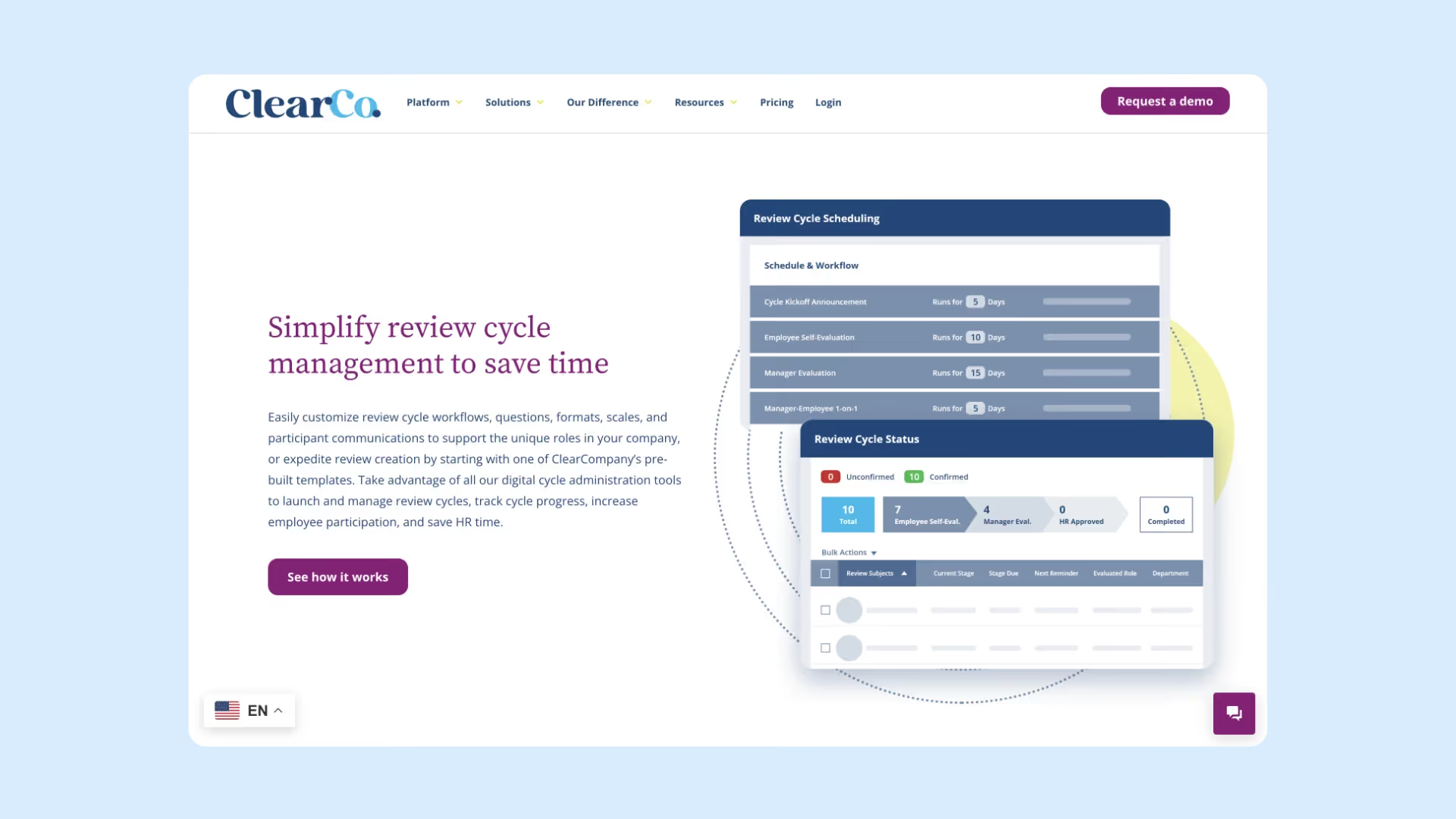
Best for: Organizations that want to connect recruiting, performance, development, and succession planning.
ClearCompany bridges talent acquisition and performance management.
Key features
- Performance reviews
- AI-assisted review templates
- Goal alignment
- 360-degree feedback
- Succession planning
- Talent acquisition
- Performance goals
The platform can be useful for organizations that want performance information to remain connected to the broader employee lifecycle.
What Is Performance Review Software?
Performance review software is a digital platform that helps organizations evaluate employee performance, collect structured multi-source feedback, set and track goals, generate development plans, and make data-backed decisions about promotions, compensation, and succession.
Modern employee performance review software replaces annual review spreadsheets with automated workflows, AI-powered analytics, and continuous feedback loops that develop people year-round rather than auditing them once a year.
The distinction between performance management vs performance appraisal matters here: appraisal is the evaluation event; management is the ongoing system that connects goals, feedback, development, recognition, and compensation into a continuous cycle.
How Performance Review Software Works — Step by Step
- Setup. HR configures review types — 360°, self-evaluation, manager-only, upward feedback — and sets cadences: quarterly, semi-annual, annual, or continuous. Templates are selected or customized — including a self-evaluation template — using a library of performance review questions and competency frameworks.
- Goal setting. Managers and employees set performance goals that cascade from company OKRs down to individual targets. Goal progress updates automatically as work completes.
- Feedback collection. The platform automates 360-degree feedback collection from all stakeholders with reminders, tracking, and anonymity controls built in.
- AI analysis. Modern platforms summarize feedback across competency dimensions, detect performance review bias patterns in language, identify skill gaps, and generate development recommendations — before the manager writes a single word.
- Review delivery. Managers use data-rich dashboards during performance review meetings, not gut feelings or incomplete notes from the last few weeks.
- Development planning. Feedback converts automatically into personal development plans, recommended learning paths, and individual development plans tied to the employee's career goals.
- Continuous tracking. The cycle continues with pulse surveys, check-ins, and real-time goal updates between formal review cycles — ensuring feedback never sits idle.
How to Choose the Right Performance Review Software in 2026
You are an HR manager at a 50–500 person company
You need AI-powered reviews, 360-degree feedback, and development planning without enterprise pricing or complexity. ThriveSparrow is purpose-built for exactly this profile — AI-generated personal development plans, 360° assessments, employee engagement surveys, and peer recognition in one platform at $5/employee/month with a 14-day free trial. It is the only tool in this list where all four of those functions are natively connected rather than bolted together via integrations.
You are a startup or team under 50 people
Start simple. Effy AI is free for up to 5 users and takes 10 minutes to configure. Zoho People starts at $1.25/user/month for structured reviews. Share how to prepare for a performance review with employees before the first cycle — culture and preparation matter more than software features at this stage.
You are an enterprise CHRO managing 1,000+ employees
You need calibration, succession planning, and cross-functional performance data. Lattice, Workday, or Cornerstone are the tier-one options. Expect custom pricing, formal implementation timelines, and dedicated onboarding. Read about types of performance reviews before scoping — enterprise organizations typically need quarterly, mid-year, annual, and probation review types running simultaneously.
You need reviews + payroll + HR in one system
BambooHR bundles everything. It is not the deepest standalone review tool but eliminates data silos for growing teams that do not want to manage multiple HR platforms.
Your primary goal is continuous feedback culture, not formal reviews
15Five is built around weekly check-ins and OKRs. The discipline of weekly feedback consistently produces better retention outcomes than sophisticated annual reviews with poor adoption. Read how to give effective feedback for the principles that make continuous feedback work across different management styles.
You want reviews connected to learning and development
Leapsome connects 360° feedback directly to competency frameworks, learning paths, and career progression — reviews become development catalysts rather than annual audits. Read about HR's role in learning and development to assess whether this integration is a priority for your organization.
Benefits of Using Employee Performance Review Software
According to Gallup, employees who receive regular feedback are nearly 3× more engaged at work. Here is what structured employee performance review software consistently produces:
Organizations using AI-powered platforms like ThriveSparrow report reducing administrative review time by up to 50% through automated workflows and AI-generated summaries, according to performance management statistics. LinkedIn Workplace Learning Report data shows 75% of employees say regular feedback helps them perform better.
Research published by SHRM confirms organizations that tie recognition to measurable performance outcomes see measurably higher retention rates. See the benefits of performance appraisal for a structured business case. And the ROI of performance management compounds — organizations using structured review platforms consistently report productivity improvements within the first two review cycles.
The failure mode is always the same: an HR team buys capable software, runs a weak onboarding cycle, and adoption collapses by February. The platforms that avoid this — ThriveSparrow, 15Five, PerformYard — build review cadence into weekly workflows through check-ins, pulse surveys, and recognition. They make feedback a habit rather than an event.
Future Trends in Performance Review Software for 2026 and Beyond
1. AI development planning and bias detection. AI in 2026 goes beyond summarizing feedback — it detects performance review bias patterns in language, predicts flight risk from engagement signal combinations, generates development path recommendations, and suggests coaching actions. ThriveSparrow's AI-powered PDPs represent the current leading implementation of this trend. See future trends in performance management for the full picture.
2. Transition from annual reviews to continuous performance management. The shift is accelerating. Research from SHRM confirms 90% of HR professionals agree ongoing check-ins give a more accurate picture than annual reviews alone.
3. Skills-based performance tracking. Static competency frameworks are being replaced by dynamic skills-based assessments that update as roles evolve faster than job descriptions can capture.
4. Wellbeing + performance integration. Research from the University of Warwick found happy employees are approximately 12% more productive. Leading platforms are incorporating employee wellbeing and burnout signals into the performance data layer.
5. Recognition as a performance signal. The strongest emerging trend is connecting peer recognition patterns to performance data — when recognition frequency drops, it surfaces as a leading indicator of disengagement before it shows up in a formal review. ThriveSparrow is currently the only mainstream platform where recognition data and review data are natively integrated and mutually informing.
The Bottom Line
The right employee performance review software is not the one with the most features. It is the one that produces development outcomes, that your managers actually use every quarter, and that closes the loop between measuring performance and improving it.
For HR and People Ops teams at 50–500 person companies, ThriveSparrow is the strongest answer in 2026. It is the only platform where AI-powered personal development plans, 360-degree feedback, peer recognition, and engagement surveys are genuinely native — not assembled through integrations or available as paid add-ons. At $5/employee/month with a 14-day free trial, it delivers capabilities that typically require platforms costing 3–4× more.
For enterprise organizations above 1,000 employees with complex calibration and succession requirements, Lattice and Workday are the tier-one options.
For startups and small teams running their first structured reviews, Effy AI (free for up to 5 users) and Zoho People ($1.25/user/month) are the lowest-friction starting points.
Whatever platform you choose — the performance review that produces no development action produced nothing. Build that expectation into your selection criteria, and the shortlist writes itself.
Ready to run AI-powered performance reviews that actually develop your people?
Start your 14-day free ThriveSparrow trial →No credit card required. Full AI-powered reviews, 360° feedback, personal development plans, and engagement surveys included from day one.
Frequently Asked Questions
1. What is the best performance review software for small companies in 2026?
For teams under 50 employees, Effy AI is free for up to 5 users and takes 10 minutes to set up — the lowest-friction entry point in this list. For teams of 50–500 employees, ThriveSparrow at $5/employee/month delivers AI-powered personal development plans, 360-degree feedback, engagement surveys, and peer recognition in one platform — capabilities that typically cost 3–4× more on competing platforms. For teams under 100 with limited budgets, Zoho People starts at $1.25/user/month. See best performance review software for small companies for a deeper comparison.
2. What performance review software includes AI-powered personal development plans?
ThriveSparrow is the only platform in this list where AI automatically generates personalized development plans from completed review data — mapping specific feedback to development actions, skill-building recommendations, and growth paths for each employee. 15Five uses SparkAI for review writing assistance. Leapsome uses AI for review summaries. Effy AI generates report summaries. But only ThriveSparrow closes the full loop from review → AI development plan → recognition → next review cycle in one native system.
3. What is the best employee performance review software that also includes recognition?
ThriveSparrow is the only platform where performance reviews, 360-degree feedback, peer recognition, and employee engagement surveys are natively integrated — not connected through third-party tools. When a review cycle surfaces a strength or achievement, managers can recognize it in the same platform, creating a feedback-to-motivation connection that improves engagement and retention. Lattice and 15Five offer recognition as separate modules with additional costs. ThriveSparrow includes it natively from $5/employee/month.
4. How do I choose between ThriveSparrow and Lattice for performance reviews?
Choose ThriveSparrow if you are at a 50–500 person company that wants AI-powered development plans, 360-degree feedback, engagement surveys, and recognition in one platform at $5/employee/month. Choose Lattice if you are at a 100+ person company with a dedicated HR team that needs enterprise-grade calibration, compensation management, career pathing, and succession planning, and you have budget for $11+/user/month with a $4,000 minimum annual commitment. For a detailed feature and pricing comparison, see our Lattice review.
5. What is the best HR performance management software for mid-market companies?
For mid-market companies (100–500 employees) with dedicated HR teams, ThriveSparrow delivers the most complete combination of AI-powered reviews, development planning, engagement measurement, and recognition at $5/employee/month. For mid-market companies that need structured calibration and compensation management, Lattice at $11/user/month is the leading alternative. For mid-market teams prioritizing continuous feedback over formal review cycles, 15Five at $11/user/month (Perform tier) is purpose-built for that model. See our best performance management software guide for a full mid-market comparison.
6. What should HR managers do when an employee is underperforming after a review?
A structured performance improvement plan is the documented next step after a review surfaces consistent performance gaps. See managing poor performance at work and how to improve employee performance for practical guides. ThriveSparrow, Lattice, and PerformYard all support launching a PIP workflow directly from a completed review cycle — keeping the paper trail connected.
7. How often should organizations run performance reviews in 2026?
Best practice in 2026 is continuous feedback with formal structured check-ins quarterly or semi-annually, plus an annual calibration cycle. According to CEB/Gartner research, 95% of managers say they are dissatisfied with traditional annual-only review processes. Weekly check-ins via 15Five or ThriveSparrow's pulse module, quarterly structured reviews, and annual calibration is the model most high-performing HR teams are converging on. Share performance review tips for employees before each cycle to improve participation quality.
8. What is the best free performance review software?
Effy AI offers the most capable free plan — up to 5 participants, unlimited review cycles, AI-generated summaries, and Slack/Teams integration at no cost. ThriveSparrow provides a 14-day free trial including full AI-powered reviews, 360-degree feedback, and the personal development plan module — no credit card required. ClickUp has a free forever plan with basic goal and review template capabilities for teams already in that ecosystem.
9. What is the difference between performance review software and performance management software?
Performance review software focuses on the evaluation event — templates, feedback collection, and review cycle management. Performance management software is broader: it covers goal setting, OKRs, continuous feedback, development planning, engagement surveys, recognition, and succession planning as a year-round system. Most modern platforms combine both. ThriveSparrow covers the full spectrum — reviews, 360° feedback, goals, engagement, recognition, and AI development plans — in one native system starting at $5/employee/month.


